Filed Under: The Week in Weed
The week felt like panic season. Congress moved ahead with a federal squeeze on hemp, national outlets screamed about scromiting, the Supreme Court inched toward a decision that could rewrite prohibition, and global markets tried to act normal while the ground shifted under them. The plant stayed steady. The people in charge did not.
STATEHOUSE HEADLINER
Congress did what the hemp world feared. A federal provision to ban most intoxicating hemp products moved forward inside a government funding bill, with the new rules scheduled to take effect in late 2026. Reporters put the industry value at well over twenty billion dollars, with hundreds of thousands of jobs on the line, and the U.S. Hemp Roundtable kept warning that the language could wipe out nearly the entire intoxicating hemp sector overnight.
States with workable hemp rules, like Minnesota and Kentucky, looked for ways to protect in-state markets while federal law threatened interstate commerce and online sales. The message from Washington was simple. The plant can stay, but only if it stops being interesting.
Grade: D
GOVERNMENT CLOWN CAR AWARD

This week belonged to the scromiting circus. Major outlets rolled out pieces on cannabinoid hyperemesis syndrome, complete with screaming headlines, horror stories, and the promise of a new national weed threat.
Your own feature, The Scromiting Scam, laid it out plainly. A real condition, CHS, became the hook for sensational coverage that blurred the line between chronic heavy use and ordinary consumption. TikTok anecdotes and worst-case hospital stories were treated like the average outcome of getting high. National write-ups barely touched baseline prevalence, risk factors, or the difference between overuse and normal use. They treated every emergency room chart as proof that legalization has unleashed a new plague. This was not education. It was click farming dressed as health reporting.
Grade: F
REGULATOR ROULETTE

All eyes turned toward the Supreme Court again. The court scheduled a private conference to decide whether it will hear a case that directly challenges federal cannabis prohibition.
If the justices take the case, the industry faces a coin flip between liberation and chaos. A narrow ruling could leave the current patchwork intact while freezing meaningful reform for years. A broad ruling could impact state markets that never expected federal law to change this fast. States prepared talking points. Lawyers prepped for every outcome except clarity. The plant sat on the docket like evidence that had already convicted itself.
Grade: C minus
PATIENT RIGHTS WATCH

Buried underneath the scromiting panic is the actual medical story. Cannabinoid hyperemesis syndrome is real. Clinics describe it as a cyclical vomiting condition that appears in a minority of long-term heavy users, often after years of daily consumption, with relief sometimes tied to hot showers and complete cessation.
The problem is not that doctors talk about CHS. The problem is that panic coverage turns every case of nausea into a morality play about weed. Patients who really have CHS still struggle to get an early, accurate diagnosis. Others end up mislabeled as problem users when their issue has nothing to do with cannabis. Meanwhile, medical patients and veterans in legal states continue to face punishment at work for lawful use, because workplace THC testing still cannot tell the difference between impairment and last weekend. Public health needs nuance. It got fear instead.
Grade: C minus
POT CULTURE MAGAZINE NEEDS YOUR HELP!!!
INTERNATIONAL HEAT CHECK

Brazil quietly set itself up as a future powerhouse. Its national agricultural research agency, Embrapa, received approval from the health regulator Anvisa to begin cannabis research and establish a seed bank, with public money committed to long-term breeding and genetics.
At the same time, the international investment story looked rougher. In Europe, one of the early London-listed cannabis firms slid into administration, a reminder that hype and reality rarely move on the same schedule. Green Wednesday sales in North America hit new records as cannabis settled deeper into holiday culture, yet export markets and medical programs in places like Europe still felt stuck in neutral. Global reform kept creeping forward, but the money that rushed in a few years ago now understands that real infrastructure moves at government speed.
Grade: B minus
FINAL GRADE

This week showed how panic and policy feed each other. Congress moved to kneecap hemp while pretending it was cleaning up a loophole. National outlets milked scromiting stories for clicks instead of explaining risk with any honesty. The Supreme Court hovered in the background with a decision that could either end prohibition or calcify it. Patients and veterans kept living in the gap between science and stigma. Abroad, Brazil invested in research while investors digested hard lessons from the last hype cycle.
The plant kept doing what it has always done. The institutions around it screamed, stalled, or cashed out.
Final Grade: C minus
©2025, Pot Culture Magazine. All rights reserved. This is the property of Pot Culture Magazine and is protected by U.S. and international copyright laws. Unauthorized reproduction, distribution, or transmission of this work, in part or in whole, without the express written permission of Pot Culture Magazine is strictly prohibited.
F O R T H E C U L T U R E B Y T H E C U L T U R E

CANNABIS LIES Vol. 5: The Gateway Lie
For decades, politicians have claimed marijuana is a gateway to heroin and harder drugs. Federal youth surveys, NSDUH data, and NIDA’s own language tell a different story. Cannabis use is widespread, hard drug use remains rare, and most users do not progress. The data dismantles one of prohibition’s most durable fear narratives.

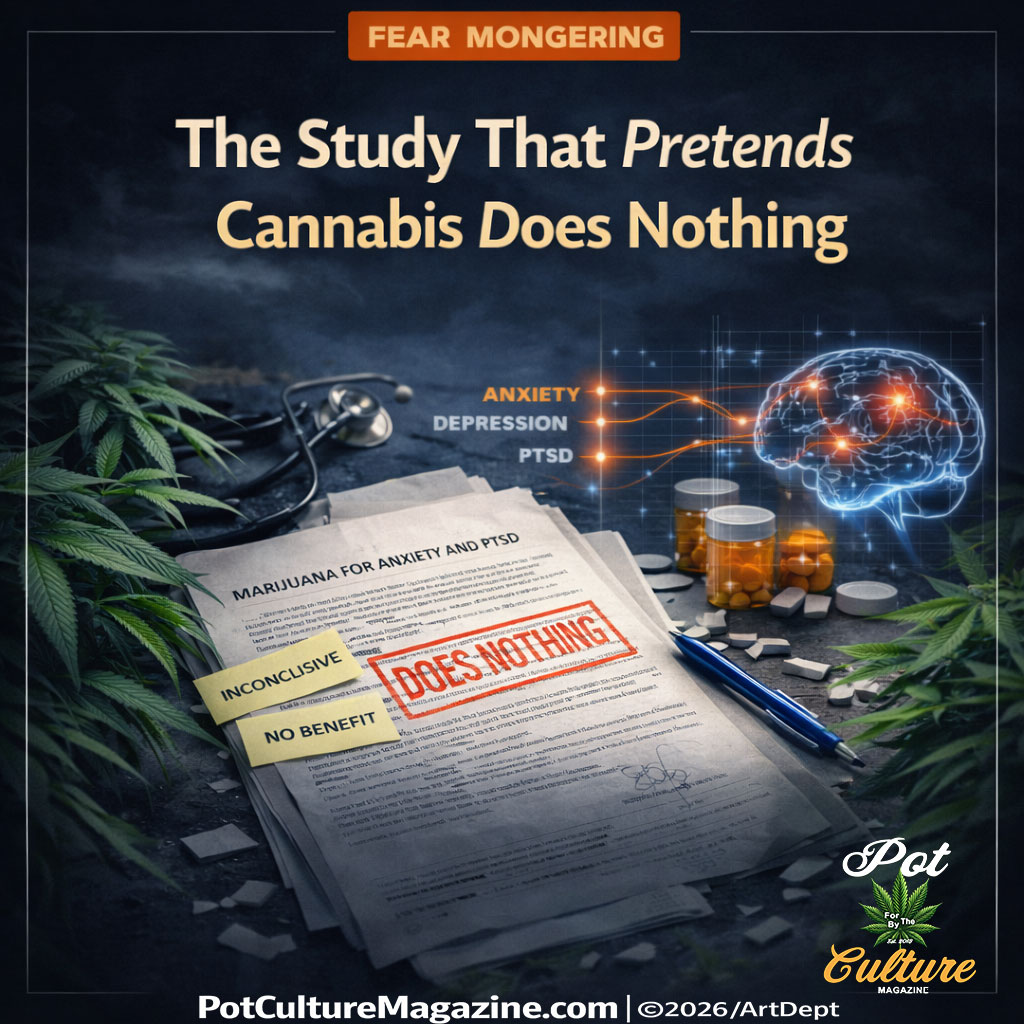
The Study That Pretends Cannabis Does Nothing
A new cannabis study claims marijuana does nothing for anxiety, depression, or PTSD. The reality is far more complicated. Decades of federal restrictions, limited research access, and synthetic substitutes have shaped the science. This breakdown exposes how incomplete data and selective interpretation continue to drive misleading headlines about cannabis and mental health.
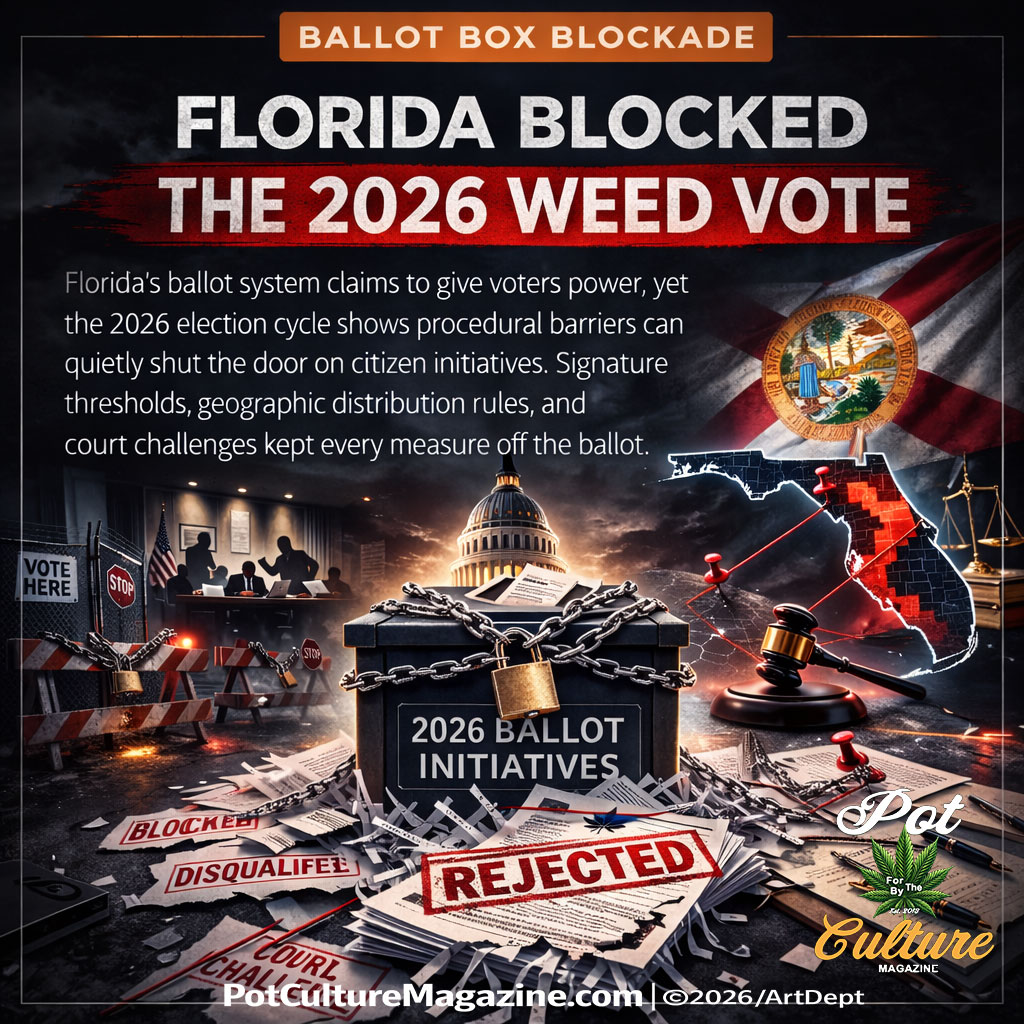
Florida Blocked the 2026 Weed Vote
Florida’s ballot system claims to give voters power, yet the 2026 election cycle shows how procedural barriers can quietly shut the door on citizen initiatives. Signature thresholds, geographic distribution rules, and court challenges blocked every measure from reaching voters, revealing how cannabis legalization fights are often decided by bureaucratic design long before election day.
Discover more from POT CULTURE MAGAZINE
Subscribe to get the latest posts sent to your email.

Leave a comment