Filed Under: Cultural Blindspots
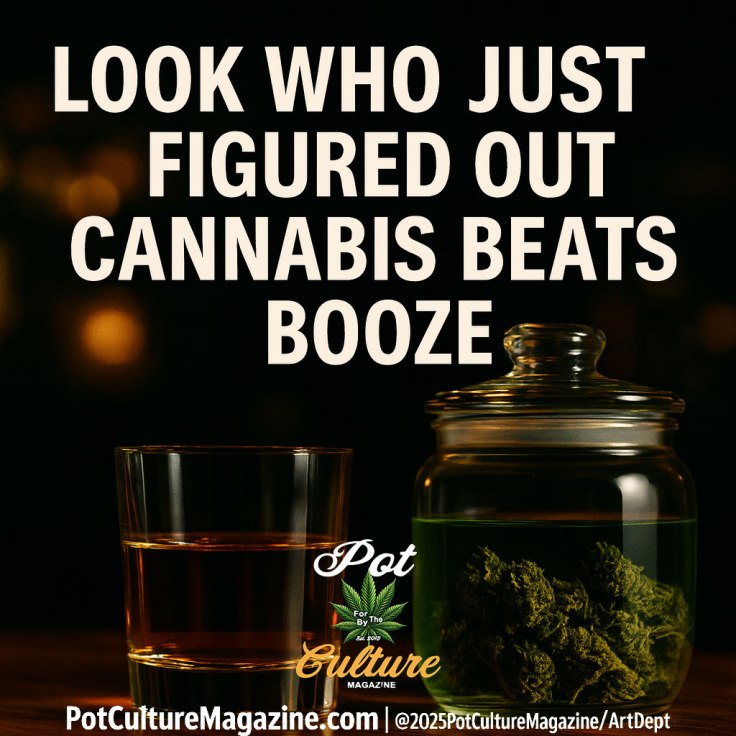
The moment The New York Times published a story claiming cannabis may reduce alcohol consumption was the moment anyone who has spent more than ten minutes inside real cannabis culture let out a long, exhausted laugh. It was not the polite kind, not the cute newsroom chuckle meant for polite company. It was the laugh you hear at two in the morning when people who have lived the truth far longer than the institutions that report on it finally see the paper of record treat the obvious like breaking news. The Times rolled out a story asking whether cannabis use might change how people drink. That question has been answered for years by the people who already switched, the people who looked at booze and weed and made a decision that the medical establishment, the alcohol industry, and the political class never wanted to acknowledge. Cannabis changes drinking because cannabis is not alcohol. That is the entire secret.
Pot Culture Magazine mapped this terrain long before the Times pretended to stumble onto it. In May, we published Battle of the Buzz: Can Weed Drinks Kill Booze? and laid out exactly how cannabis was already cutting into alcohol’s grip on American culture. Three months later, we dropped The New York Times Wants to Scare the Shit Out of You, calling out their fear campaign before they flipped the script and pretended they discovered a trend we had been reporting on all year. PCM told the truth while the paper of record hid behind its own shadow.
The story circles the question the way a nervous student circles the pool before stepping in. It cites studies showing that some cannabis users drink less, including research from the University of Washington and Harvard’s Mass General Brigham. It points out the trend lines in legal states where alcohol sales fall while cannabis revenue climbs, a pattern confirmed in multiple analyses from the RAND Corporation. Experts quoted in the story say more research is needed because that is what experts are required to say when the truth is politically inconvenient. The article never touches what matters. The moment people were allowed to choose between a substance that kills over 140,000 Americans each year (CDC) and a plant with zero recorded overdose deaths, the substitution began. No mystery. No hidden lever. Just cultural permission.
For decades, alcohol enjoyed a cultural monopoly. It was the default social lubricant, the sanctioned way to relax, celebrate, or numb the edges of life. Cannabis was shoved into the shadows while alcohol was poured in stadiums, airports, and family gatherings with patriotic approval. The Times treats cannabis as a new intruder on alcohol’s turf instead of the older and safer companion that survived generations of propaganda and police pressure. When people finally had a real choice, the shift happened quietly at first. Young adults who used to hit bars on Fridays started rolling joints at home. Middle-aged parents swapped wine for edibles because they wanted to sleep without wrecking their mornings. Professionally successful adults stopped binge drinking because the plant offered calm without the self-destruction.
The numbers tell the truth. Beer sales dropped sharply in legal cannabis states compared to prohibition states, according to the Beer Institute. Retail data from Colorado, Washington, Oregon, and Michigan all show the same curve. Alcohol levels off or falls while cannabis climbs. Emergency rooms remain flooded with alcohol related injuries. Cannabis related emergencies, by comparison, revolve mostly around anxiety spikes or edible miscalculations, not organ failure. There is no liver disease tied to cannabis. There is no fatal poisoning. The Times acknowledges these details without drawing the line between them. When one substance punishes the body and the other does not, substitution is not a mystery. It is survival.
advertisement
F O R T H E C U L T U R E B Y T H E C U L T U R E
CANNABIS LIES Vol. 5: The Gateway Lie
For decades, politicians have claimed marijuana is a gateway to heroin and harder drugs. Federal youth surveys, NSDUH data, and NIDA’s own language tell a different story. Cannabis use is widespread, hard drug use remains rare, and most users do not progress. The data dismantles one of prohibition’s most durable fear narratives.

The Study That Pretends Cannabis Does Nothing
A new cannabis study claims marijuana does nothing for anxiety, depression, or PTSD. The reality is far more complicated. Decades of federal restrictions, limited research access, and synthetic substitutes have shaped the science. This breakdown exposes how incomplete data and selective interpretation continue to drive misleading headlines about cannabis and mental health.
advertisement
People do not need a scientist to explain the way their own bodies respond. They know what a hangover feels like. They know what beer bloat feels like. They know the anxious spike after a night of drinking. They also know what a quiet night with a joint feels like and how an edible helps them sleep. They know which option wipes out the next day and which option lets them wake up functional, focused, and present. The Times frames this as a possible shift in public health behavior. In reality, it is one of the most predictable cultural corrections in modern history.
The article avoids the political shadow beneath the data. Alcohol sits at the center of American power. Its industry carries enormous lobbying influence. Politicians drink. Donors drink. The country drinks. The alcohol industry has spent years funding opposition to cannabis legalization because the numbers always terrified them. Internal documents described cannabis as a direct competitive threat. Executives warned that younger consumers were drifting toward weed and away from alcohol. They were right.
Meanwhile, cannabis research was frozen for decades by federal scheduling. The plant was blamed for laziness, deviance, and moral collapse while alcohol sat untouched on store shelves under patriotic branding. Now the culture is reversing itself. Not because of influencers. Not because of branding. Not because of marketing campaigns. People tried both substances and made a conclusion that the data now support.
To its credit, the Times avoids full-blown fear-mongering this time. It acknowledges nuance. It notes that some people use both substances. It gestures vaguely toward the need for more research. It even quotes physicians who understand cannabis is more than a party drug. What it does not do is follow its own evidence to its conclusion. The country is distancing itself from alcohol. Cannabis accelerated that shift. The reasons are cultural, psychological, physiological, and political. They all point to the same horizon.
None of this is a trend. None of this is a fad. None of this is the result of social media hype. This is a nation reclaiming its health from a culture that normalized self-inflicted harm. Cannabis is not a cure for alcohol abuse, but it is a release valve chosen by millions. The Times ended up reporting a truth that anyone inside cannabis culture has lived for ten years. The plant did not change. The country did.
Now comes the question the Times avoided. If cannabis reduces alcohol consumption, the country will feel it everywhere. Emergency rooms will see fewer alcohol fueled injuries. Domestic violence rates could shift as the most volatile substance loses ground. Workplaces may face fewer accidents tied to impaired judgment. Entire categories of alcohol driven harm could shrink as people reach for a safer option. Harm reduction stops being a slogan and becomes a measurable reality when a plant replaces a poison.
The answer is forming state by state. The numbers do not lie. The culture does not lie. The truth was never hidden. It was only ignored by institutions that prefer to treat the obvious like discovery.
©2025 Pot Culture Magazine. All rights reserved. This content is the exclusive property of Pot Culture Magazine and may not be reproduced, distributed, or transmitted in any form or by any means without prior written permission from the publisher, except for brief quotations in critical reviews.
F O R T H E C U L T U R E B Y T H E C U L T U R E
Florida Blocked the 2026 Weed Vote
Florida’s ballot system claims to give voters power, yet the 2026 election cycle shows how procedural barriers can quietly shut the door on citizen initiatives. Signature thresholds, geographic distribution rules, and court challenges blocked every measure from reaching voters, revealing how cannabis legalization fights are often decided by bureaucratic design long before election day.
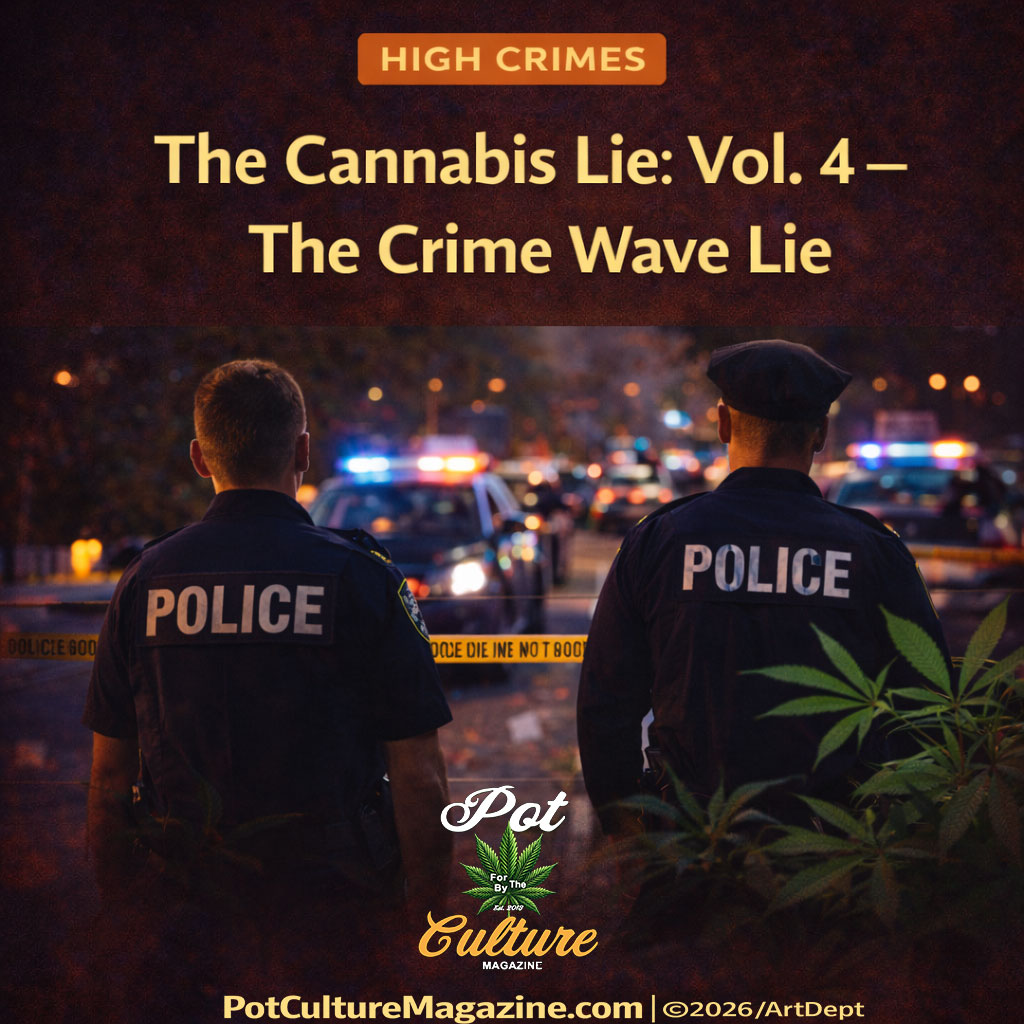
The Cannabis Lie: Vol. 4 — The Crime Wave Lie
Politicians and pundits warned that legal cannabis would unleash a crime wave. The data tell a different story. From Colorado’s violent crime trends to DOJ time-series research and statewide arrest declines, the evidence shows no consistent long-term surge tied to legalization. The numbers never matched the panic.
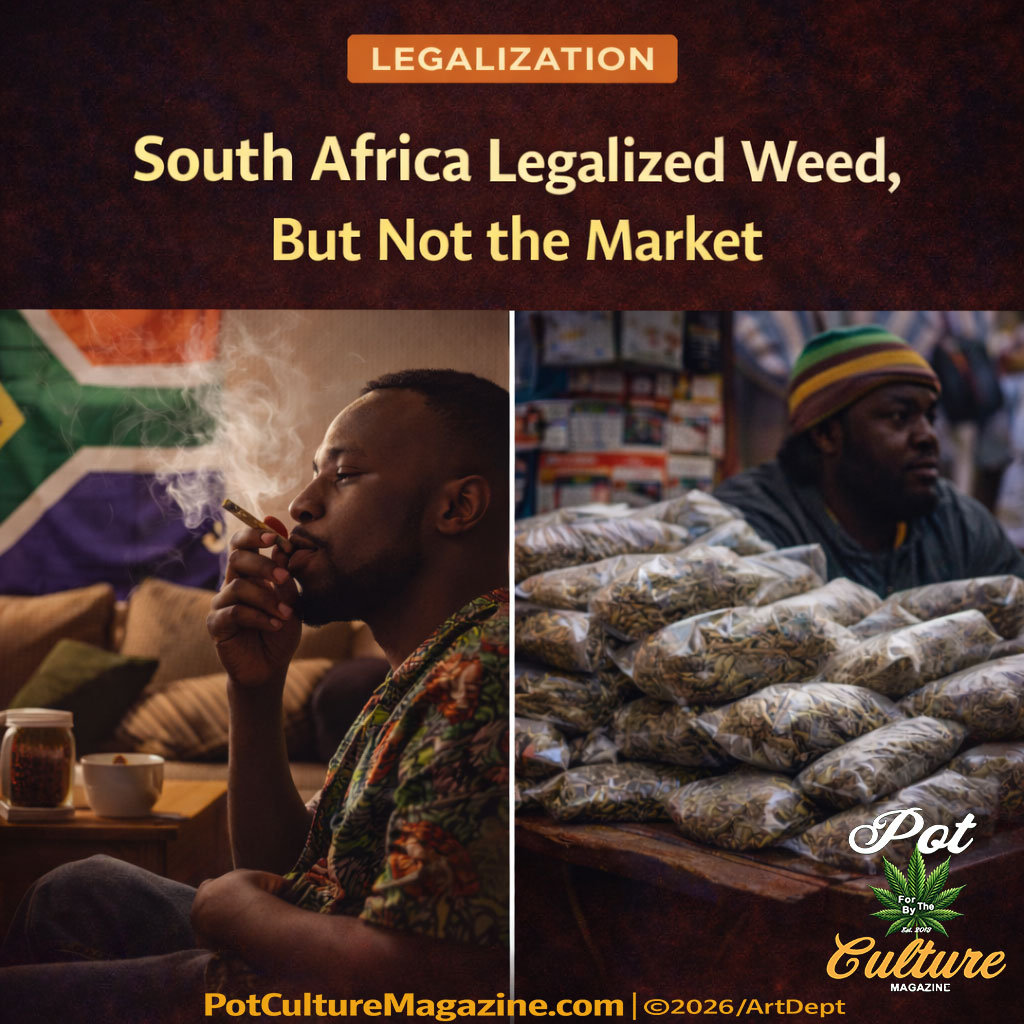
South Africa Legalized Weed, But Not the Market
South Africa recognized private adult cannabis use and home cultivation, but never built a legal domestic market around them. With buying and selling still largely outside the law, the illicit trade remains dominant while regulators scramble to set limits, draft rules, and prepare a broader Cannabis Bill that could finally address commerce.
Discover more from POT CULTURE MAGAZINE
Subscribe to get the latest posts sent to your email.

Leave a comment