Filed Under: The Great Green North

Canada sold a dream and built a maze. Storefronts opened on every block, rent climbed, margins thinned, prices fell, and the market taught a hard lesson. Too many stores, not enough demand, taxes that bite deeper when prices drop, and promotion rules that treat retailers like ghosts. The result is closures, consolidations, and quiet fire sales from Vancouver to Halifax.
Walk any city and you will see it. Shuttered glass, paper over the windows, a landlord sign taped at an angle. Ontario lists over 1,700 authorized stores, and Toronto’s count shrank year over year. The province shipped hundreds of millions of grams in 2024 and recorded more than CA$2 billion in sales, but dense clustering in Toronto turned growth into grind. See the receipts in the Ontario Cannabis Store market report and the prior year baseline in OCS By the Numbers 2023.
Alberta sits at around 700 retail stores serving five million people. In 2023, store cancellations finally outpaced new licences, the first clear turn from hype to math. Check the AGLC annual report and coverage by MJBizDaily and StratCann for additional context.
Price compression is the undertow that drags everything. Legal flower that launched near CA$10 per gram now appears as low as CA$3 per gram in value tiers, with bulk packs pulling tickets down. See the pricing trajectories in Hammond Lab’s price study and recent academic analyses.
Taxes add the choke. Canada’s excise is the greater of CA$1 per gram or 10%. When prices fall, that floor makes the effective tax rate climb. The policy design is outlined in Finance Canada’s framework and the federal–provincial cannabis tax agreement.
Then there is the marketing handcuff. Lifestyle ads and characters are banned, packaging is constrained, and most promotion is restricted to compliant POS education. Consumers default to price when the story is illegal. See the promotion and packaging rules inside the Cannabis Act.
advertisement
F O R T H E C U L T U R E B Y T H E C U L T U R E

CANNABIS LIES Vol. 5: The Gateway Lie
For decades, politicians have claimed marijuana is a gateway to heroin and harder drugs. Federal youth surveys, NSDUH data, and NIDA’s own language tell a different story. Cannabis use is widespread, hard drug use remains rare, and most users do not progress. The data dismantles one of prohibition’s most durable fear narratives.


The Study That Pretends Cannabis Does Nothing
A new cannabis study claims marijuana does nothing for anxiety, depression, or PTSD. The reality is far more complicated. Decades of federal restrictions, limited research access, and synthetic substitutes have shaped the science. This breakdown exposes how incomplete data and selective interpretation continue to drive misleading headlines about cannabis and mental health.
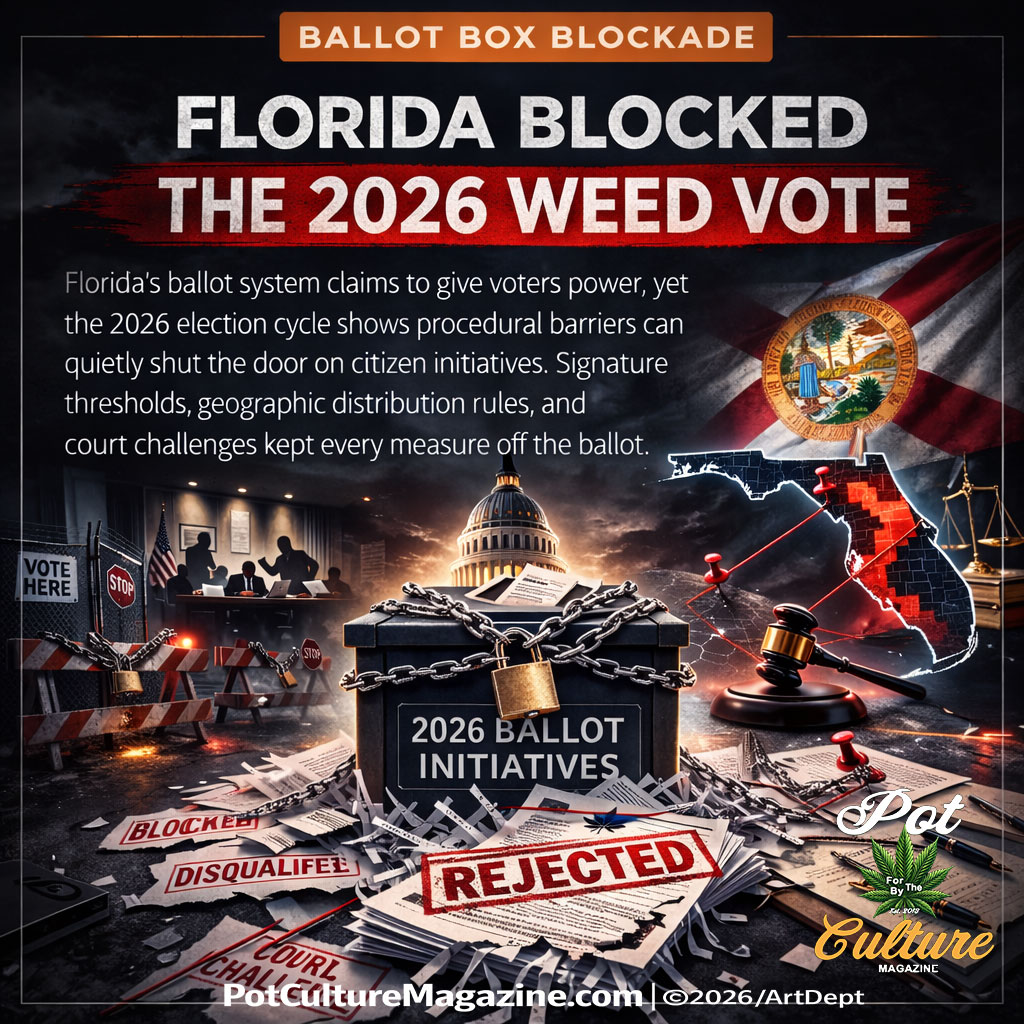
Florida Blocked the 2026 Weed Vote
Florida’s ballot system claims to give voters power, yet the 2026 election cycle shows how procedural barriers can quietly shut the door on citizen initiatives. Signature thresholds, geographic distribution rules, and court challenges blocked every measure from reaching voters, revealing how cannabis legalization fights are often decided by bureaucratic design long before election day.
advertisement
Provincial distributors tried to help. Ontario shifted to a fixed markup model and trimmed its wholesale take. It mattered on the margins, not on the lease. OCS shipped hundreds of millions of grams to retailers in 2024. A smaller wholesale take does not rescue a bad location in a saturated block with rising security, payroll, and insurance. Details are in OCS By the Numbers 2024.
Winners learned to live lean. Value chains scaled across provinces, moved volume, tightened assortments, and targeted neighborhoods with real demand instead of vanity corners. Rural hubs survived by owning local loyalty and keeping costs ruthless. On the corporate side, the message was consolidation, not swagger. SNDL closed the Nova Cannabis privatization in October 2024, rolled stores into Value Buds, trimmed overhead, and kept buying selectively. That is balance sheet realism. See SNDL’s completion notice and New Cannabis Ventures coverage.
Losers came in hot on debt and expanded faster than their customer base. A row of identical stores in the same postal code is not competition; it is cannibalism. Closures hit first where leases were richest and foot traffic thinnest. Alberta’s cancellations and Toronto’s shrinkage are mile markers, not outliers. See AGLC’s store count history and OCS retail trendlines.
Inventory tells the same story. Producers pushed volume to keep plants moving, retailers pushed bulk to chase value shoppers, and the system built a cushion that never fully deflated. Federal market dashboards show packaged dried flower inventory exceeding several months of national sales, proof that supply still outpaces demand. You can scan the ratios on Health Canada’s market data.
Consumers did what consumers do: they followed price. Average legal prices fell steadily while illicit prices were relatively stable, narrowing the gap as the legal side gained ground. That is a win for safety and transparency, but also a squeeze for store margins. Analysts put legal capture around 70–80% of spending by 2022–2023, with Ontario alone doing more than CA$2 billion in 2024. See the capture analysis in Transitions to Legal Cannabis Markets and Statistics Canada retail data.
The lesson for the United States is simple. Caps on store counts are not moral panic; they are basic planning. Zoning should keep three dispensaries from dogpiling the same corner. Taxes need a relief valve, or a straight ad valorem model without a one-dollar floor, so the rate does not spike when prices fall. Honest potency rules and real lab enforcement matter because fake numbers distort value and teach shoppers to chase a label, not quality. Price compression and waste need daylight, not denial. Start with our reporting in Dead Flowers: The Waste of American Weed and the upcoming feature, The Fake Lab Problem.
Canada is still a success in one sense. The legal side keeps gaining ground, the illicit share keeps shrinking, and consumers can buy tested products at prices that look more like street than a few years back. Ontario alone cleared more than CA$2 billion in legal cannabis sales in 2024, and shipments topped hundreds of millions of grams, proof that many Canadians chose the regulated shelf over the sidewalk. The cost of that shift has been paid by storefronts that opened too many doors too fast, and by producers crushed between falling prices and a tax that does not bend when the market does. The lesson is clear. Build for the world you live in, not the pitch deck you showed investors.
Help Pot Culture Magazine stay strong. Subscribe here.
©2025 Pot Culture Magazine. All rights reserved. This content is the exclusive property of Pot Culture Magazine and may not be reproduced, distributed, or transmitted in any form or by any means without prior written permission from the publisher, except for brief quotations in critical reviews.
F O R T H E C U L T U R E B Y T H E C U L T U R E

The Cannabis Lie: Vol. 4 — The Crime Wave Lie
Politicians and pundits warned that legal cannabis would unleash a crime wave. The data tell a different story. From Colorado’s violent crime trends to DOJ time-series research and statewide arrest declines, the evidence shows no consistent long-term surge tied to legalization. The numbers never matched the panic.

South Africa Legalized Weed, But Not the Market
South Africa recognized private adult cannabis use and home cultivation, but never built a legal domestic market around them. With buying and selling still largely outside the law, the illicit trade remains dominant while regulators scramble to set limits, draft rules, and prepare a broader Cannabis Bill that could finally address commerce.

NY’s Legal Weed Market Is Running Out of Weed
New York legalized cannabis and opened hundreds of stores, but regulators now warn the legal market may not produce enough weed to keep them stocked. With nearly 600 stores open and sales nearing $3 billion, the state is discovering that legalization alone does not guarantee a functioning market.
Discover more from POT CULTURE MAGAZINE
Subscribe to get the latest posts sent to your email.

Leave a comment