Filed Under: Public Panic & Stoner Logic

Every October, the same half-baked ghost story oozes back out of suburbia. Reporters whisper about “tainted treats.” Parents panic-scroll Facebook groups. Local cops issue warnings about “THC-laced candy.” The plot never changes, because it never happened. The myth of the free edible is America’s favorite seasonal hallucination, right up there with pumpkin-spice outrage and fake serial killers in cornfields.
Let’s start with basic economics. A ten-pack of decent gummies costs anywhere from $25 to $60. That is not trick-or-treat generosity; that is a grocery budget. No stoner is standing on a porch handing out a week’s worth of sleep aid to random kids. Weed is expensive. People lock it up like jewelry. If anyone is giving away free edibles, please tell us which neighborhood, because the rest of us will bring costumes and bags.
According to NORML, which just dropped its annual Halloween sanity check, there is no record anywhere of strangers handing out cannabis edibles to trick-or-treaters. Zero. None. The reform group put it bluntly:
“No one is knowingly giving out edibles to children as Halloween candy.”
— NORML, October 2025
That line should be printed on every bag of candy between now and eternity.
Meanwhile, back in Virginia, Dr. Chris Holstege, director of UVA Health’s Blue Ridge Poison Center, spent his Thursday morning politely debunking this nonsense for local media. He said the real problem is not “malicious candy,” it’s accidental ingestion. Kids eat what looks like candy, and because half the edibles on the market mimic Skittles or Nerds, toddlers end up in the ER. It’s not a criminal conspiracy; it’s poor packaging design and sloppy adult storage.
“As an adult, I cannot tell the difference between some of the edible cannabis products now emerging on the market because the products closely mimic available candies such as caramels and gum drops.”
— Dr. Chris Holstege, UVA Health (UVA Health Newsroom)
The numbers tell the story. In 2018, U.S. poison centers logged 816 calls involving children who ate cannabis edibles. By 2023, that number jumped to 6,888. Holstege’s own center handled about 150 to 200 of those cases. Most were mild. Some were scary. A few were life-threatening. But not one involved a stranger handing out weed at the door. Nationwide, ER visits tied to accidental cannabis ingestion have increased tenfold since 2017, according to the American Academy of Pediatrics.
advertisement
F O R T H E C U L T U R E B Y T H E C U L T U R E
Texas Is Moving to Shut Down the Hemp Market
Texas helped build one of the largest hemp THC markets in the country, then moved to shut it down. As regulators tighten rules and enforcement increases, businesses are left exposed and the future of hemp-derived cannabinoids hangs in the balance. This is not a simple crackdown. It is a full policy reversal with real economic…


CANNABIS LIES Vol. 5: The Gateway Lie
For decades, politicians have claimed marijuana is a gateway to heroin and harder drugs. Federal youth surveys, NSDUH data, and NIDA’s own language tell a different story. Cannabis use is widespread, hard drug use remains rare, and most users do not progress. The data dismantles one of prohibition’s most durable fear narratives.
The Study That Pretends Cannabis Does Nothing
A new cannabis study claims marijuana does nothing for anxiety, depression, or PTSD. The reality is far more complicated. Decades of federal restrictions, limited research access, and synthetic substitutes have shaped the science. This breakdown exposes how incomplete data and selective interpretation continue to drive misleading headlines about cannabis and mental health.
advertisement
So why does this myth keep rising from the dead every year? Because fear is clickbait. The poison-candy panic is easy to write and impossible to disprove. It gives every local newsroom a cheap headline and every suburban parent a reason to feel vigilant. It’s the same machine that ran the drug war, just repackaged in orange and black. Last week, a Florida TV station even warned parents to “look closely for cannabis candy,” citing zero evidence but plenty of stock photos.
The real horror story is what Holstege found when his team tested some of those candies bought online. The label often didn’t match the contents. Some had higher THC than advertised. Some had ingredients that weren’t listed at all. That’s not witchcraft, that’s deregulation. And that is where a real journalist should be pointing the flashlight.
Instead, we get reruns of Reefer Madness Jr. Police departments issue boilerplate warnings. Reporters nod gravely. Parents dump out their kids’ candy like forensic analysts. Nobody asks how these scare stories survive fifty years of contradiction. The answer is boring but true: cannabis panic is a habit, and America never breaks its habits.
Let’s talk motive. Who exactly benefits from this annual hysteria? Law enforcement gets a free PR boost. Politicians get to posture about “protecting children.” Media outlets get guaranteed traffic from anxious parents. It’s a symbiotic fear economy. The only people not cashing in are the ones supposedly doing the poisoning.
Reality check: the few genuine pediatric emergencies around edibles have one thing in common. They happen inside the home. A parent leaves a bag in the wrong drawer. A grandparent buys something mislabeled. A roommate bakes brownies without warning anyone. That is not a Halloween issue; it is a household issue. Blaming anonymous weed fairies just lets adults dodge responsibility.
And let’s not ignore the culture contrast. Kids swallow laundry pods, parents blame Procter & Gamble. Kids find an edible, parents blame “stoners.” It is always easier to demonize cannabis than to admit someone left it on the counter.
The irony is that legalization was supposed to fix this. Regulated markets promised child-proof packaging and dosage accuracy. Yet state patchwork laws and cheap imports still flood stores with look-alikes. THC content swings wildly. Some wrappers copy candy brands so closely that even adults get fooled. That is the problem to write about, not phantom strangers in hoodies.
This Halloween, before the next local anchor recites the annual “check your kid’s candy” sermon, remember this: there is a bigger chance your Uber driver is high than your child’s Reese’s cup. The real danger is ignorance, not ingestion.
So please, stop tagging your neighborhood watch groups. Stop sharing memes about “rainbow fentanyl gummies.” No one is handing out drugs that cost more than your costume. If you’re a parent, keep your fucking edibles locked up and away from kids. You’re the likely source of your child’s accidental ingestion, not some stranger in a hoodie.
Because if there’s one thing scarier than a ghost, it’s America’s talent for believing the same lie forever.
© 2025 Pot Culture Magazine. All rights reserved. This content is the exclusive property of Pot Culture Magazine and may not be reproduced, distributed, or transmitted in any form or by any means without prior written permission from the publisher, except for brief quotations in critical reviews.
F O R T H E C U L T U R E B Y T H E C U L T U R E
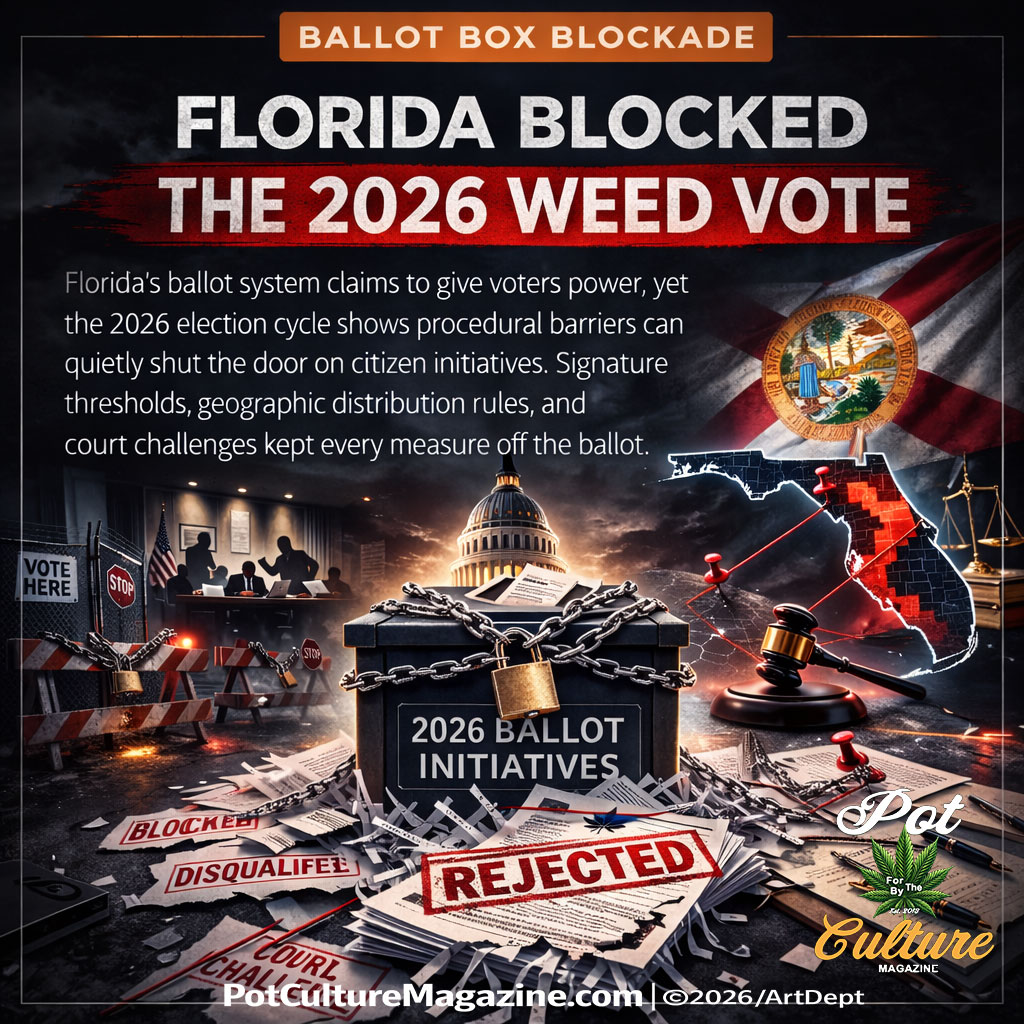
Florida Blocked the 2026 Weed Vote
Florida’s ballot system claims to give voters power, yet the 2026 election cycle shows how procedural barriers can quietly shut the door on citizen initiatives. Signature thresholds, geographic distribution rules, and court challenges blocked every measure from reaching voters, revealing how cannabis legalization fights are often decided by bureaucratic design long before election day.

The Cannabis Lie: Vol. 4 — The Crime Wave Lie
Politicians and pundits warned that legal cannabis would unleash a crime wave. The data tell a different story. From Colorado’s violent crime trends to DOJ time-series research and statewide arrest declines, the evidence shows no consistent long-term surge tied to legalization. The numbers never matched the panic.

South Africa Legalized Weed, But Not the Market
South Africa recognized private adult cannabis use and home cultivation, but never built a legal domestic market around them. With buying and selling still largely outside the law, the illicit trade remains dominant while regulators scramble to set limits, draft rules, and prepare a broader Cannabis Bill that could finally address commerce.
Discover more from POT CULTURE MAGAZINE
Subscribe to get the latest posts sent to your email.

Leave a comment