Filed Under: Drug War Theater

On October 9, Senator Thom Tillis turned a sovereign nation into his latest political prop. Cameras rolled, microphones waited, and a white man from North Carolina decided he was the moral compass for the Eastern Band of Cherokee people, a community that was governing itself long before this country decided it was a country.
In a Judiciary Committee hearing, Tillis asked Attorney General Pam Bondi to “look into” what he called predatory marketing by the Cherokee cannabis operation. He waved around product packaging like evidence from a crime scene and told Bondi he was concerned about children. Bondi blinked, said she was “not familiar” with the tribe’s work, and promised to “look into it.” It was pure political theater, and everyone in the room knew it.
The truth is simpler. The Cherokee cannabis program is legal on Cherokee land. The tribe passed its own legislation, built a regulatory agency, hired compliance officers, and opened a dispensary run by Qualla Enterprises LLC. The program operates within the Qualla Boundary, the sovereign territory of the Eastern Band of Cherokee. Every gram is tracked from seed to sale. Every product must be tested and labeled. Customers must present valid identification. The operation is transparent, controlled, and compliant.
Tillis chose to ignore all of that. Instead, he held up Halloween-themed vape packaging and talked about “marketing to kids.” He accused the tribe of offering app-based ordering and possibly delivering cannabis off tribal land. There is no evidence of either claim. The Great Smoky Cannabis Company, the tribe’s retail arm, clearly states that no deliveries are offered and all sales occur in person within the Boundary. The app he cited allows customers to reserve orders for pickup, the same model used by countless state-licensed dispensaries across America.
So why make it a federal issue? Because the Drug War Theater never really ends, it just changes costumes.
The Cherokee people legalized medical cannabis in 2021 and adult use in 2023, establishing the first legal recreational market in the southeastern United States. That alone made them a target. For lawmakers like Tillis, who built their careers on law-and-order rhetoric, the sight of a Native nation outpacing the state on cannabis policy is more than uncomfortable, it is a political threat. North Carolina still bans marijuana, clinging to prohibition like a security blanket, and the idea that the Cherokee can grow, regulate, and profit from cannabis without state control undermines the illusion that Raleigh is in charge.
Tillis’s record makes his motives clear. In 2024, he and Senator Ted Budd sent letters to federal and state law enforcement questioning how the Cherokee were operating their cannabis enterprise. They cited the Controlled Substances Act and North Carolina’s state prohibition. It was a thinly veiled attempt to pressure the Justice Department into intervening. No federal agency acted because there was nothing to act on.
The Department of Justice has long recognized that tribes have the right to govern themselves, including setting and enforcing their own cannabis laws, provided they maintain control, transparency, and security. Unless the tribe is diverting product or engaging in criminal trafficking, the DOJ typically leaves them alone. That’s not leniency, that’s sovereignty.
But sovereignty doesn’t play well on talk radio. So Tillis leaned on the oldest trick in American politics, fear. The “protect the children” line has been the Drug War’s emotional lever for fifty years. It was used to jail jazz musicians, ban hemp, militarize police, and flood prisons with non-violent offenders. Now it’s being used to smear a Native government that happens to be running a clean, legal cannabis business.
Principal Chief Michell Hicks didn’t mince words. He called Tillis’s claims
“inaccurate and offensive.” He said the tribe’s operations are “fully compliant with federal and tribal law” and built on “accountability, transparency, and safety.”
The tribe hasn’t received any notice of a federal investigation, because no agency has grounds to investigate. The accusation is a headline generator, not a legal argument.
Still, the smear works. Once a senator says the word “investigation,” media outlets echo it without context. Viewers hear “Cherokee cannabis under federal scrutiny” and assume wrongdoing. By the time the truth surfaces, the narrative is set. That is how drug war propaganda functions, through repetition and innuendo, not evidence.
advertisement
F O R T H E C U L T U R E B Y T H E C U L T U R E
CANNABIS LIES Vol. 5: The Gateway Lie
For decades, politicians have claimed marijuana is a gateway to heroin and harder drugs. Federal youth surveys, NSDUH data, and NIDA’s own language tell a different story. Cannabis use is widespread, hard drug use remains rare, and most users do not progress. The data dismantles one of prohibition’s most durable fear narratives.

The Study That Pretends Cannabis Does Nothing
A new cannabis study claims marijuana does nothing for anxiety, depression, or PTSD. The reality is far more complicated. Decades of federal restrictions, limited research access, and synthetic substitutes have shaped the science. This breakdown exposes how incomplete data and selective interpretation continue to drive misleading headlines about cannabis and mental health.
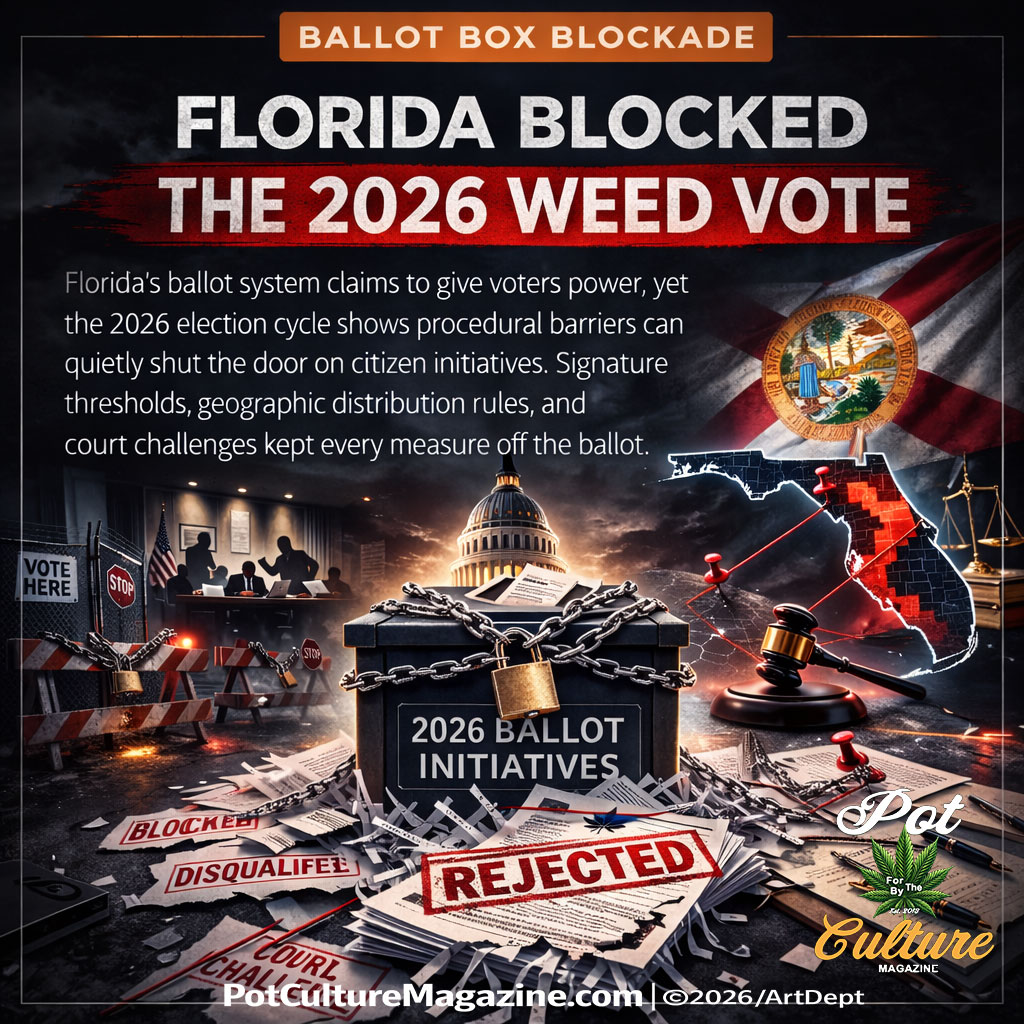
Florida Blocked the 2026 Weed Vote
Florida’s ballot system claims to give voters power, yet the 2026 election cycle shows how procedural barriers can quietly shut the door on citizen initiatives. Signature thresholds, geographic distribution rules, and court challenges blocked every measure from reaching voters, revealing how cannabis legalization fights are often decided by bureaucratic design long before election day.
advertisement
Let’s be clear. There are only two ways the Cherokee could run afoul of federal law. One, if they transported cannabis across non-tribal state land, or two, if they allowed non-tribal entities to traffic it beyond their jurisdiction. There’s no proof of either. The cultivation and retail facilities are both inside the Boundary. Transport between them occurs under tribal escort along limited routes approved by their own legal department. Everything else Tillis suggested is conjecture.
So what is really happening here? A sitting U.S. senator is questioning a sovereign nation’s right to govern its own economy, and he’s doing it under the pretense of child protection. That is not oversight; it is paternalism. It’s the same mentality that drove generations of government interference on Native land, from relocation to boarding schools to resource theft. The language has softened, but the power play hasn’t.
The irony is staggering. North Carolina’s opioid crisis is still raging, fueled by legal pharmaceuticals, yet Tillis has nothing to say about that. He hasn’t demanded federal probes into OxyContin marketing or fentanyl distribution, but he’s ready to grill the Cherokee over pumpkin-spice-themed THC cartridges.
The Cherokee Nation is not breaking the law; it is rewriting it on its own soil. The tribe’s cannabis control program employs Cherokee citizens, generates revenue for healthcare and education, and reduces dependence on outside economies. That should be a model of self-reliance, not a target.
But sovereignty threatens the hierarchy. If tribes can run successful, transparent cannabis programs, it proves the state is not essential. It proves the people most criminalized by the drug war are capable of running the industry better than the bureaucrats who punished them for it.
That’s what this is really about: the illusion of control. The same government that once jailed Native people for possessing plant medicine now wants to dictate how they sell it. The same state that can’t fix its own broken laws is demanding to oversee those who already did.
The Cherokee people do not need Thom Tillis’s permission to heal, grow, or prosper. They earned their right to self-govern through centuries of resistance, treaties, and endurance. The federal government recognized that sovereignty long ago, even if politicians keep pretending not to understand it.
When Tillis calls for a DOJ investigation, he’s not protecting anyone. He’s reminding the Cherokee that power in America still runs uphill, that Washington always wants the last word. But that hierarchy is cracking. Cannabis reform is exposing every lie the Drug War sold to the public, from “gateway drug” hysteria to “public safety” spin. The Cherokee simply got there first in the South, and that success story terrifies the old guard.
By October 14, the headlines will fade and the senator will move on to his next soundbite. The Cherokee operation will keep selling legal cannabis, testing its products, and paying its employees. Life will go on inside the Boundary while the outside world argues over who gets to control what they already built.
This was never about packaging or apps or protecting children. It was about control. The Cherokee are proving they don’t need saving, supervision, or permission. And that’s what the Senate cannot stand.
Pot Culture Magazine reached out to the Eastern Band of Cherokee people for comment before publication, but did not receive a response by the deadline.
© 2025 Pot Culture Magazine. All rights reserved. This content is the exclusive property of Pot Culture Magazine and may not be reproduced, distributed, or transmitted in any form or by any means without prior written permission from the publisher, except for brief quotations in critical reviews.
F O R T H E C U L T U R E B Y T H E C U L T U R E

The Cannabis Lie: Vol. 4 — The Crime Wave Lie
Politicians and pundits warned that legal cannabis would unleash a crime wave. The data tell a different story. From Colorado’s violent crime trends to DOJ time-series research and statewide arrest declines, the evidence shows no consistent long-term surge tied to legalization. The numbers never matched the panic.

South Africa Legalized Weed, But Not the Market
South Africa recognized private adult cannabis use and home cultivation, but never built a legal domestic market around them. With buying and selling still largely outside the law, the illicit trade remains dominant while regulators scramble to set limits, draft rules, and prepare a broader Cannabis Bill that could finally address commerce.
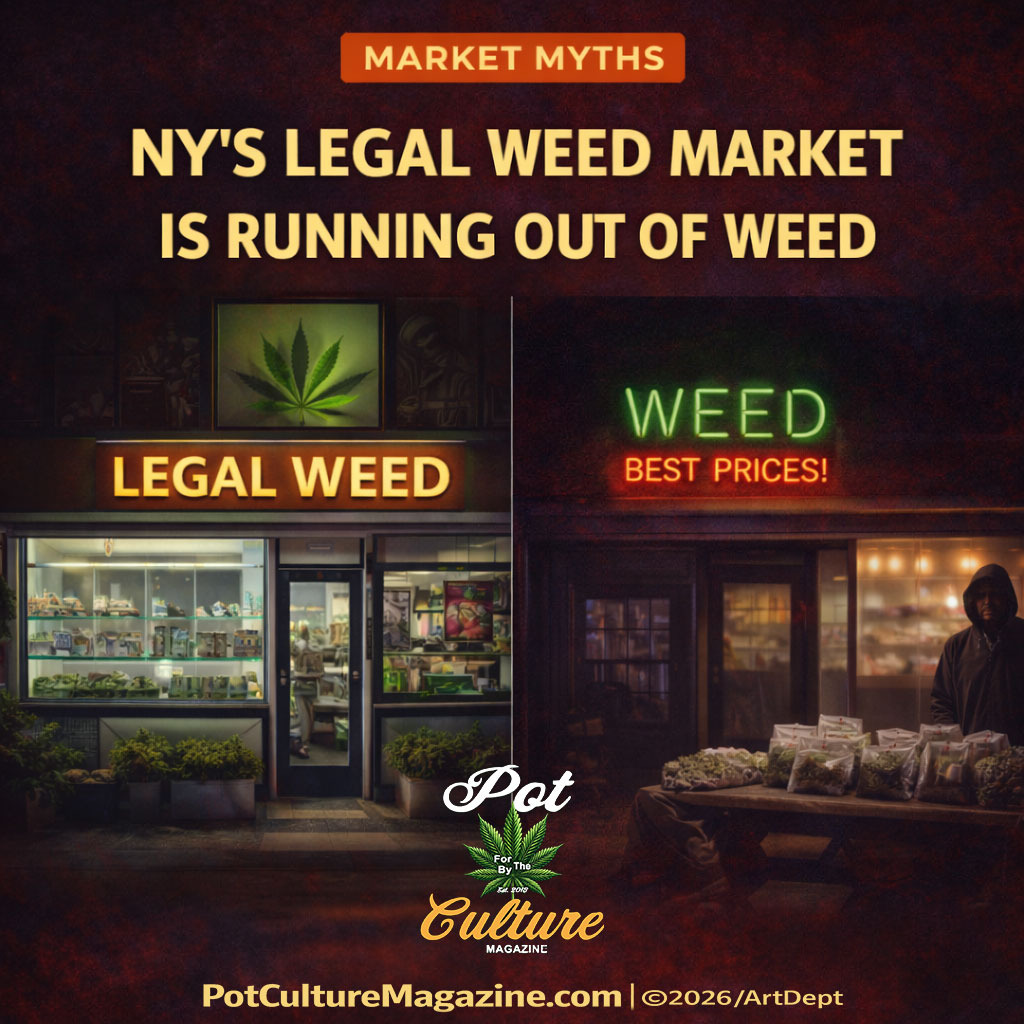
NY’s Legal Weed Market Is Running Out of Weed
New York legalized cannabis and opened hundreds of stores, but regulators now warn the legal market may not produce enough weed to keep them stocked. With nearly 600 stores open and sales nearing $3 billion, the state is discovering that legalization alone does not guarantee a functioning market.
Discover more from POT CULTURE MAGAZINE
Subscribe to get the latest posts sent to your email.

Leave a comment