Filed Under: Academia Gone to Pot
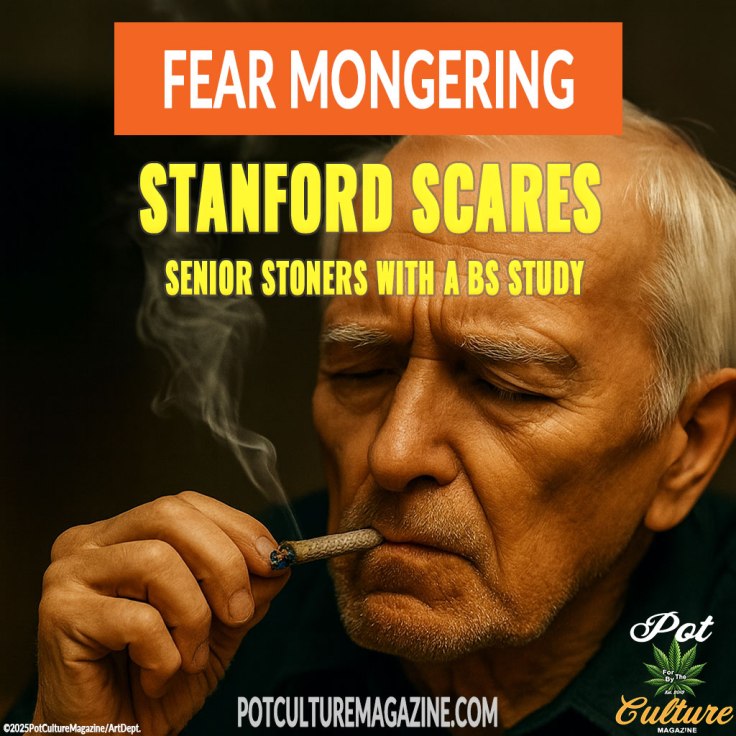
Attention, anyone with gray hair and a grinder. Stanford, in their infinite fear and loathing of all things green, just published a panic piece for the masses, and man, it is a doozy. The headline warns that cannabis could hurt older adults. The subtext whispers that salvation still comes from the pharmacy aisle.
And if you want a preview of how the modern propaganda cycle works, keep an eye on your news feed. Within days, every major outlet will parrot the same talking points. Expect polished anchors to say “new research shows” while citing the same single Stanford article. Watch how fast it spreads, how neatly it fits between a pharmaceutical ad and a fear segment about vaping. That is the machine at work.
It is the kind of academic press release designed to travel fast. A few buzzwords about “heart attack risk” and “impaired cognition,” some ominous quotes about “no safe amount,” and suddenly the same recycled fear gets dressed in a white coat. The article is written for people who still believe that scientific authority is above marketing, when in reality it now serves it.
The piece opens with a predictable chorus. Cannabis is dangerous for seniors, experts caution. The risks may outweigh the benefits. The tone is a sermon wrapped in statistics. There is no new research in the article, only citations of familiar talking points. A 29 percent higher risk of heart attack. A 20 percent higher risk of stroke. A mention of vascular inflammation found in animal models. The phrasing is confident, but the foundation is sand.
The Heart journal meta-analysis that produced those figures combined twenty-four observational studies of wildly different quality. It found a correlation between heavy cannabis use and acute coronary events, but it never proved causation. The authors themselves admitted high heterogeneity and limited data on dosage, as well as inadequate control for confounders like tobacco, alcohol, obesity, and lifestyle. The American Heart Association repeated the same pattern in its 2024 review. They found higher odds ratios among self-reported daily users, but again stopped short of causal claims. These are warnings, not verdicts.
Stanford presented them as gospel.
In fairness, cannabis can raise heart rate and blood pressure temporarily, especially in inexperienced users or those with existing cardiac conditions. That is real physiology. But so can standing up too fast. The difference between a transient effect and a medical event matters. Without clear dose thresholds or patient-level data, no scientist should be claiming the former predicts the latter. Yet that is exactly what this article does, and it does it for clicks.
The piece also references animal studies showing that THC can cause vascular inflammation in mice. That is fine for mechanistic curiosity, not public guidance. Mice do not smoke joints, and they do not carry human comorbidities or metabolism. Translating rodent data into human risk is like reading a weathervane and calling it a storm warning. It makes for exciting copy and lousy science.
Meanwhile, actual human data complicates the scare story. The veterans cohort study, published this year and involving older adults with coronary artery disease, tracked patients for over three years. It found no statistically significant increase in cardiovascular deaths, heart attacks, or strokes among cannabis users. The hazard ratio for smoking cannabis was below one, meaning no measurable rise in risk. If cannabis were the cardiac grenade Stanford suggests, this study should have exploded. It did not.
That omission is telling. It is easier to quote animal studies than explain why human outcomes do not fit the narrative.
Yes, older adults deserve good information. They also deserve honesty. Cannabis is not harmless, but it is not the silent killer the article implies. Risks depend on dose, frequency, delivery method, and health status. Smoking daily high-THC flower may stress the cardiovascular system. Using low THC edibles, tinctures, or balanced CBD formulations likely does not. Those are not opinions. They are distinctions supported by pharmacology and clinical data. The problem is that public health messaging rarely has patience for nuance. It sells fear faster than context.
Stanford’s piece also leans on Canadian emergency room data showing a tripling of ER visits among seniors after legalization. That statistic sounds shocking until you unpack it. The increase mostly came from accidental overconsumption of edibles, not heart attacks. Edibles take longer to hit, and many new users misjudge timing or dose. When someone eats an entire chocolate bar labeled ten milligrams per square, that is not a cardiovascular crisis. That is poor packaging and worse education. The solution is labeling and literacy, not prohibition disguised as paternal concern.
Seniors are one of the fastest-growing segments of cannabis users in North America. They are not teenagers chasing a buzz. They are cancer survivors, chronic pain patients, and insomniacs trying to replace prescriptions that stopped working or started hurting. Cannabis lets them eat again, sleep again, and move again. To frame that as a looming public health crisis is disingenuous.
And it misses the cultural irony. The same generation that was told marijuana would rot their minds is now being told it will stop their hearts. The difference is that this time, the fear comes with citations.
advertisement
F O R T H E C U L T U R E B Y T H E C U L T U R E
CANNABIS LIES Vol. 5: The Gateway Lie
For decades, politicians have claimed marijuana is a gateway to heroin and harder drugs. Federal youth surveys, NSDUH data, and NIDA’s own language tell a different story. Cannabis use is widespread, hard drug use remains rare, and most users do not progress. The data dismantles one of prohibition’s most durable fear narratives.

The Study That Pretends Cannabis Does Nothing
A new cannabis study claims marijuana does nothing for anxiety, depression, or PTSD. The reality is far more complicated. Decades of federal restrictions, limited research access, and synthetic substitutes have shaped the science. This breakdown exposes how incomplete data and selective interpretation continue to drive misleading headlines about cannabis and mental health.
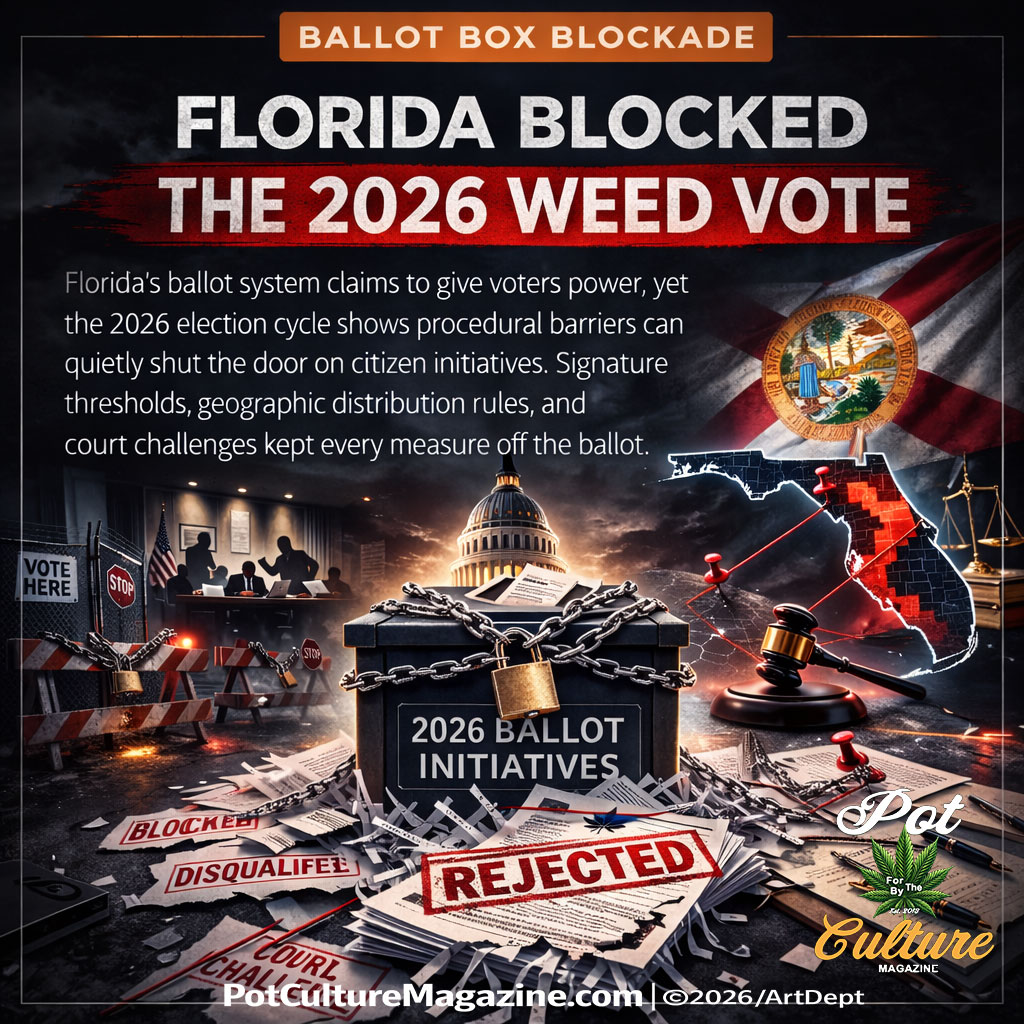
Florida Blocked the 2026 Weed Vote
Florida’s ballot system claims to give voters power, yet the 2026 election cycle shows how procedural barriers can quietly shut the door on citizen initiatives. Signature thresholds, geographic distribution rules, and court challenges blocked every measure from reaching voters, revealing how cannabis legalization fights are often decided by bureaucratic design long before election day.
advertisement
The Heart meta-analysis, the AHA review, and the veterans cohort are all legitimate studies. What matters is how they are interpreted. Correlation studies are useful, but they are not the final word. They signal areas for deeper investigation. They do not justify alarmist claims or moralizing headlines. Stanford’s framing collapses those distinctions on purpose because complexity does not go viral.
It would be one thing if the university were running its own controlled trial in older adults. They are not. They are summarizing other people’s work and wrapping it in their own cautionary packaging. This is science by press release, not research by experiment.
The tone is what gives it away. Every quote is carefully staged to sound neutral, but the rhythm reads like a public service announcement. Older adults are at higher risk. No level of use is truly safe. We need more awareness. It is an old formula dressed in new credentials. Say enough to justify funding, say nothing that risks controversy, and remind readers that fear is a form of virtue.
Real science thrives on doubt. Public health thrives on certainty. When those two instincts collide, certainty usually wins, and nuance gets buried under click metrics.
That is where outlaw journalism earns its keep.
The real story is not that Stanford got the facts wrong. It is that they picked the ones that fit a preloaded story. The fear of cannabis among institutions is less about data and more about control. The industry threatens too many monopolies, from pharmaceuticals to mental health providers to the federal grant machine that keeps prohibition academically profitable. Fear keeps the funding flowing.
For older readers, the takeaway should be simpler. Cannabis can interact with medication, especially drugs metabolized through CYP450 enzymes. If you are on statins, blood thinners, or heart meds, talk to your physician before adding cannabinoids. That is responsible use, not fear-mongering. Avoid combustion if possible. Start with low doses. Stick with tested, labeled products. Monitor your response. That is all anyone needs to know.
Stanford could have written that article. They did not. They wrote one that reinforces the same institutional reflex that made cannabis taboo for seventy years. It is a reflex that still equates intoxication with irresponsibility and self-medication with rebellion. The problem is not that the scientists are lying. The problem is that they are performing safety theater for an audience that expects sin to come with a stethoscope.
Older adults are smarter than that. They have lived through worse misinformation campaigns. They watched cholesterol become a religion and opioids become a cure before turning into a curse. They know what fear looks like when it wears a white coat.
The question is whether the next generation of researchers will break that pattern or keep polishing it.
If Stanford wants to lead the conversation, it can start by studying cannabis as medicine, not metaphor. Follow real patients. Track outcomes. Publish data that separates low-dose therapeutic use from heavy daily consumption. Measure CBD as a cardiovascular agent in its own right. Compare cannabis against the actual alternatives, opiates, benzodiazepines, and anti-inflammatories that already carry black box warnings. That would be research worth printing.
Until then, the scare stories will keep coming. They will quote experts, cite percentages, and bury every qualifier below the fold. They will warn that cannabis might stop your heart, but they will never mention what actually does.
Because the only thing rising faster than blood pressure is the hypocrisy.
©2025 Pot Culture Magazine. All rights reserved. This content is the exclusive property of Pot Culture Magazine and may not be reproduced, distributed, or transmitted in any form or by any means without prior written permission from the publisher, except for brief quotations in critical reviews.
F O R T H E C U L T U R E B Y T H E C U L T U R E
The Cannabis Lie: Vol. 4 — The Crime Wave Lie
Politicians and pundits warned that legal cannabis would unleash a crime wave. The data tell a different story. From Colorado’s violent crime trends to DOJ time-series research and statewide arrest declines, the evidence shows no consistent long-term surge tied to legalization. The numbers never matched the panic.

South Africa Legalized Weed, But Not the Market
South Africa recognized private adult cannabis use and home cultivation, but never built a legal domestic market around them. With buying and selling still largely outside the law, the illicit trade remains dominant while regulators scramble to set limits, draft rules, and prepare a broader Cannabis Bill that could finally address commerce.
NY’s Legal Weed Market Is Running Out of Weed
New York legalized cannabis and opened hundreds of stores, but regulators now warn the legal market may not produce enough weed to keep them stocked. With nearly 600 stores open and sales nearing $3 billion, the state is discovering that legalization alone does not guarantee a functioning market.
Discover more from POT CULTURE MAGAZINE
Subscribe to get the latest posts sent to your email.

Leave a comment