Filed Under: Weed Life / Science and Smoke

If you have ever felt like a joint hit harder on a muggy afternoon or that your high stretched longer up in the mountains, you are not imagining things. The weather around you changes the chemistry of your smoke, how your body absorbs THC, and even how your brain interprets the buzz. The forecast can shape your high as much as the strain itself.
Hot air is thin while cold air is dense. That simple difference changes how much smoke your lungs can take in. Warm air carries fewer molecules per breath, which means less THC delivered per pull. Cooler air helps your lungs absorb more vapor and cannabinoids, making each inhale count.
That is why the same joint can hit like a freight train on a cold night but feel weaker under summer heat. Researchers in Colorado found that lung uptake of aerosolized compounds rises when the surrounding air is cooler and denser through a study by the University of Colorado Boulder. It is not a placebo effect; it is physics in motion.
Heat also changes the burn. A dry, hot day makes cannabis combust faster and destroys more THC before it ever reaches your lungs. A slower, cooler burn preserves cannabinoids and terpenes, producing a smoother smoke with a more complete effect. It is why an autumn joint feels different, slower burn, fuller flavor, deeper lift.
Humidity changes the balance. Cannabis absorbs moisture from the air, and when humidity climbs, the plant material softens and burns at a lower temperature, vaporizing cannabinoids less efficiently. The smoke feels thicker but delivers less THC. When the air dries out, the opposite happens. Brittle buds burn too quickly, sending valuable cannabinoids straight into the flame.
Most cultivators aim for storage humidity around sixty percent to balance combustion and preservation, according to Leafly. Deviate too far in either direction and you lose potency. High humidity also makes the air heavier and harder to pull through the lungs, leaving smokers with a shorter or flatter high. When the rain rolls in, the dullness you feel might not be in your head; it is in the air.
Barometric pressure, the weight of the atmosphere pressing down on you, plays a quieter but measurable role. Low pressure expands gases in your lungs slightly, allowing more surface area for THC absorption. That looseness can make the same dose feel floatier and stronger. Studies show that low pressure increases the permeability of the alveoli, as noted by the National Library of Medicine. As the storm builds, the body becomes more efficient at drawing in everything it inhales.
advertisement
F O R T H E C U L T U R E B Y T H E C U L T U R E
CANNABIS LIES Vol. 5: The Gateway Lie
For decades, politicians have claimed marijuana is a gateway to heroin and harder drugs. Federal youth surveys, NSDUH data, and NIDA’s own language tell a different story. Cannabis use is widespread, hard drug use remains rare, and most users do not progress. The data dismantles one of prohibition’s most durable fear narratives.

The Study That Pretends Cannabis Does Nothing
A new cannabis study claims marijuana does nothing for anxiety, depression, or PTSD. The reality is far more complicated. Decades of federal restrictions, limited research access, and synthetic substitutes have shaped the science. This breakdown exposes how incomplete data and selective interpretation continue to drive misleading headlines about cannabis and mental health.
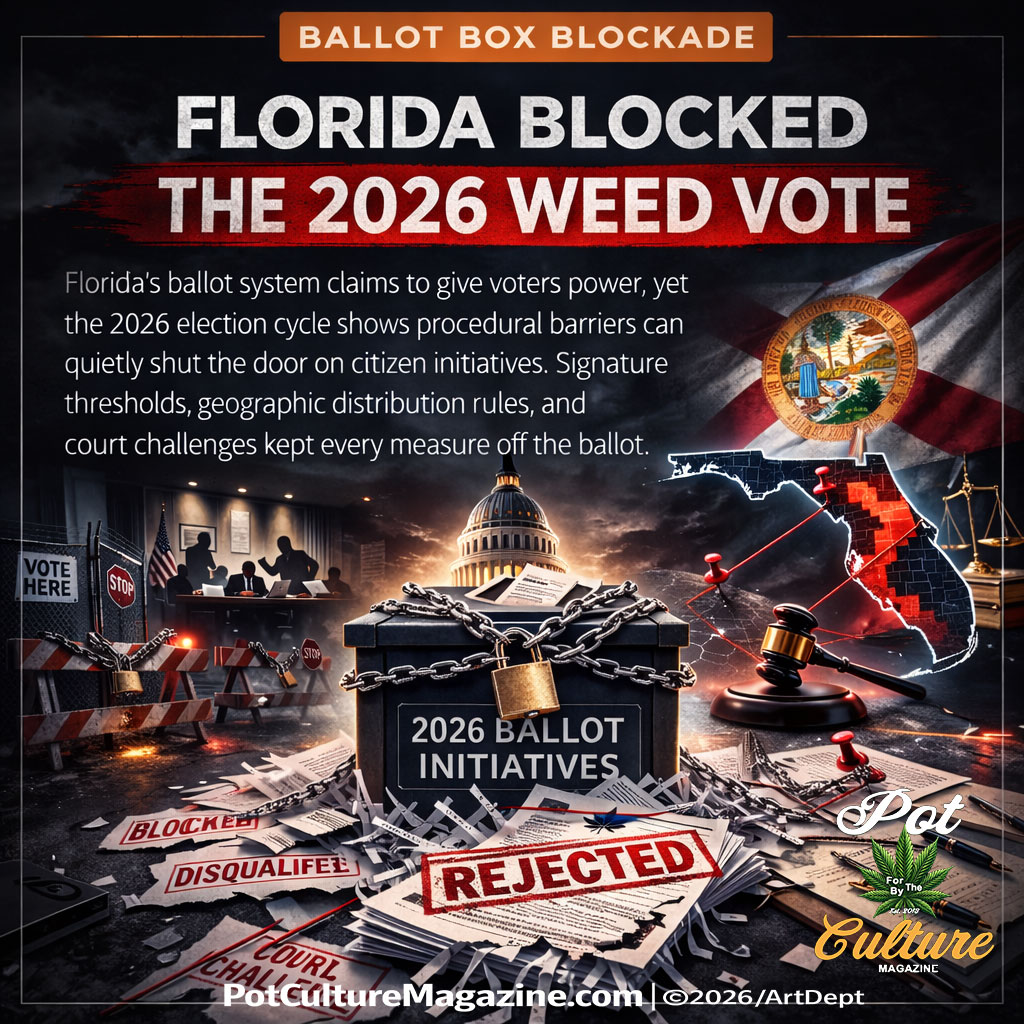
Florida Blocked the 2026 Weed Vote
Florida’s ballot system claims to give voters power, yet the 2026 election cycle shows how procedural barriers can quietly shut the door on citizen initiatives. Signature thresholds, geographic distribution rules, and court challenges blocked every measure from reaching voters, revealing how cannabis legalization fights are often decided by bureaucratic design long before election day.
advertisement
Altitude amplifies everything. At higher elevations, reduced oxygen causes a mild form of euphoria called hypoxia, a light-headed stimulation that pairs perfectly with cannabinoids. The Colorado High is not a myth. It is oxygen deprivation working alongside dopamine release, exaggerating the sense of elevation. Lower oxygen also means slower combustion and cooler burns, which preserve terpenes and subtle cannabinoids. The result is often a fuller flavor and a slower, more sustained climb.
Air quality matters. Polluted air can blunt your high before the first puff. Particulates compete with cannabinoids for the same lung space. The more polluted the air, the less efficiently THC crosses into your bloodstream. A 2023 study found that poor air quality reduced absorption of airborne compounds by up to twenty percent, reported by the European Respiratory Journal. A joint smoked on a smoggy street corner will not feel the same as one smoked in clean mountain air. The difference is not just psychological; it is chemical. Cleaner air makes for more efficient uptake and a sharper, more consistent high.
Terpenes, the aromatic compounds that give cannabis its flavor and effect, are highly sensitive to heat. Each evaporates at a different temperature: myrcene around 332°F, limonene around 349°F, and pinene around 311°F. Warm storage conditions or direct sunlight cause those molecules to degrade, changing both the scent and the psychoactive profile of the flower.
Researchers at the University of Mississippi’s NIDA program found that terpene loss begins within seventy-two hours at elevated temperatures, even in sealed containers, according to the University of Mississippi NIDA Marijuana Project. Myrcene, responsible for the sedative and earthy tone of many strains, is especially vulnerable. Storing cannabis in a cool, dark, and stable environment preserves the terpene balance that gives each strain its identity. The same rule applies outdoors. High temperatures and sunlight break down volatile compounds mid-smoke. Cold air and shade let them linger, which is why night sessions feel richer and fuller.
Weather also moves through the mind. Sunlight increases serotonin, which amplifies THC’s euphoric side. Overcast skies lower dopamine, pulling the experience toward introspection or fatigue. A Stanford study found seasonal fluctuations in receptor activity, higher in summer and lower in winter, documented by Stanford Medicine. That means your body’s sensitivity to cannabinoids literally changes with the seasons. The weed is the same, the wiring is not.
Every smoker has had those days when one hit feels transcendent and others when nothing seems to land. The difference often hides in the air itself, the temperature, the pressure, the moisture, and the mood of the sky. The world around you is part of the equation, a silent variable in every inhale. A cold breeze might sharpen the edge. A humid storm might soften it. Altitude, pressure, and air all conspire in ways you can feel long before you understand them.
Your high has always been a conversation between the plant and the planet. The Puff Test simply gives it language.
This is the property of Pot Culture Magazine and is protected by U.S. and international copyright laws. Unauthorized reproduction, distribution, or transmission of this work, in part or in whole, without the express written permission of Pot Culture Magazine is strictly prohibited.
F O R T H E C U L T U R E B Y T H E C U L T U R E

The Cannabis Lie: Vol. 4 — The Crime Wave Lie
Politicians and pundits warned that legal cannabis would unleash a crime wave. The data tell a different story. From Colorado’s violent crime trends to DOJ time-series research and statewide arrest declines, the evidence shows no consistent long-term surge tied to legalization. The numbers never matched the panic.

South Africa Legalized Weed, But Not the Market
South Africa recognized private adult cannabis use and home cultivation, but never built a legal domestic market around them. With buying and selling still largely outside the law, the illicit trade remains dominant while regulators scramble to set limits, draft rules, and prepare a broader Cannabis Bill that could finally address commerce.

NY’s Legal Weed Market Is Running Out of Weed
New York legalized cannabis and opened hundreds of stores, but regulators now warn the legal market may not produce enough weed to keep them stocked. With nearly 600 stores open and sales nearing $3 billion, the state is discovering that legalization alone does not guarantee a functioning market.
Discover more from POT CULTURE MAGAZINE
Subscribe to get the latest posts sent to your email.

Leave a comment