Filed Under: The Stench of Discrimination
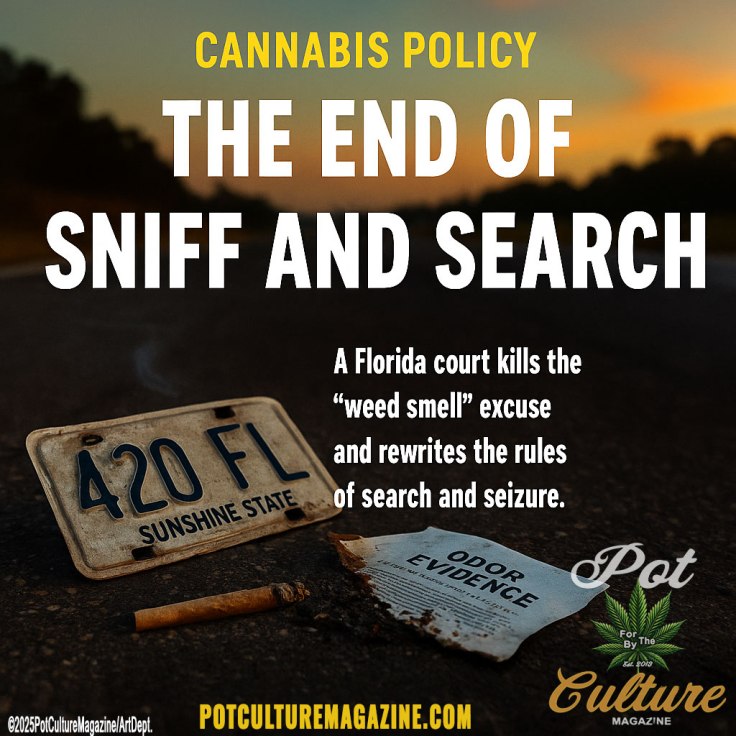
For decades, the smell of weed has been the cop’s golden ticket. No warrant, no evidence, no probable cause, just a whiff in the air, and suddenly the Fourth Amendment did not mean a damn thing. The claim went like this: “I smelled marijuana.” That was all it took to tear through a person’s car, pockets, and dignity. Florida cops rode that scam for years. But last week, a state appeals court finally threw a wrench into their routine.
The court ruled that police can no longer use the smell of cannabis alone as justification to search a vehicle. That ruling, issued by the Second District Court of Appeal, slammed the door on decades of lax, discriminatory enforcement. It is a long-overdue dose of common sense wrapped in constitutional law. Cops can still investigate if they have other evidence of a crime, but the smell of weed by itself is no longer enough.
It is the kind of decision that hits like a joint to the face of the entire drug war establishment. For years, police departments across America have treated “odor of marijuana” as both shield and sword, a shield against accountability and a sword against the public. They used it on college kids, veterans, single mothers, Black drivers, and anyone else unlucky enough to look like a bust waiting to happen. Florida was one of the last strongholds where that play still worked. Now it is crumbling.
Gulf Breeze Police Chief Rick Hawthorne, caught trying to spin the loss, called it “a little more difficult” for his officers. In reality, it just means they might have to start following the law. He admitted what every cop already knows: “Most agencies do the odor plus rule.” Translation: we smell weed, and we make up something else to justify the search. Broken taillight, nervous behavior, an imaginary “furtive movement,” whatever it takes to turn a scent into suspicion.
That scam has filled Florida’s jails for years. Arrest reports read like copy-paste templates: “I detected the odor of marijuana emanating from the vehicle.” It did not matter if the smell came from a legal hemp product, a passenger’s shirt, or the last person who borrowed the car. It did not matter if the driver had a valid medical marijuana card. The smell alone turned any street into an open-air checkpoint.
The court’s decision finally acknowledged what reform advocates have been shouting for years: smell is not evidence. Attorney Rachel Gilmer put it bluntly, “We have medical marijuana, we have hemp, we have legal and illegal forms, and you cannot make that determination based on smell alone.” The legal landscape changed, but police tactics never did. They have been pretending that the world froze in 1985.
This ruling did not come from nowhere. Florida joins a growing list of states where courts have ruled that cannabis odor can no longer be treated as probable cause. In 2021, the Pennsylvania Supreme Court said the same thing. Colorado made similar rulings years earlier after legalization. Michigan followed suit. New York police were ordered to stop smell-based searches after legal sales began. Even conservative states like Iowa and Georgia are starting to question the logic.
advertisement
F O R T H E C U L T U R E B Y T H E C U L T U R E
CANNABIS LIES Vol. 5: The Gateway Lie
For decades, politicians have claimed marijuana is a gateway to heroin and harder drugs. Federal youth surveys, NSDUH data, and NIDA’s own language tell a different story. Cannabis use is widespread, hard drug use remains rare, and most users do not progress. The data dismantles one of prohibition’s most durable fear narratives.

The Study That Pretends Cannabis Does Nothing
A new cannabis study claims marijuana does nothing for anxiety, depression, or PTSD. The reality is far more complicated. Decades of federal restrictions, limited research access, and synthetic substitutes have shaped the science. This breakdown exposes how incomplete data and selective interpretation continue to drive misleading headlines about cannabis and mental health.
Florida Blocked the 2026 Weed Vote
Florida’s ballot system claims to give voters power, yet the 2026 election cycle shows how procedural barriers can quietly shut the door on citizen initiatives. Signature thresholds, geographic distribution rules, and court challenges blocked every measure from reaching voters, revealing how cannabis legalization fights are often decided by bureaucratic design long before election day.
advertisement
But this fight is not about the nose. It is about power. The “odor doctrine” was always a loophole, a cheap way for cops to sidestep warrants and the Constitution in one sniff. It started in the Nixon years, got turbocharged under Reagan, and never stopped. Judges upheld it because they did not want to look “soft on drugs.” Prosecutors defended it because it made convictions easy. And cops loved it because it made control simple.
The human cost has been staggering. Black drivers were far more likely to be searched based on “odor” than white drivers, even when nothing illegal was found. Families were torn apart. Cars were impounded. Kids watched their parents humiliated on the side of the road while cops turned their backs, seats inside out over the faint smell of burnt flower. It was never about safety. It was about submission.
Think about how ridiculous this logic is in any other context. Imagine if the smell of alcohol were cause for a search. Every bar in Florida would be a crime scene. Every tailgate, every nightclub, every airport lounge. But weed has been treated like radioactive contraband because police and politicians built careers on demonizing it. The nose became the last weapon of the drug war, and for too long it worked.
The irony is that this whole system was doomed from the start. The same government that licensed medical marijuana patients and hemp farmers still lets police criminalize them for the smell of what they were legally allowed to possess. That contradiction was not justice; it was a con.
Florida’s ruling does not mean the drug war is over. It just means one of its favorite tools got pried out of its hand. Cops will still claim “odor plus,” still invent other reasons to justify searches, still hide behind buzzwords like “officer safety.” But this decision makes it harder. It forces accountability. It reminds police that their job is not to guess at guilt, it is to prove it.
The bigger question is why it took so long. How did something as subjective as smell become a legal standard in the first place? Courts let it happen because it was convenient. A cop’s word was treated as gospel, even when it reeked of bias. That trust gave us decades of stop-and-frisk, traffic stops gone wrong, and millions of lives disrupted by a claim that could never be disproven.
The judge who dissented in this latest ruling, Craig Villanti, argued that Florida has not “wholesale decriminalized” marijuana and that cops should still be allowed to investigate potential impairment. That logic misses the point. The law already covers impaired driving. This is not about impairment; it is about control. If police cannot tell legal from illegal cannabis by smell, then smell should never have been the standard to begin with.
So now the smell test is finally on trial. The drug war’s most durable myth, that weed odor equals crime, is collapsing. Florida’s police unions are furious. Civil rights advocates are celebrating. And somewhere out there, a kid who would have spent the night in jail over a roach in the ashtray just got to go home.
This is what progress smells like.
Because freedom should not depend on how good your car smells.
©2025 Pot Culture Magazine. All rights reserved. This content is the exclusive property of Pot Culture Magazine and may not be reproduced, distributed, or transmitted in any form or by any means without prior written permission from the publisher, except for brief quotations in critical reviews.
F O R T H E C U L T U R E B Y T H E C U L T U R E
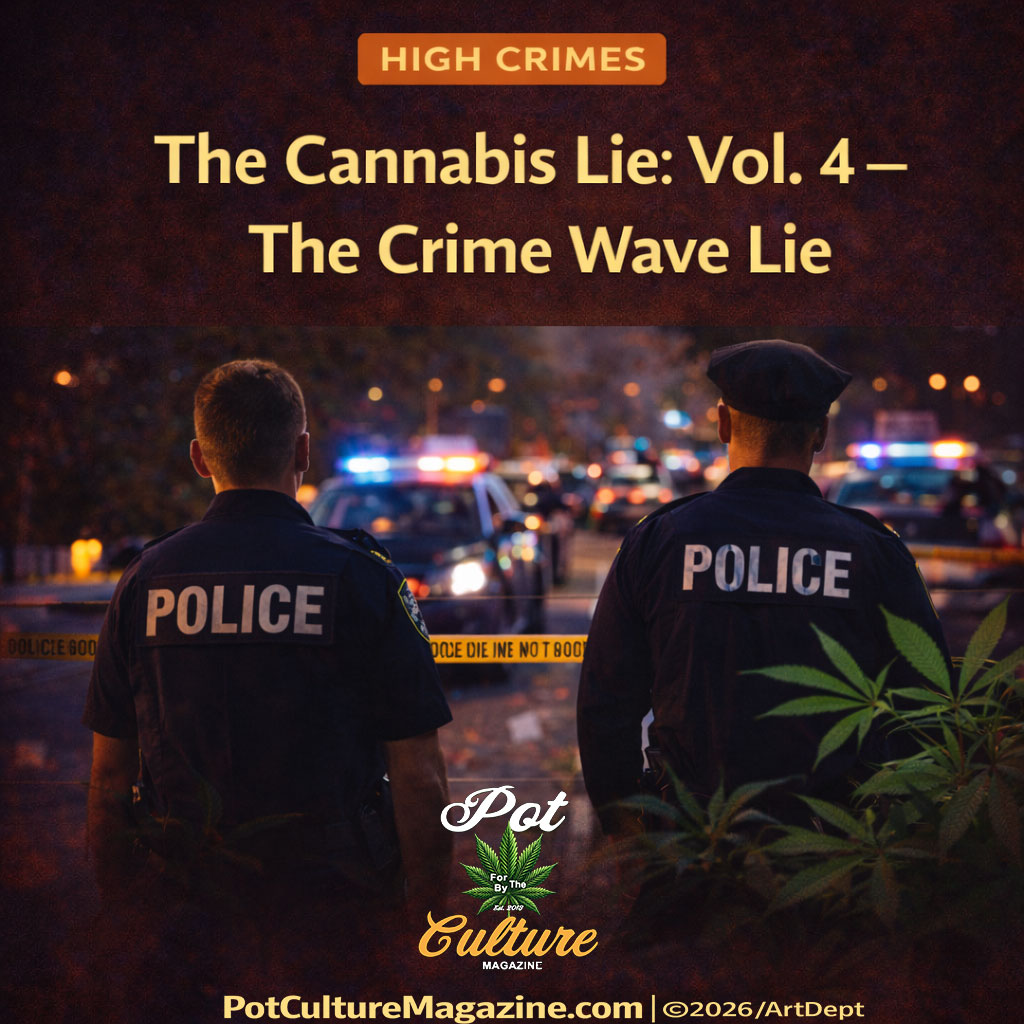
The Cannabis Lie: Vol. 4 — The Crime Wave Lie
Politicians and pundits warned that legal cannabis would unleash a crime wave. The data tell a different story. From Colorado’s violent crime trends to DOJ time-series research and statewide arrest declines, the evidence shows no consistent long-term surge tied to legalization. The numbers never matched the panic.
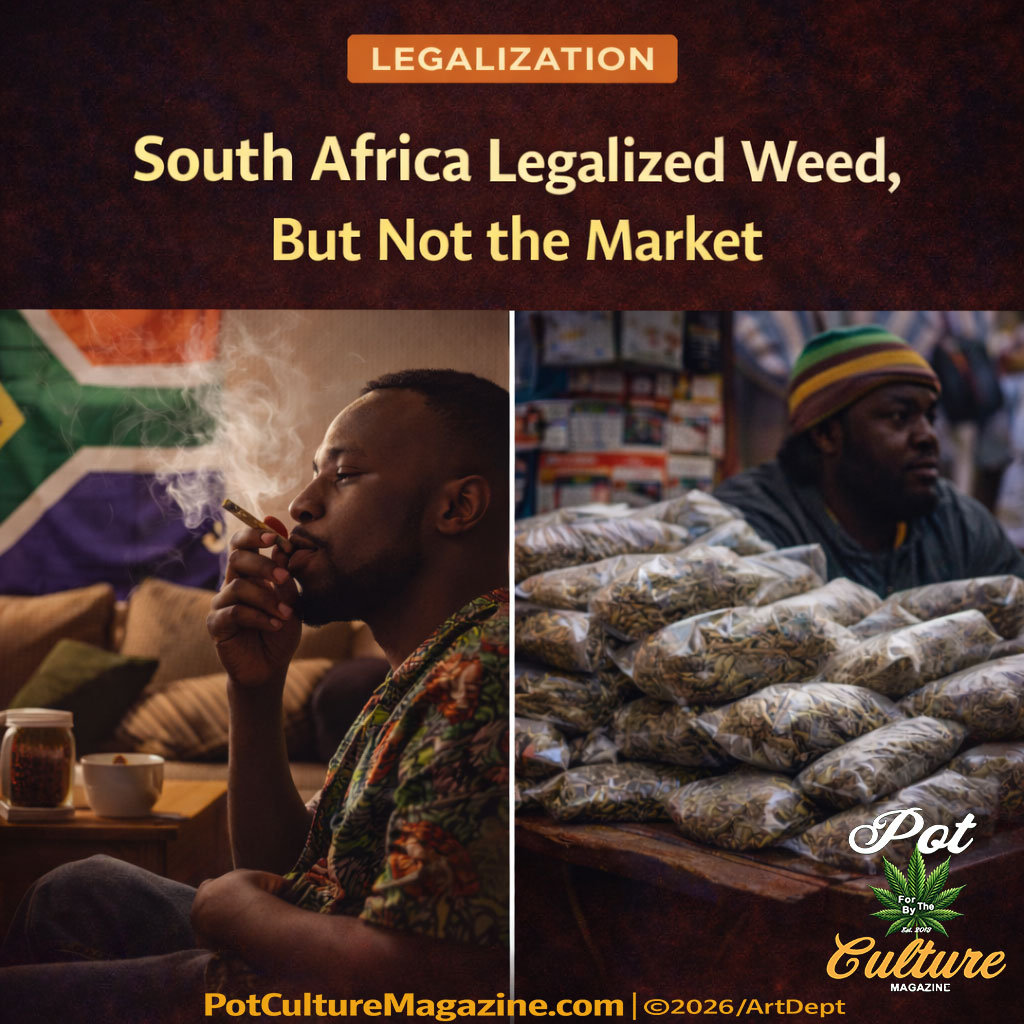
South Africa Legalized Weed, But Not the Market
South Africa recognized private adult cannabis use and home cultivation, but never built a legal domestic market around them. With buying and selling still largely outside the law, the illicit trade remains dominant while regulators scramble to set limits, draft rules, and prepare a broader Cannabis Bill that could finally address commerce.
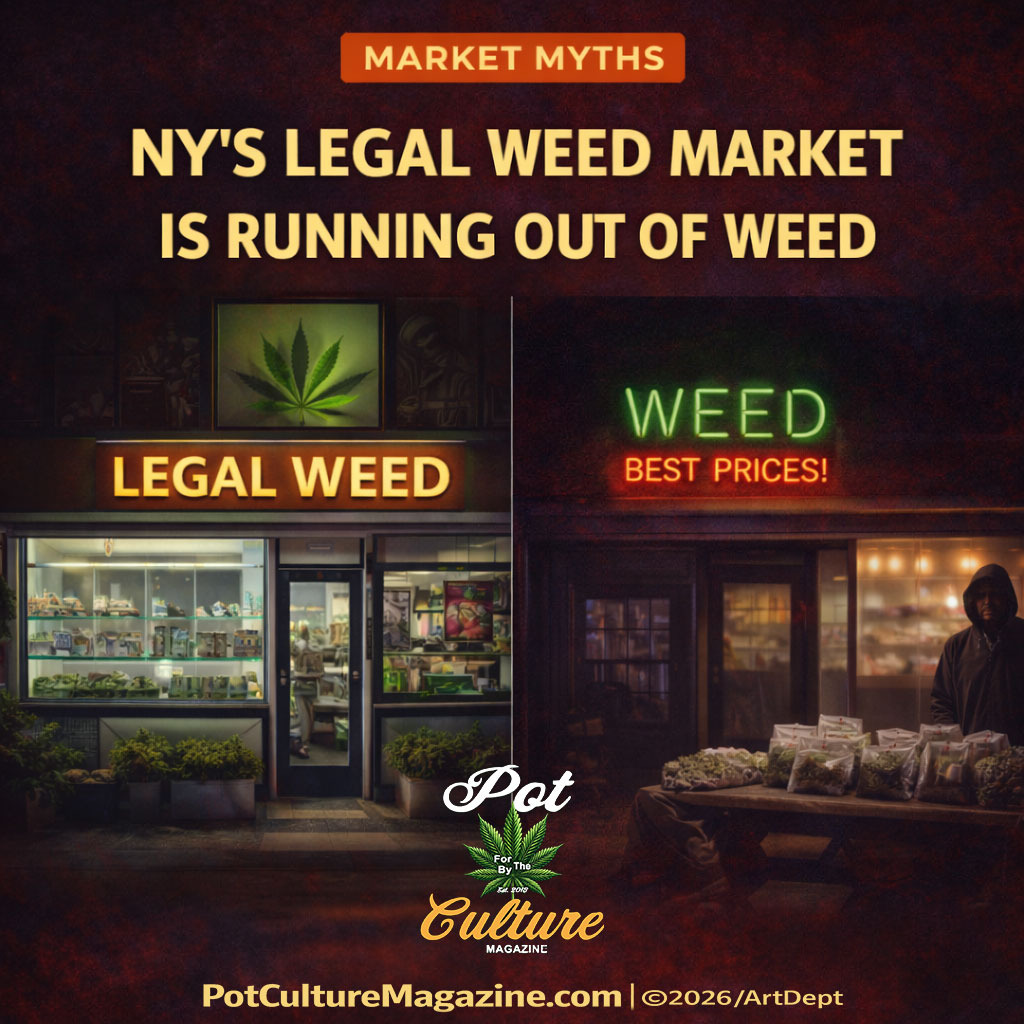
NY’s Legal Weed Market Is Running Out of Weed
New York legalized cannabis and opened hundreds of stores, but regulators now warn the legal market may not produce enough weed to keep them stocked. With nearly 600 stores open and sales nearing $3 billion, the state is discovering that legalization alone does not guarantee a functioning market.
Discover more from POT CULTURE MAGAZINE
Subscribe to get the latest posts sent to your email.

Leave a comment