Filed Under: Government Waste
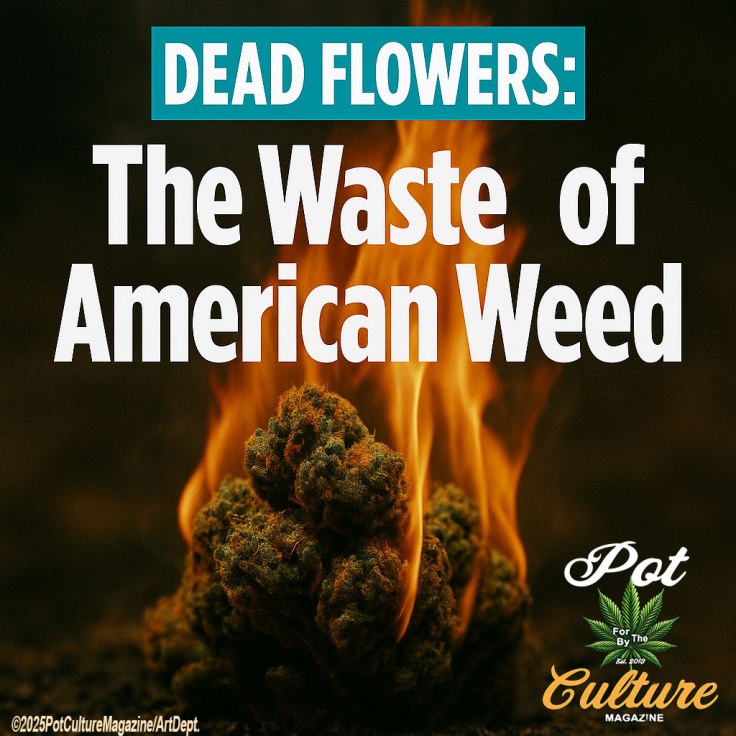
They call it destruction, but the word barely scratches the surface. Excellent cannabis trimmed, cured, tested, and packed is dumped into shredders, soaked in bleach, or burned under supervision while patients struggle to afford medicine. Every day in America, thousands of pounds of weed are erased by the same system that was supposed to end the insanity of prohibition. Legalization built a new bureaucracy, and it still burns green.
Regulators keep records of this ritual. They call them destruction logs. They look like environmental crime reports with batch numbers, pounds destroyed, and methods used. California has logged over a million pounds of ruined flower since 2019. Oregon tracks entire harvests scrapped because testing windows expired. Massachusetts grinds up anything over a year old, no matter how potent it remains. Canada took it further. Since federal legalization, producers there have destroyed more than one point seven billion grams of cannabis flower. Warehouses became graveyards for the same plant that politicians once swore they were saving from the black market.
What kills the plant now is not contamination but red tape. A single failed lab test can wipe out months of work. A trace of yeast or a meaningless variance in potency can condemn a harvest worth tens of thousands. Growers pay for retesting, but the numbers often vary by lab. Some fail for microbes that exist naturally in soil. Others pass the same strain with no issue. When the science becomes guesswork, the grinder becomes the final judge.
Time finishes the job. Many states force dispensaries to destroy anything older than twelve months, even when stored properly and still fresh. The plant does not rot that fast, but the rule says otherwise. Some dispensaries retest at their own expense, but most just write off the loss. Perfectly good weed meets the landfill because the label says its time is up.
Packaging laws add another layer of absurdity. When California changed its labeling rules in 2018, everything without new child-proof containers or warning text became unsellable. Distributors rushed to move product before the deadline, then loaded trucks for waste disposal when the clock ran out. The cannabis was fine. The packaging was wrong. Regulators called it safety. The industry called it survival.
Nobody wins except the few who profit from destruction. Waste contractors now advertise their services like undertakers. They sell shredders and sealed barrels and certify every pound of ruin. Labs benefit too because inconsistent testing keeps growers coming back for more. Everyone else pays the price. Patients watch medicine being thrown away. Small farms lose crops and collapse. Consumers pay higher prices because supply shrinks on purpose. Taxpayers lose millions in untaxed revenue. The environment absorbs the rest as tons of organic material and plastic packaging rot in landfills.
Oversupply drives the problem deeper. Each state market is a closed island. Oregon grows far more than it can sell, but it cannot legally ship a single gram to New York, where shelves still run thin. Growers keep planting because stopping risks their licenses. Warehouses fill. Quality drops. Regulators order the destruction to clean the books. Canada repeated the pattern on a national scale. By 2023, producers there were trashing over six hundred million grams a year, while patients complained about shortages of affordable flower. Legalization created both feast and famine at once.
advertisement
F O R T H E C U L T U R E B Y T H E C U L T U R E
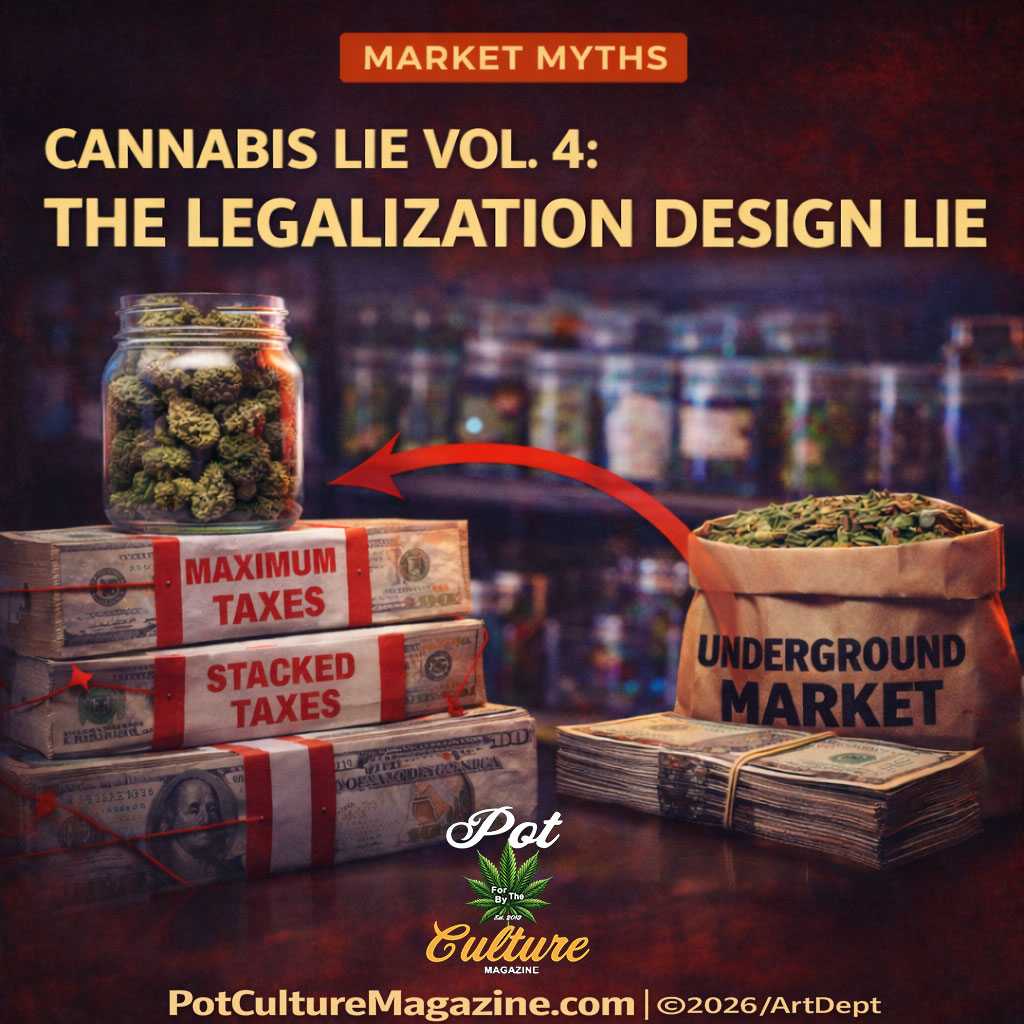
Cannabis Lie Vol. 4: The Legalization Design Lie
Cannabis legalization was sold as the end of the illicit market. Instead, stacked taxes, licensing limits, and local bans created price gaps that allowed underground sales to survive. From California’s cultivation tax to Illinois pricing and Michigan’s price compression, this installment of Cannabis Lie examines how policy design, not the plant, determines who wins and…

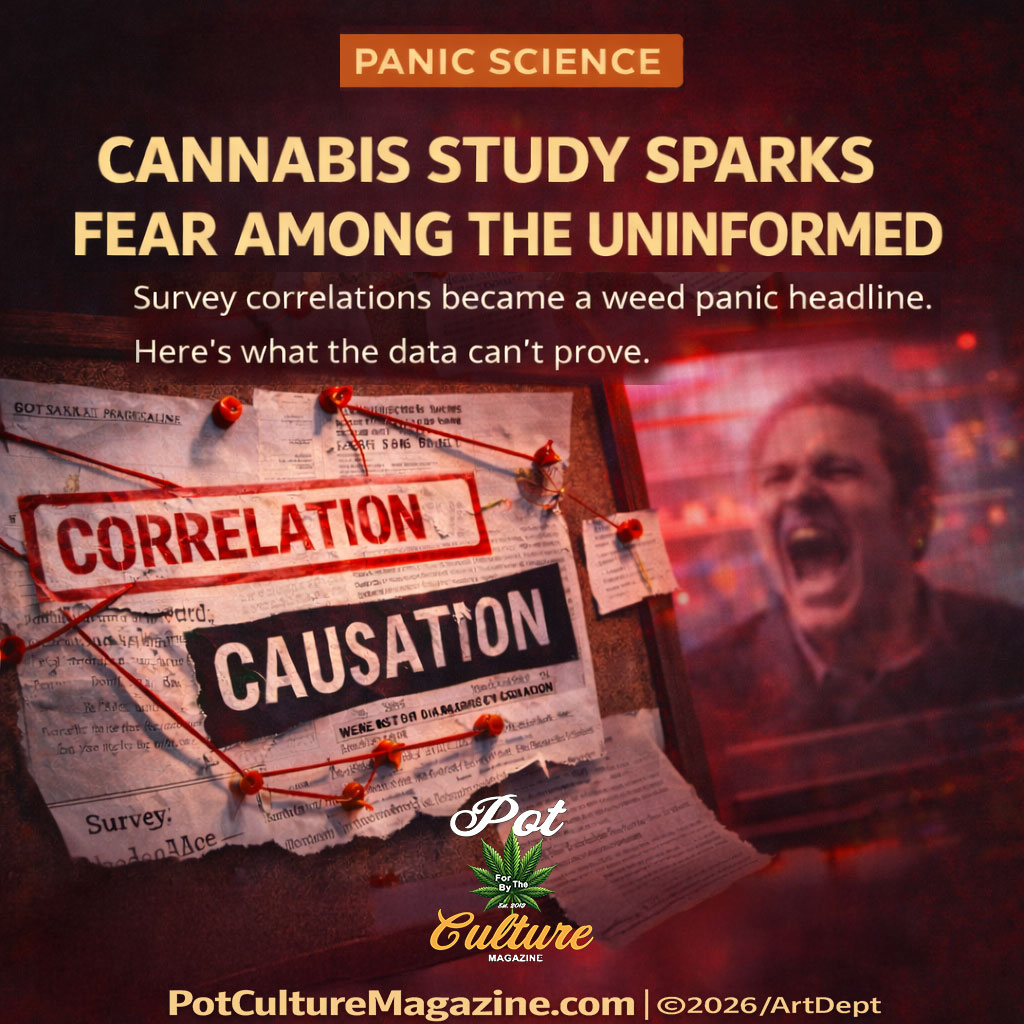
Cannabis Study Sparks Fear Among the Uninformed
A McMaster led analysis of two Canadian mental health surveys is getting recycled as a weed panic story, even though the design can only show association. This piece breaks down what the data can actually support, what it cannot prove, and how headlines turn survey correlations into causal claims that fuel stigma, bad policy, and…

Louisiana’s Cannabis Pilot Gamble
Louisiana HB 373 would create a tightly controlled adult-use cannabis pilot overseen by the Louisiana Department of Health. The bill limits participation to existing medical marijuana dispensaries, imposes permit renewal fees and a 3.5 percent wholesale assessment, and sunsets July 1, 2030, forcing lawmakers to decide whether to make legalization permanent.
advertisement
The official excuse is diversion prevention. Regulators require that cannabis waste be mixed half and half with ordinary trash until it is unrecognizable. Colorado wrote that into law and doubled its landfill mass overnight. Some states even demand video proof of every destruction event. Growers film themselves grinding their own product and upload the footage to prove obedience. The system treats cannabis like contraband that must be humiliated before disposal.
The numbers tell their own story. A single pound of dispensary-grade flower can sell for around two thousand dollars. California destroys hundreds of thousands of pounds every year. That is hundreds of millions of dollars evaporating while veterans and low-income patients go without. Multiply that across the country, and the total loss climbs into the billions. The moral cost is impossible to measure. A farmer grows medicine. A patient needs it. The state makes sure they never meet.
The environmental damage adds insult. Cannabis cultivation devours electricity and water. Studies from Colorado show that producing one kilogram of indoor flower can emit up to five tons of carbon dioxide. When that product ends up shredded instead of smoked, the emissions stay, while the benefit disappears. Add the layers of plastic and foil from packaging, and you have a green industry painting its own carbon bruise across the landscape.
If regulators truly cared about safety, they would allow retesting, donation, or repurposing. Their refusal has nothing to do with public health and everything to do with power. The destruction ritual reassures the nervous politicians and agencies that legalization remains under their control. Every wasted pound becomes proof of restraint. It is the same thinking that keeps THC limits low and public consumption illegal. The message is simple. You can have the weed, but you cannot have the freedom that should come with it.
There are glimmers of progress. California passed the Dennis Peron and Brownie Mary Act, allowing compassion programs to donate unsold product to patients. Some Canadian firms now recycle cannabinoids from unsold flower into oils and tinctures. A few states let growers compost waste instead of sending it to landfills. These are small steps toward sanity, but they remain exceptions, not rules. Until federal law allows interstate trade and unified standards, the waste will keep growing. The logs will fill with more numbers. The videos will keep rolling.
Behind every destroyed gram is a line of people who paid the price. A trimmer pulling a double shift. A cultivator covering power bills with credit. A patient is skipping medicine because the price never dropped. The legal market loves to talk about innovation, about infused drinks and celebrity partnerships, but the true innovation would be simple. Stop throwing away what the culture fought half a century to grow in peace.
Until that happens, legalization will remain half-baked, and the fields of America will keep blooming into smoke that no one gets to inhale.
©2025 Pot Culture Magazine. All rights reserved. This content is the exclusive property of Pot Culture Magazine and may not be reproduced, distributed, or transmitted in any form or by any means without prior written permission from the publisher, except for brief quotations in critical reviews.
F O R T H E C U L T U R E B Y T H E C U L T U R E

Cannabis Lies Vol. 3: The Nuisance Lie
Arizona lawmakers are advancing legislation that would criminalize “excessive” marijuana odor detectable across property lines. Cannabis Lie Vol. 3 examines SB 1725 and SCR 1048, the proposed misdemeanor penalties, the legal implications of State v. Sisco, and why critics argue this is a backdoor attempt to reintroduce cannabis criminalization under the banner of nuisance law.

Medical Marijuana and the Paycheck
Workplace Wars continues in New Jersey, where Senate Bill S3452 would protect registered medical cannabis patients from metabolite only drug test punishment. The proposal shifts the burden to employers, requiring proof by a preponderance of the evidence that lawful medical use caused on duty impairment, backed by specific articulable symptoms. It also keeps the written…
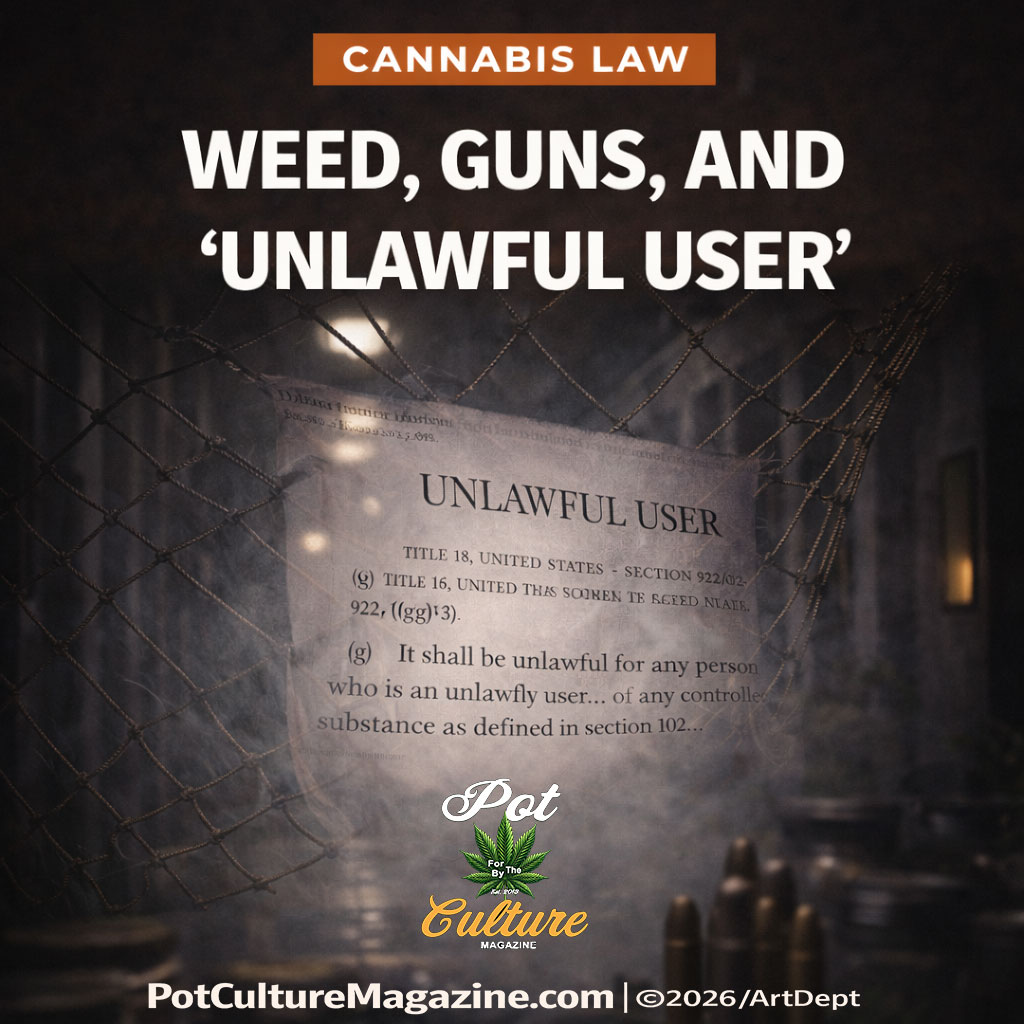
Weed, Guns, and “Unlawful User”
Federal law bans gun ownership for anyone labeled an “unlawful user” of cannabis, but it never clearly defines what that means. The result is a shifting standard that changes by circuit, by evidence, and by prosecutor. This feature breaks down the legal fog, the enforcement leverage, and why vagueness is the real power play.
Discover more from POT CULTURE MAGAZINE
Subscribe to get the latest posts sent to your email.

Leave a comment