Filed Under: Smoke and Mirrors
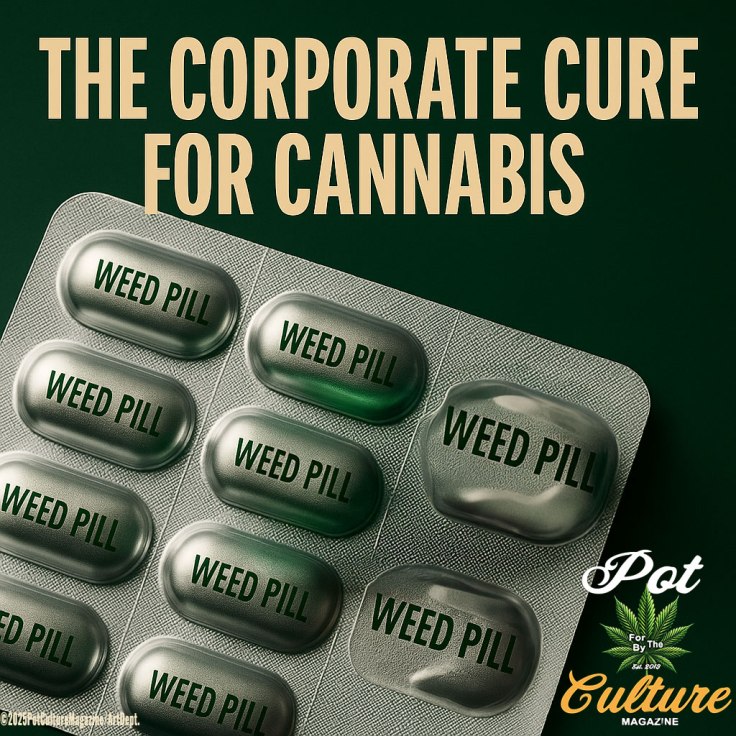
They are calling it a breakthrough. A cannabis-based pill that promises to dull back pain without lighting a joint, breaking a law, or offending a pharmaceutical lobby. The drug is called VER-01, and if you read the headlines, it sounds like the dawn of a new medical era. But look closer, and it starts to feel like another case of the system rebranding what the streets already knew. A sanitized, repackaged version of the same plant that has been healing people for thousands of years, now in the hands of the very institutions that once criminalized it.
VER-01 is the polished product of a Munich-based biotech called Vertanical. They are selling it as a pharmaceutical-grade cannabis extract, engineered to be pure, measurable, and uniform. Each capsule delivers roughly 2.5 milligrams of THC per dose, plus trace amounts of CBG and CBD in sesame oil, with individualized titration built into the dosing protocol. It is not the flower, not the oil, not the tincture. It is a pill that comes wrapped in science, born in a lab, and bred for compliance. Vertanical’s pitch is simple. They say this is what medical cannabis was supposed to be all along, stripped of cultural baggage and adjusted for the regulatory class. In other words, the kind of weed a doctor can prescribe without getting side-eyed at the golf club.
A randomized, double-blind, placebo-controlled phase 3 trial in Nature Medicine reported a −1.9 vs −1.4 point drop on a zero-to-ten pain scale after fifteen weeks. Eight hundred twenty patients suffering from chronic low back pain took part. About half received VER-01, the rest a placebo. The difference is real but slim. On paper, it looks like success, but to the human body, it feels more like a whisper than a roar. This is the paradox of pharmaceutical cannabis. Once you strip it down to the molecule and put it in a blister pack, the plant loses some of its soul. It becomes something you tolerate rather than something you trust.
Vertanical says this is just the beginning. They are running more studies, talking about broader applications, and preparing submissions to European regulators. They insist they are not Big Pharma. They want to be seen as pioneers, not profiteers. But the playbook feels familiar. A small biotech builds a product, proves it works just enough to satisfy the data gods, then waits for a buyout. A company like Novartis or Johnson and Johnson will come along, swallow it whole, and rename it something more palatable. The price triples, the marketing blitz begins, and a plant that once grew freely in the soil becomes a profit stream on a balance sheet.
Those who continued in the open-label extension reported a roughly 2.9 point drop at six months, showing a sustained response among continuers. That looks good on paper until you read the fine print. About seventeen percent of participants discontinued due to adverse events such as dizziness, nausea, dry mouth, and fatigue. The study’s authors played down the risk, saying it was manageable. That word does a lot of heavy lifting. What it really means is that the pharmaceutical industry expects people to accept side effects as part of the deal. You get pain relief, but only after you pay for it with discomfort. Cannabis users have known for decades that side effects are mostly self-managed. You take too much, you take a break. You do not need a prescription or a follow-up consult. You know your limits. The plant teaches you how to find them.
The corporate machine cannot market that. It cannot patent intuition. It can only patent formulas. So it takes what is free and packages it as innovation. It echoes the broader pharmaceutical playbook: isolate, patent, and price. The story of VER-01 fits neatly into that continuum. Cannabis has always threatened the system because it gives people agency. You can grow it, share it, heal with it. Now the same system that outlawed it is building fences around it, turning it into intellectual property.
advertisement
F O R T H E C U L T U R E B Y T H E C U L T U R E
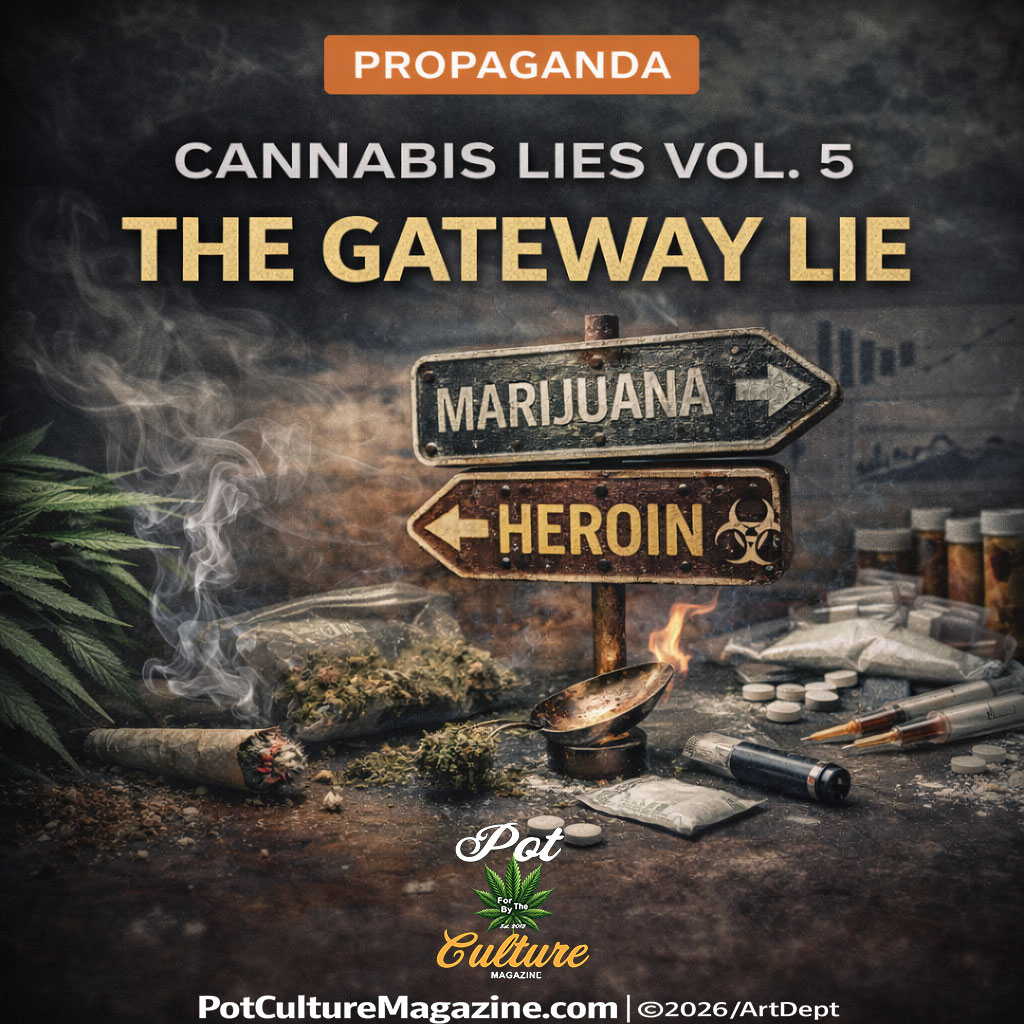
CANNABIS LIES Vol. 5: The Gateway Lie
For decades, politicians have claimed marijuana is a gateway to heroin and harder drugs. Federal youth surveys, NSDUH data, and NIDA’s own language tell a different story. Cannabis use is widespread, hard drug use remains rare, and most users do not progress. The data dismantles one of prohibition’s most durable fear narratives.

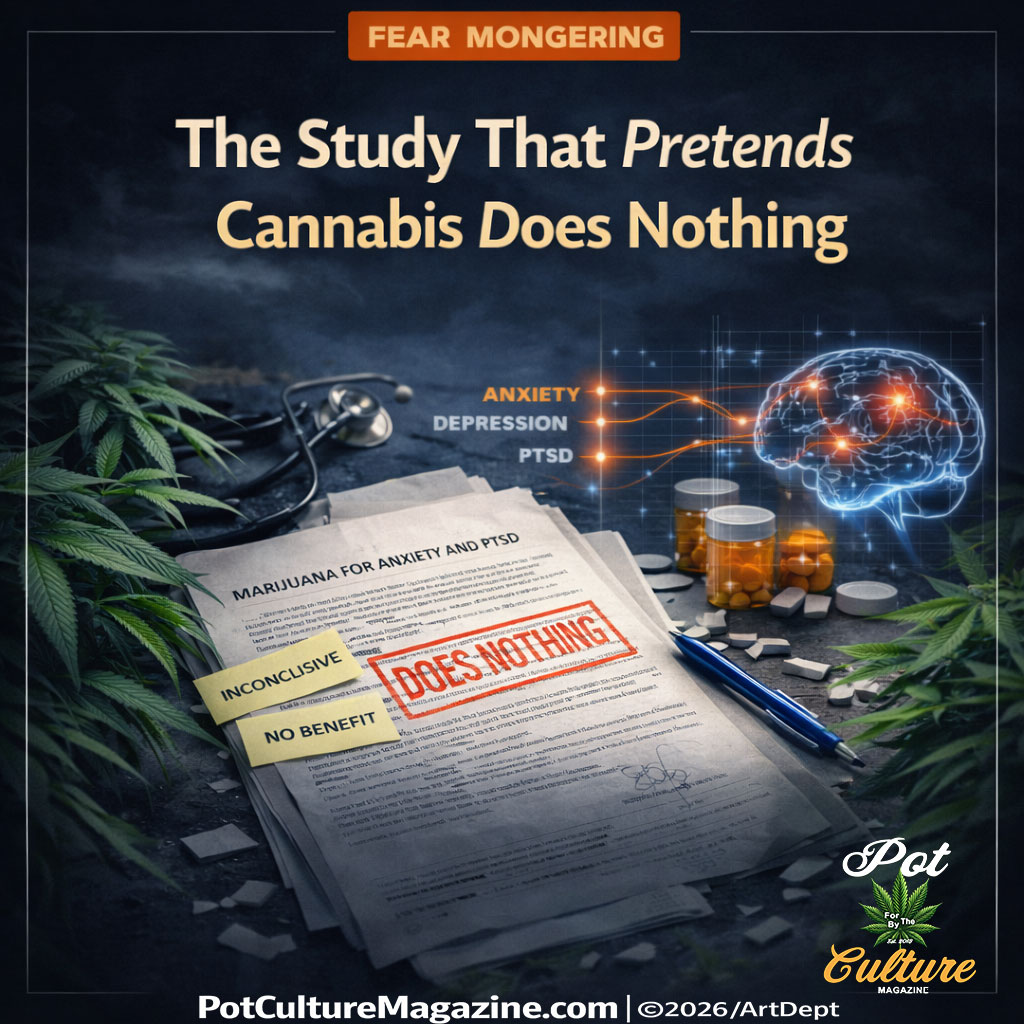
The Study That Pretends Cannabis Does Nothing
A new cannabis study claims marijuana does nothing for anxiety, depression, or PTSD. The reality is far more complicated. Decades of federal restrictions, limited research access, and synthetic substitutes have shaped the science. This breakdown exposes how incomplete data and selective interpretation continue to drive misleading headlines about cannabis and mental health.
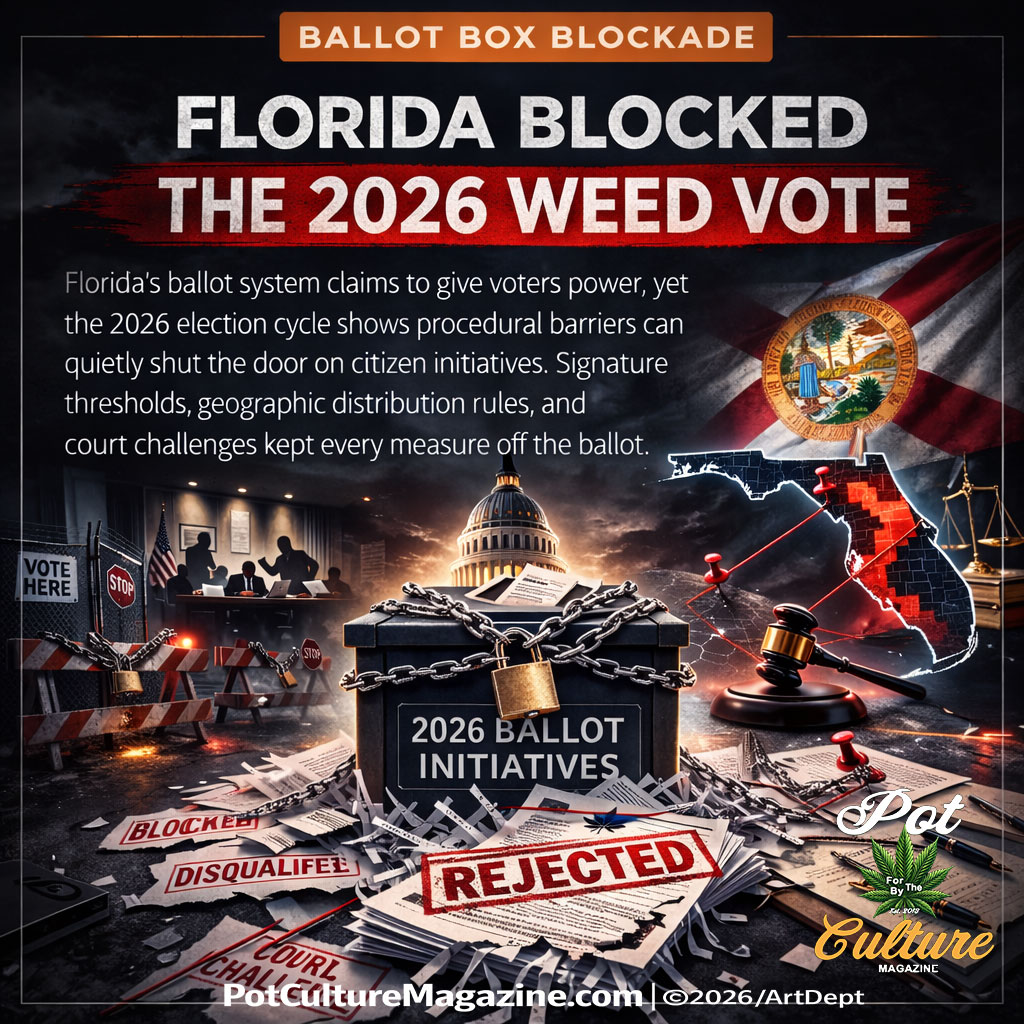
Florida Blocked the 2026 Weed Vote
Florida’s ballot system claims to give voters power, yet the 2026 election cycle shows how procedural barriers can quietly shut the door on citizen initiatives. Signature thresholds, geographic distribution rules, and court challenges blocked every measure from reaching voters, revealing how cannabis legalization fights are often decided by bureaucratic design long before election day.
advertisement
The study’s defenders say this is progress. They call it validation. They claim this is the kind of data cannabis needs to be taken seriously by regulators. That argument would hold water if the regulators had ever treated cannabis honestly. The same governments that demanded gold-standard data are the ones that blocked cannabis research for fifty years. Every study proposal was buried under red tape and stigma. Now that the market is ripe and the stigma has softened, the lab coats are stepping in to take credit for what the culture already proved. It is not progress. It feels like an appropriation lab validating what culture already proved.
The pharmaceutical model does not care about justice. It cares about control. The moment cannabis stepped out of the shadows, corporations saw a gold rush. They call it medicine when they make it and crime when you do. That is the double standard that has defined this plant’s existence since Harry Anslinger first spread his racist tirades. Science is the new propaganda, only with better fonts and cleaner data sets. You can wrap it in peer review, but the motive stays the same. Control the plant, control the people.
Still, the scientific legitimacy of the trial cannot be dismissed. It was a serious effort. The design was randomized, double-blind, and placebo-controlled. That is how modern medicine establishes credibility. For patients who have exhausted other options, VER-01 could be a genuine lifeline. Chronic back pain destroys quality of life. It breaks people down slowly, grinding away at sleep, work, and sanity. If a cannabis pill can give even partial relief, that matters. But the problem is not the molecule. It is the monopoly.
Vertanical knows this. They position themselves as the antidote to the chaos of the cannabis market. They talk about precision, standardization, and repeatability. They say patients deserve consistent outcomes, not guesswork. They are right about that. The illicit market has been inconsistent. But they ignore the larger truth. The inconsistency was born from prohibition, not from the plant. The system made chaos inevitable by forcing the culture underground. Now it offers order as salvation, and the price of that order is ownership.
The question is not whether VER-01 works. It probably does. The question is who gets to define what working means. The people who built cannabis culture never needed a lab to prove its worth. They learned through experience. They healed themselves. They took the risk. The medical establishment dismissed them as stoners and criminals. Now those same institutions are rushing to trademark their discoveries. That is not science. It feels like appropriation—science validating what culture proved first.
It is also about optics. Governments love to point to pharmaceutical cannabis as evidence that legalization is under control. It makes them look rational, modern, and data-driven. They can regulate a pill. They cannot regulate a joint. The pill fits the bureaucratic imagination. It comes with paperwork and tax codes. The joint carries too much history, too much rebellion, too much truth. The pill is safe for politicians. The joint still smells like protest.
There is a quiet irony buried in all of this. VER-01 is being celebrated as a medical innovation even though its active ingredient is the same THC molecule demonized for generations. The difference is in packaging. When THC comes from a government-licensed lab, it is medicine. When it comes from your garden, it is contraband. The hypocrisy is staggering, but it is not new. Every counterculture movement eventually gets absorbed by the mainstream that once feared it. Cannabis is no exception. The rebellion gets monetized, the truth gets diluted, and the culture gets erased one clinical trial at a time.
Look at how GW Pharmaceuticals played it. They turned cannabidiol into Epidiolex and sold it to Jazz Pharmaceuticals for seven billion dollars. Now you need a prescription for what was once a plant extract. The same could happen here. Vertanical could become the next buyout trophy in a growing parade of corporate takeovers. When that happens, VER-01 will stop being a story about pain relief and start being a story about market share.
In a way, VER-01 is the perfect metaphor for the times. It sits at the intersection of two competing realities. On one side, there is the outlaw spirit of cannabis, born in basements, backyards, and underground networks. On the other hand, there is the sanitized, corporate version, born in sterile labs with legal teams hovering over every molecule. Both claim legitimacy. Both feed the same need. But only one remembers where it came from.
You can feel the tension in how the media covers it. The headlines are cautious, almost reverent. They speak of breakthroughs and promising data. What they do not say is that the difference between VER-01 and the weed in your jar is mostly paperwork. They call it a clinical-grade extract to make it sound exotic, but the plant behind it is the same one people have been growing in defiance of bad laws for generations. This is not discovery. It is repackaging. It is gentrification in chemical form.
If the system really cared about science, it would have funded research decades ago. It would have given grants to the very growers and chemists who already understood the plant. Instead, it jailed them. Now those same authorities applaud Vertanical for doing what the community already did. It is the oldest story in America. Criminalize the poor, subsidize the rich, then sell the revolution back to the people who started it.
That is what makes VER-01 both fascinating and infuriating. It shows that cannabis has finally infiltrated the pharmaceutical fortress, but it also shows how easily that victory can be stolen. If this drug succeeds, it will be held up as proof that the system was right all along. They will say cannabis just needed to be purified and standardized. They will ignore the decades of grassroots healing, the underground compassion clubs, the cancer patients who risked arrest to treat themselves. They will rewrite history with a citation.
There is a darker future hiding under the optimism. If regulators move toward pharma-only models, there is a risk that smaller producers could be squeezed out, as already seen in parts of the EU herbal market. Licensing fees, purity requirements, and clinical validation protocols. They sound reasonable until you realize they are designed to choke small producers out. The corporate takeover does not always come with a police raid. Sometimes it comes with paperwork.
That is the real risk of VER-01. Not that it fails, but that it succeeds too well. Success will invite ownership. Ownership will invite exclusion. And exclusion will erase the people who kept this plant alive when the system wanted it dead. Cannabis was never supposed to belong in laboratories. It belonged to the people who needed it most. Those who grew it in closets, who shared it in secret, who paid for it with criminal records. That history cannot be sterilized, no matter how many double-blind trials they publish.
Maybe Vertanical believes they are doing good. Maybe they are. But intent does not erase impact. Every time a corporation wraps cannabis in corporate language, the culture loses a little more of its soul. The fight for legalization was never about handing the plant to the pharmaceutical industry. It was about freedom. Freedom to heal, to grow, to exist without persecution. VER-01 might ease pain, but it also reminds us what pain looks like when a movement gets commodified.
There is an entire generation that never knew what it felt like to hide a joint in the glove box or whisper about weed at a party. They live in the age of dispensaries and delivery apps. They see weed as a lifestyle, not a liability. For them, a pharmaceutical cannabis pill might sound like progress. But the old heads know better. Progress without freedom is just rebranding.
When you strip away the press releases, VER-01 is not a revolution. It is a reminder that power never gives anything away for free. It waits, it watches, and when the time is right, it buys. Cannabis was built by rebels, not researchers. It survived because people refused to let it die. The science may catch up, but the spirit cannot be patented.
VER-01 might help people, and that should be acknowledged. But let us not mistake validation for liberation. A pill in a box is not justice. It is the system taking a victory lap on a road paved by outlaws. Until the people who paid the price for this plant are free, until the prisons are empty, until the stigma is gone, every so-called breakthrough is just another headline built on borrowed struggle.
Cannabis does not need Big Pharma. Big Pharma needs cannabis. That is the truth behind every clinical trial and corporate press release. They see the writing on the wall. The world is moving on without them. The people are waking up. The medicine has always been here. It never needed a logo.
© 2025 Pot Culture Magazine. All rights reserved. This content is the exclusive property of Pot Culture Magazine and may not be reproduced, distributed, or transmitted in any form or by any means without prior written permission from the publisher, except for brief quotations in critical reviews.
F O R T H E C U L T U R E B Y T H E C U L T U R E
The Cannabis Lie: Vol. 4 — The Crime Wave Lie
Politicians and pundits warned that legal cannabis would unleash a crime wave. The data tell a different story. From Colorado’s violent crime trends to DOJ time-series research and statewide arrest declines, the evidence shows no consistent long-term surge tied to legalization. The numbers never matched the panic.

South Africa Legalized Weed, But Not the Market
South Africa recognized private adult cannabis use and home cultivation, but never built a legal domestic market around them. With buying and selling still largely outside the law, the illicit trade remains dominant while regulators scramble to set limits, draft rules, and prepare a broader Cannabis Bill that could finally address commerce.
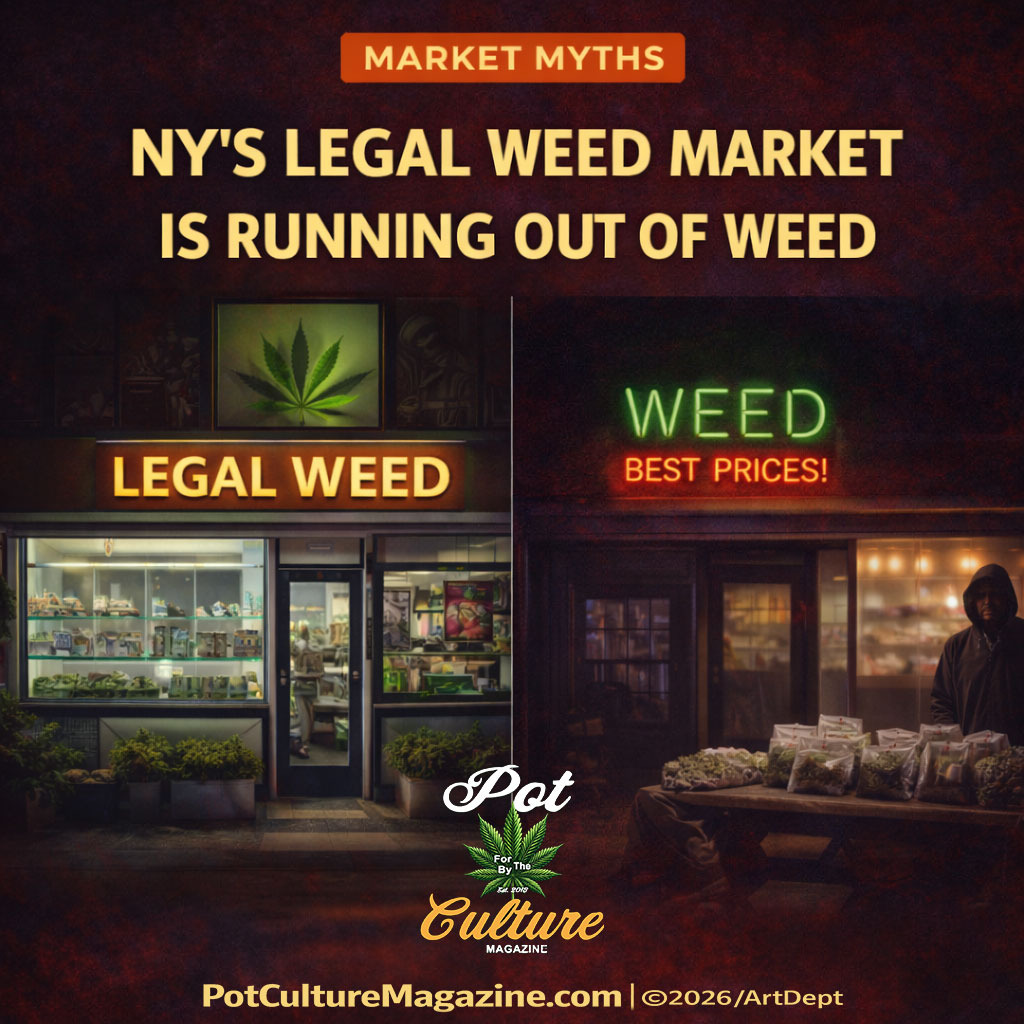
NY’s Legal Weed Market Is Running Out of Weed
New York legalized cannabis and opened hundreds of stores, but regulators now warn the legal market may not produce enough weed to keep them stocked. With nearly 600 stores open and sales nearing $3 billion, the state is discovering that legalization alone does not guarantee a functioning market.
Discover more from POT CULTURE MAGAZINE
Subscribe to get the latest posts sent to your email.

Leave a comment