
Every few weeks, another headline drops like a dead rat in the middle of the street. Cannabis causes psychosis. Cannabis wrecks fertility. Cannabis doubles your risk of heart disease. Cannabis makes you lazy, insane, infertile, violent, diabetic, unmotivated, and unemployable. According to these headlines, weed is both the most dangerous substance on the planet and, somehow, the least studied. The absurdity is almost impressive.
The latest hit job comes dressed up in the language of science. A group of researchers in Boston announced that cannabis users were nearly four times more likely to develop diabetes over five years. Four times! They made it sound like lighting up a joint is the same as eating donuts for breakfast and shooting insulin into your thigh before lunch. The headlines did not mention that the study was retrospective, meaning it looked backward, not forward. They did not mention that the researchers had no details on actual consumption, dosage, or even whether participants still used cannabis after their first “diagnosis.” They did not mention that many of the so-called “cannabis users” were tagged because they once showed up at a hospital with the smell of weed on them or a code in their chart written by a doctor who did not like the look of them. But the headline? “Cannabis Use Linked to Diabetes.” That is all most people will ever see.
This is the scam. Science is supposed to be rigorous, slow, and skeptical. But cannabis research has been hijacked for decades by people looking to prove one thing only: that weed is dangerous. If the results do not show harm, they rarely make it past peer review. If they do, they get buried in journals no one reads. Meanwhile, every flimsy correlation that can be spun into a health scare gets a press release and a headline in the Daily Mail.
Look at the greatest hits. In the 1970s, government-funded scientists claimed cannabis caused chromosomal damage. That was debunked, but not before it gave cover to prohibitionists who screamed that pot would deform your children. In the 1980s, researchers pushed the “amotivational syndrome” lie, claiming cannabis made kids drop out of school. Those studies ignored poverty, policing, and inequality, and they have been shredded ever since. In the 1990s, the gateway drug theory dominated, suggesting that smoking a joint would inevitably lead to crack, heroin, and death in an alley. The Institute of Medicine said flat out in 1999 that the gateway theory was unsupported. Did not matter. Politicians had their talking points.
Advertisement
F O R T H E C U L T U R E B Y T H E C U L T U R E
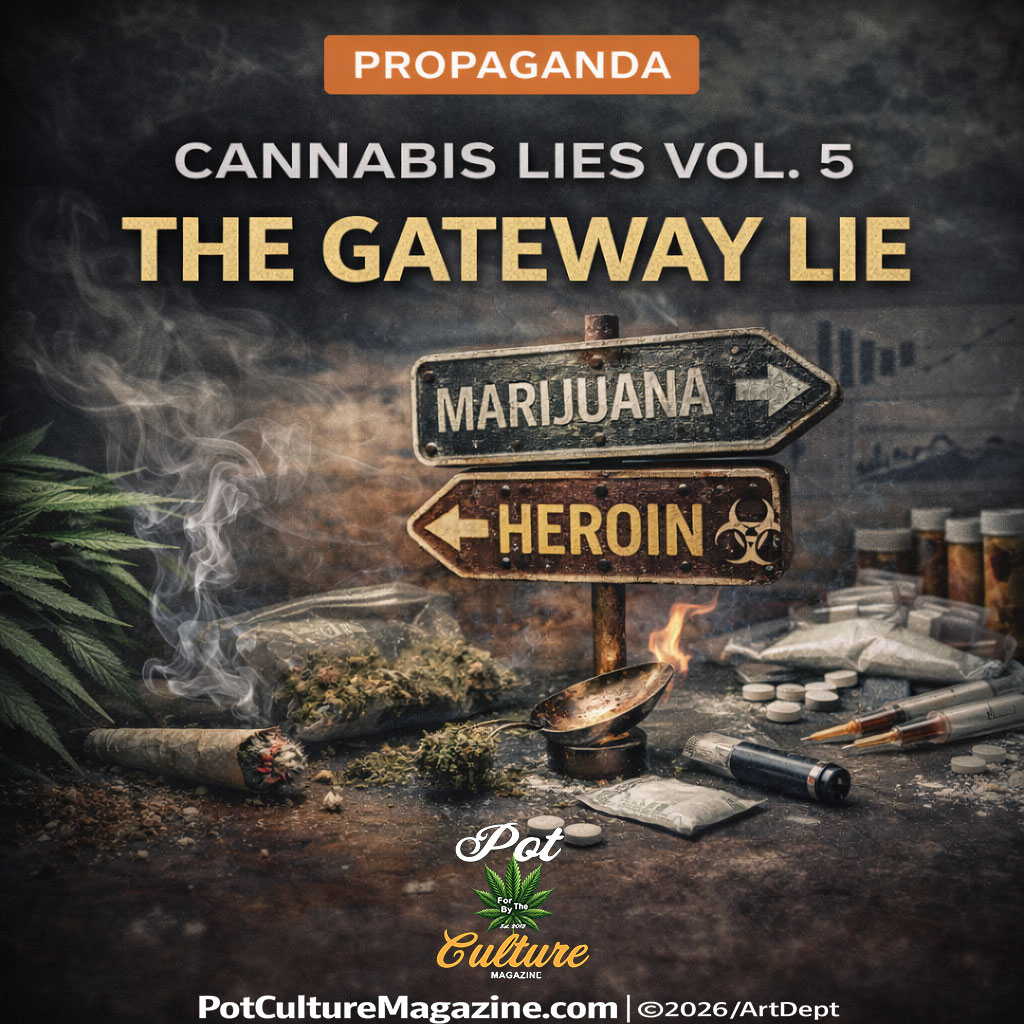
CANNABIS LIES Vol. 5: The Gateway Lie
For decades, politicians have claimed marijuana is a gateway to heroin and harder drugs. Federal youth surveys, NSDUH data, and NIDA’s own language tell a different story. Cannabis use is widespread, hard drug use remains rare, and most users do not progress. The data dismantles one of prohibition’s most durable fear narratives.

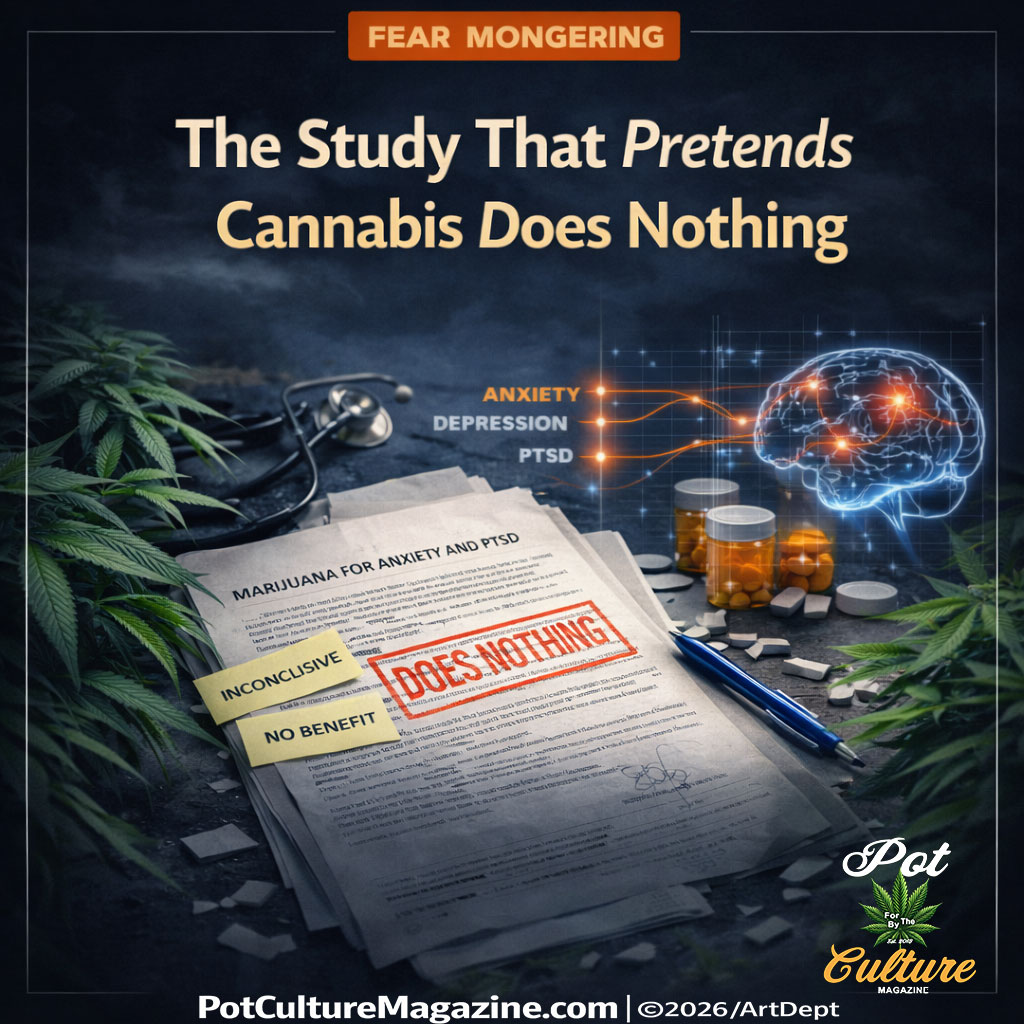
The Study That Pretends Cannabis Does Nothing
A new cannabis study claims marijuana does nothing for anxiety, depression, or PTSD. The reality is far more complicated. Decades of federal restrictions, limited research access, and synthetic substitutes have shaped the science. This breakdown exposes how incomplete data and selective interpretation continue to drive misleading headlines about cannabis and mental health.
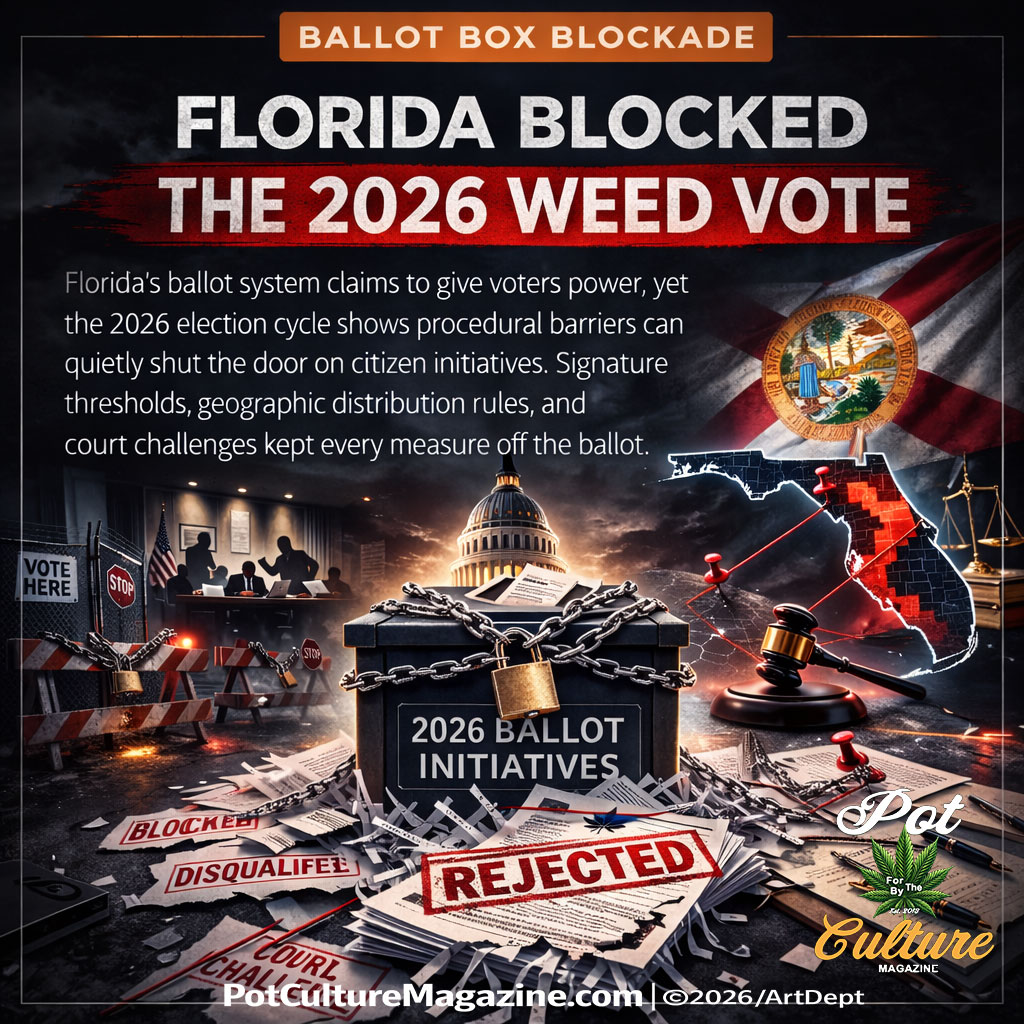
Florida Blocked the 2026 Weed Vote
Florida’s ballot system claims to give voters power, yet the 2026 election cycle shows how procedural barriers can quietly shut the door on citizen initiatives. Signature thresholds, geographic distribution rules, and court challenges blocked every measure from reaching voters, revealing how cannabis legalization fights are often decided by bureaucratic design long before election day.
Advertisement
Now the scam has gone medical. Instead of Reefer Madness posters with skulls and crossbones, we get clickbait headlines about psychosis, infertility, schizophrenia, heart disease, and now diabetes. The words are dressed up with charts, confidence intervals, and statistical models. But the conclusion is the same as the scare films from the 1930s: cannabis is a threat to your body and your mind.
What these studies rarely acknowledge is the basic scientific principle that correlation is not causation. Cannabis users, especially those marked in medical databases, are more likely to also use tobacco, alcohol, and pharmaceuticals. They are more likely to come into contact with the criminal justice system. They are more likely to have medical records that mention drug use in the first place. In other words, the group being studied is already different from the “healthy control group” in ways that matter more than a joint ever will.
But nuance does not make headlines. “Cannabis Users Have Slightly Higher Incidence of Diabetes in Retrospective Data Set With Confounders” does not sell. “Weed Gives You Diabetes” does. And every time one of these studies drops, prohibitionists, politicians, and pundits line up to point and sneer. See? They were right all along.
Here is what they do not mention. Alcohol kills about 140,000 Americans every year. Tobacco kills about 480,000. Opioids killed over 80,000 people last year alone. Cannabis kills no one. Not a single overdose. Not a single death was directly caused by the plant. You will not read that in the diabetes study.
They also will not mention that other studies show cannabis users often have lower body mass indexes, lower fasting insulin levels, and lower rates of obesity. Those studies exist. They are not blasted out by press offices because they do not serve the narrative.
Why does this keep happening? Because cannabis research in the United States has been chained to prohibition from the start. For decades, the only legal source of cannabis research was the University of Mississippi, where the government grew low-grade weed that looked like lawn clippings. Researchers who wanted to study potential harms could get access. Researchers who sought to study potential benefits were blocked, delayed, or denied access. That bottleneck shaped the entire body of literature. Harm studies outnumber benefit studies by orders of magnitude.
Even today, with legalization spreading and public opinion swinging hard, the National Institute on Drug Abuse spends most of its budget studying problems, not potential. The funding stream shapes the outcome. Researchers know what gets grants, what gets published, and what gets cited. Nobody makes tenure writing that cannabis is safer than Tylenol. You make tenure writing that cannabis might increase risk factors for psychosis in a small subset of heavy users who also smoke tobacco and live under stress.
This cycle feeds the headlines, which feed the politics, which feed the laws. Policymakers can point to “the science” when they want to stall reform. Police unions can point to “the science” when they want to keep arresting people. Prosecutors can point to “the science” when they want to stack charges. All of it rests on a rotten foundation.
The real-world data tells a different story. Colorado legalized it in 2012. Crime did not spike. Teen use did not explode. Traffic fatalities did not surge. What did happen? The state collected billions in tax revenue, arrests plummeted, and thousands of people built legal businesses. California, Washington, Oregon, Nevada, Michigan, Illinois, Massachusetts, New Jersey, New York, and more tell the same story. No collapse. No epidemic. No apocalypse.
Internationally, the evidence is just as strong. Canada legalized it in 2018. The market stabilized. Youth use stayed flat. Portugal decriminalized all drugs in 2001, and overdose deaths dropped. Malta legalized home grows. Germany just opened adult-use. Thailand opened shops on nearly every block before its government tried to roll them back. None of these countries collapsed. None of them saw the dire consequences predicted by junk science.
Meanwhile, the United States continues to treat cannabis like a threat while letting alcohol sponsor the Super Bowl. This is not about health. It is about politics, power, and profit. Alcohol companies fund anti-cannabis campaigns while launching their own THC beverage lines. Pharmaceutical giants bankroll studies highlighting harms while racing to patent synthetic cannabinoids. Law enforcement lobbies scream about danger while cashing in on asset forfeiture and overtime from cannabis busts. Everyone has a stake in keeping the scare alive.
The diabetes study is just the latest brick in that wall. Next month it will be something else. A weak association between cannabis and dental problems. A statistical blip about cannabis and sleep disorders. A headline about cannabis and sperm counts. The scam will keep going because the scam works.
What needs to change is not just the research but the way we treat it. Journalists need to stop copy-pasting press releases and start interrogating the methods. Politicians need to stop hiding behind the phrase “the science” and start reading the damn studies. And the cannabis community needs to stop letting this bullshit slide. Every time a junk headline drops, it needs to be shredded, debunked, and exposed for what it is.
Cannabis is not harmless. Nothing is. Driving high is dangerous. Smoking anything carries risk. But the risks are not remotely on the scale these scare studies suggest. The real dangers come from prohibition itself. Arrests, fines, criminal records, child custody battles, job losses, deportations. Those destroy lives. Not the plant.
The truth is simple. Millions of people use cannabis daily. They go to work, raise families, drive cars, pay taxes, and live their lives. If cannabis truly carried the catastrophic risks these studies claim, we would not need p-values and retrospective charts to see it. It would be obvious in every community. Instead, what is obvious is that cannabis is safer than alcohol, safer than tobacco, and safer than most prescription drugs. That is why people keep using it despite the headlines, the stigma, and the laws.
The scam will not end on its own. The institutions that profit from it have no incentive to change. But culture moves faster than policy. Every time another state legalizes, every time another country opens its doors, the gap between reality and rhetoric widens. At some point, the lies collapse under their own weight.
Until then, expect another headline next month. Cannabis causes strokes. Cannabis causes dementia. Cannabis makes your dog hate you. It will be nonsense dressed up as science, and it will be repeated by people who should know better. The only antidote is to keep calling it out, to keep putting the facts on the table, and to keep reminding anyone who will listen that prohibition was built on lies and those lies are still doing damage.
Cannabis does not give you diabetes. It does not rot your chromosomes. It does not turn teenagers into criminals. The studies say more about the system that funds them than the plant they pretend to study. The real disease is prohibition. The cure is truth.
©2025 Pot Culture Magazine. All rights reserved. This content is the exclusive property of Pot Culture Magazine and may not be reproduced, distributed, or transmitted in any form or by any means without prior written permission from the publisher, except for brief quotations in critical reviews.
F O R T H E C U L T U R E B Y T H E C U L T U R E
The Cannabis Lie: Vol. 4 — The Crime Wave Lie
Politicians and pundits warned that legal cannabis would unleash a crime wave. The data tell a different story. From Colorado’s violent crime trends to DOJ time-series research and statewide arrest declines, the evidence shows no consistent long-term surge tied to legalization. The numbers never matched the panic.

South Africa Legalized Weed, But Not the Market
South Africa recognized private adult cannabis use and home cultivation, but never built a legal domestic market around them. With buying and selling still largely outside the law, the illicit trade remains dominant while regulators scramble to set limits, draft rules, and prepare a broader Cannabis Bill that could finally address commerce.
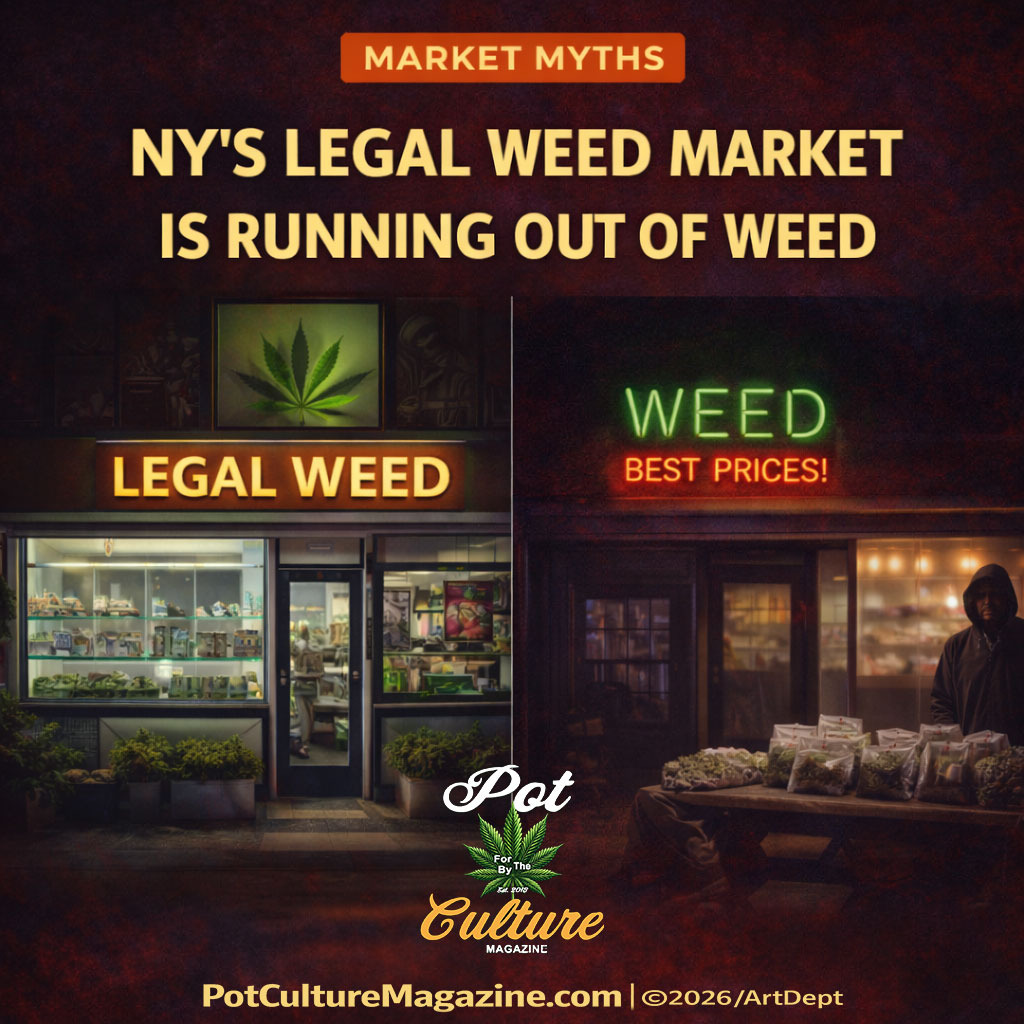
NY’s Legal Weed Market Is Running Out of Weed
New York legalized cannabis and opened hundreds of stores, but regulators now warn the legal market may not produce enough weed to keep them stocked. With nearly 600 stores open and sales nearing $3 billion, the state is discovering that legalization alone does not guarantee a functioning market.
Discover more from POT CULTURE MAGAZINE
Subscribe to get the latest posts sent to your email.

Leave a comment