Filed Under: From Seedlings to Thrones
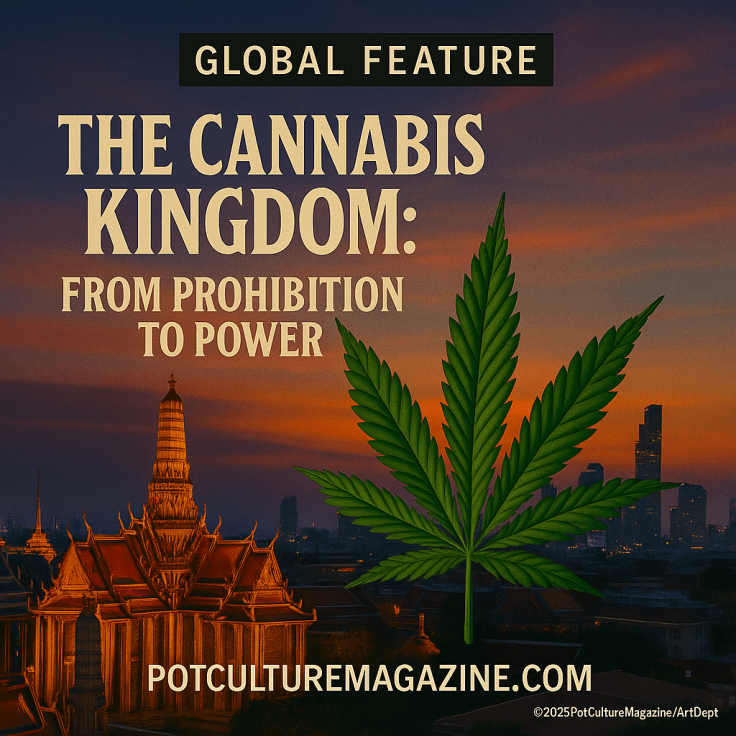
Thailand was once the place where you could get thrown in a cage for a joint. Now it is the only country in Asia where a man known as the Cannabis King just became Prime Minister. The road between those two extremes is a story of contradictions, crackdowns, and a million free seedlings dumped on the people like a green lottery. It is the outlaw tale of how cannabis went from contraband to campaign platform to political throne.
For decades, Thailand was one of the harshest anti-drug regimes on the planet. The 1979 Narcotics Act grouped cannabis with heroin, meth, and cocaine. A single joint could mean prison time. Tourists were warned that possession was treated like a crime against the state. Farmers who had cultivated the plant for centuries were driven into the shadows. Cannabis was both everywhere in the culture and nowhere in the law. The government wore its prohibition like a badge of moral purity.
The first crack in the wall came in December 2018. The military-backed parliament shocked the region by passing a bill to legalize medical cannabis. It was framed as a “New Year’s gift” to the Thai people, though the gift came wrapped in heavy regulation and state control. Thailand became the first country in Southeast Asia to legalize medical use. Research programs were approved. Licensed medical growers emerged under strict government oversight. For the first time in forty years, cannabis was not automatically a crime. It was a narrow opening, but it changed the conversation. Cannabis was no longer untouchable.
The years that followed saw a slow trickle of medical development. Universities grew test crops. Hospitals explored cannabis oils for pain and seizures. Farmers began lobbying for broader cultivation rights. But prohibition still ruled daily life. For ordinary people, cannabis remained out of reach. The streets did not smell like freedom; they still smelled like fear.
That changed in June 2022. The Health Ministry, led by Anutin Charnvirakul, made the explosive move of removing cannabis from the narcotics list entirely. Overnight, cannabis was decriminalized. Possession was no longer a crime. Households could register to grow plants at home. Farmers were told they could participate in a booming new agricultural market. The government announced that one million cannabis seedlings would be handed out for free. The move was not subtle. It was a political thunderclap designed to show Anutin’s party as champions of the people.
The response was immediate. Dispensaries popped up in Bangkok, Chiang Mai, and beach towns across the south. Tourists came flooding in, eager to light up in a region where cannabis was supposed to be impossible. Thailand became the first country in Asia with a legal cannabis market, even if the law was still a legal gray zone. Extracts with more than 0.2 percent THC were technically restricted, but enforcement was uneven. Vapes, gummies, pre-rolls, and jars of flower lined storefronts. A cannabis boom was on, fueled by confusion and freedom in equal measure.
Not everyone was happy. Conservative politicians and religious leaders warned that decriminalization had gone too far. Police complained they had no clear authority to act against shops that ignored restrictions. Parents worried about candy-shaped edibles ending up in children’s hands. International media ran stories about backpackers in Khao San Road celebrating Thailand’s “Amsterdam of the East.” The ruling coalition cracked under the weight of its own policy. What was meant as controlled medical expansion had become full-blown recreational chaos.
advertisement
F O R T H E C U L T U R E B Y T H E C U L T U R E
CANNABIS LIES Vol. 5: The Gateway Lie
For decades, politicians have claimed marijuana is a gateway to heroin and harder drugs. Federal youth surveys, NSDUH data, and NIDA’s own language tell a different story. Cannabis use is…

The Study That Pretends Cannabis Does Nothing
A new cannabis study claims marijuana does nothing for anxiety, depression, or PTSD. The reality is far more complicated. Decades of federal restrictions, limited research access, and synthetic substitutes have…
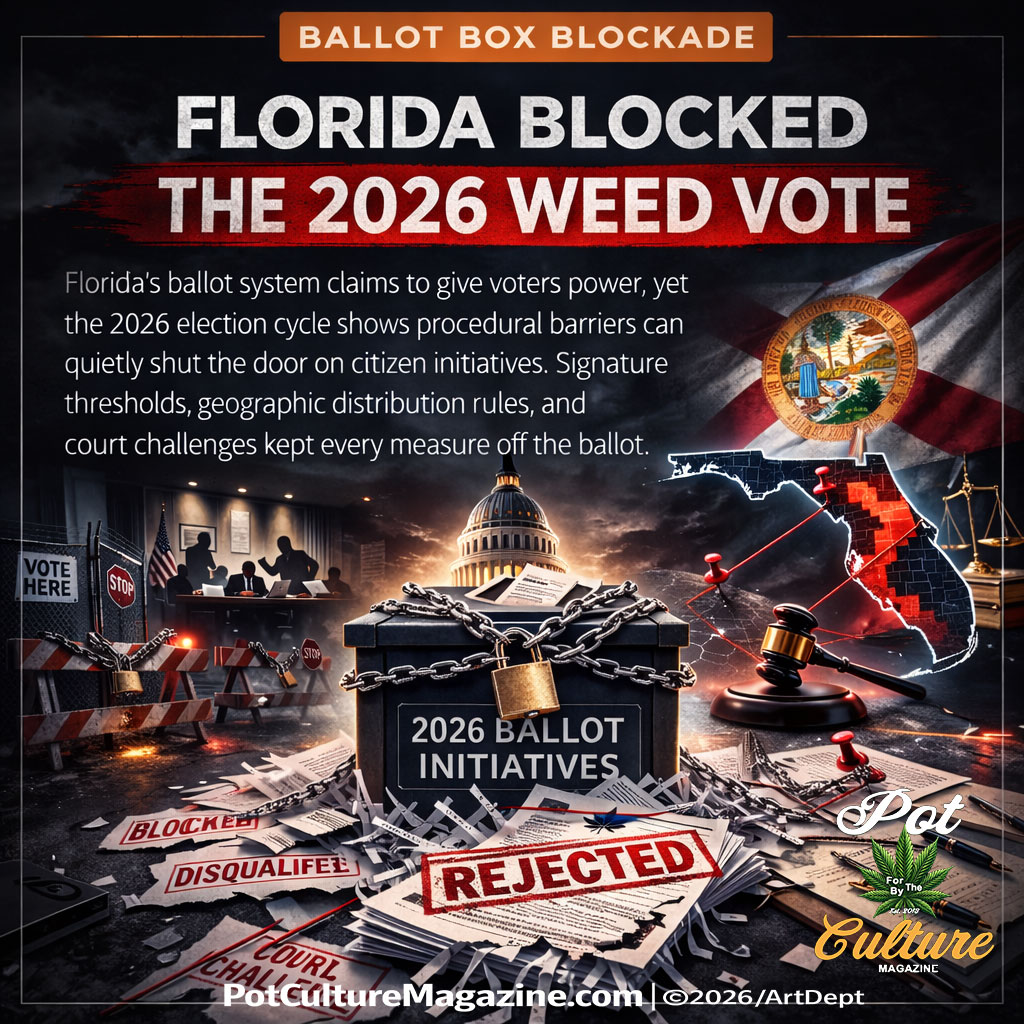
Florida Blocked the 2026 Weed Vote
Florida’s ballot system claims to give voters power, yet the 2026 election cycle shows how procedural barriers can quietly shut the door on citizen initiatives. Signature thresholds, geographic distribution rules,…
advertisement
By 2023 and into 2024, the backlash sharpened. Prime Minister Srettha Thavisin promised to reverse course. He announced that cannabis would be relisted as a Category 5 narcotic. The message was clear: the party was over. Draft legislation circulated to re-criminalize recreational use and limit cannabis to medical purposes only. Dispensary owners feared the end. Farmers who had invested heavily in cannabis crops faced ruin. Activists who had cheered decriminalization braced for another wave of arrests.
The government set a January 1, 2025, target for the reversal, but politics are rarely so clean. Legal drafts stalled. Protests grew louder. Foreign investors pulled back. The confusion spread wider. The cannabis market that had exploded in less than two years was suddenly living under a death sentence without a clear execution date.
Then came June 2025. The Health Ministry issued a new order that did not fully re-criminalize cannabis but cut the legs out from under the free market. Cannabis buds were declared a controlled herb. Sales now required a prescription. Dispensaries that had been serving tourists and locals alike were told to stop or face fines and jail. Penalties included up to one year behind bars or a 20,000 baht fine. The prescription rules were narrow, targeting conditions like insomnia, chronic pain, migraines, Parkinson’s disease, and loss of appetite. Overnight, the recreational free-for-all was replaced by medical gatekeeping. The dispensary boom collapsed into panic. Enforcement squads began visiting shops. The cannabis economy was not dead, but it was placed in chains.
International headlines screamed that Thailand had reversed its cannabis revolution. Outlets reported the end of legalization, even though the truth was more complicated. Cannabis was still not a narcotic under the law. People could still grow plants at home. But the market had been gutted. Recreational sales were out, medical prescriptions were in, and the gray zone was gone. What had been a showcase of Southeast Asian reform was now a muddled compromise that pleased nobody.
Enter Anutin Charnvirakul, the man who started the storm. As Health Minister, he had championed cannabis as both medicine and a political platform. His party, Bhumjaithai, had used cannabis as its signature issue in the 2019 elections. The one million seedling giveaway was his brand. He wore the title Cannabis King like a badge. Critics called him reckless, but his base saw him as the only politician willing to break prohibition’s stranglehold. When he left the ruling coalition in 2025 after the courts ousted the sitting Prime Minister, he positioned himself as the solution to the chaos. Within weeks, he aligned with reformists, secured parliamentary support, and on September 5, 2025, he was elected Prime Minister with 311 votes and royal approval.
Anutin’s rise was not just about cannabis, but cannabis was at the heart of his political identity. Supporters cheered that the man who had given them seedlings was now running the country. Industry leaders predicted a revival. Headlines called him the Cannabis King on the throne. For the first time since the 2022 decriminalization, the industry saw hope instead of decline.
What Anutin will do next is the question that defines Thailand’s cannabis future. Early signals suggest he will not allow cannabis to be relisted as a narcotic. Instead, his government is expected to revive the stalled Cannabis-Hemp Act, a comprehensive law to regulate the industry instead of destroying it. That act would likely codify bans on advertising, age limits, licensing, and restrictions on public use. It would tighten packaging rules to prevent products from being marketed to children. It would replace the gray zone with a system of control, but it would preserve decriminalization. Cannabis would not return to the narcotics list. The seedling revolution would not be erased.
The contrast is sharp. Under Srettha, the message was rollback and fear. Under Anutin, the message is regulation, not prohibition. The industry expects stability. Farmers expect markets. Tourists expect dispensaries to return in some form. For a country that has swung wildly between extremes, regulation may feel like a balance.
Still, uncertainty lingers. The prescription rule of June 2025 remains on the books unless Anutin’s cabinet reverses it. Dispensaries remain in limbo. Enforcement is uneven. Parliament faces early elections within months, adding more pressure to act quickly. The next chapter could still collapse into another wave of confusion. The outlaw lesson is that nothing in cannabis is guaranteed, not even under a Cannabis King.
Thailand’s story matters because it shows both the promise and peril of rapid reform. In 2018, the country was a model of cautious medical legalization. In 2022, it was a global headline for bold decriminalization. In 2025, it was a cautionary tale of political backlash. And now, with Anutin in power, it is once again a case study in how cannabis can define not just policy but entire governments.
From prohibition prisons to seedling giveaways, from a booming dispensary free market to prescription crackdowns, and finally to the Cannabis King taking the top job, Thailand has lived an entire century of cannabis politics in less than a decade. The outlaw culture knows this cycle all too well. Progress sparks backlash. Freedom invites control. Leaders rise and fall on the back of the plant. What is different in Thailand is that the plant itself is no longer in chains. It is out in the open, waiting for the next law, the next leader, the next fight.
If Anutin follows through, Thailand will not return to prohibition. It will not put the genie back in the bottle. It will become the first country in Asia to regulate cannabis like a mainstream industry rather than treat it like a plague. That would make the Cannabis King more than a nickname. It would make him the man who turned outlaw culture into state policy. That is the outlaw dream, even if it comes dressed in bureaucracy and licensing forms.
For the rest of the world, Thailand is no longer a side note. It is a frontline. The Cannabis Kingdom is here, ruled by a Prime Minister who built his brand on the plant. The outlaw spirit is alive in Southeast Asia, and it just took the throne.
©2025 Pot Culture Magazine. All rights reserved. This content is the exclusive property of Pot Culture Magazine and may not be reproduced, distributed, or transmitted in any form or by any means without prior written permission from the publisher, except for brief quotations in critical reviews.
F O R T H E C U L T U R E B Y T H E C U L T U R E
The Cannabis Lie: Vol. 4 — The Crime Wave Lie
Politicians and pundits warned that legal cannabis would unleash a crime wave. The data tell a different story. From Colorado’s violent crime trends to DOJ time-series research and statewide arrest declines, the evidence shows no consistent long-term surge tied to legalization. The numbers never matched the panic.
South Africa Legalized Weed, But Not the Market
South Africa recognized private adult cannabis use and home cultivation, but never built a legal domestic market around them. With buying and selling still largely outside the law, the illicit trade remains dominant while regulators scramble to set limits, draft rules, and prepare a broader Cannabis Bill that could finally…
NY’s Legal Weed Market Is Running Out of Weed
New York legalized cannabis and opened hundreds of stores, but regulators now warn the legal market may not produce enough weed to keep them stocked. With nearly 600 stores open and sales nearing $3 billion, the state is discovering that legalization alone does not guarantee a functioning market.
Discover more from POT CULTURE MAGAZINE
Subscribe to get the latest posts sent to your email.

Leave a comment