Filed Under: Roots, Rebellion, and Re-Legalization

Ed Rosenthal isn’t just the “Guru of Ganja”. He’s the man who turned more people on to pot than Cheech and Chong. For more than fifty years, Rosenthal has taught the world to grow, fought the federal government in court, and pushed cannabis legalization from California to the Caribbean. Now he is looking east, to India, the birthplace of ganja culture, where a centuries-old relationship with the plant was erased under Western pressure but never truly died.
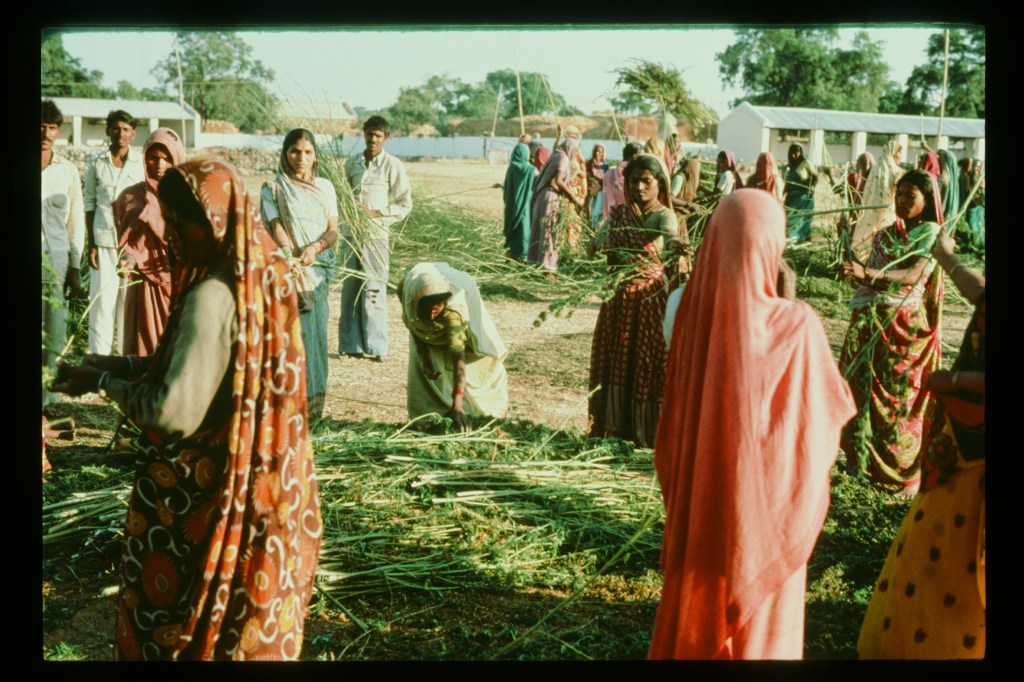
Rosenthal’s connection to India runs deep. In 1981, during a trip through Madhya Pradesh, he stumbled onto a sprawling government-sanctioned cannabis field outside Kandwa. “It was a legal field,” he explained. “They were growing cannabis for buds that were sold in stores.” He went to the agriculture department in Bhopal, secured official permission to visit, and spent days photographing the operation. Those photos, proof of a legal cannabis industry that most of today’s generation has never even heard of, became the foundation for his limited-edition book Ganja in India, which is now set for a new release in India. “If I hadn’t photographed it, that entire knowledge would have been lost,” Rosenthal said. “People didn’t even know it had happened.”
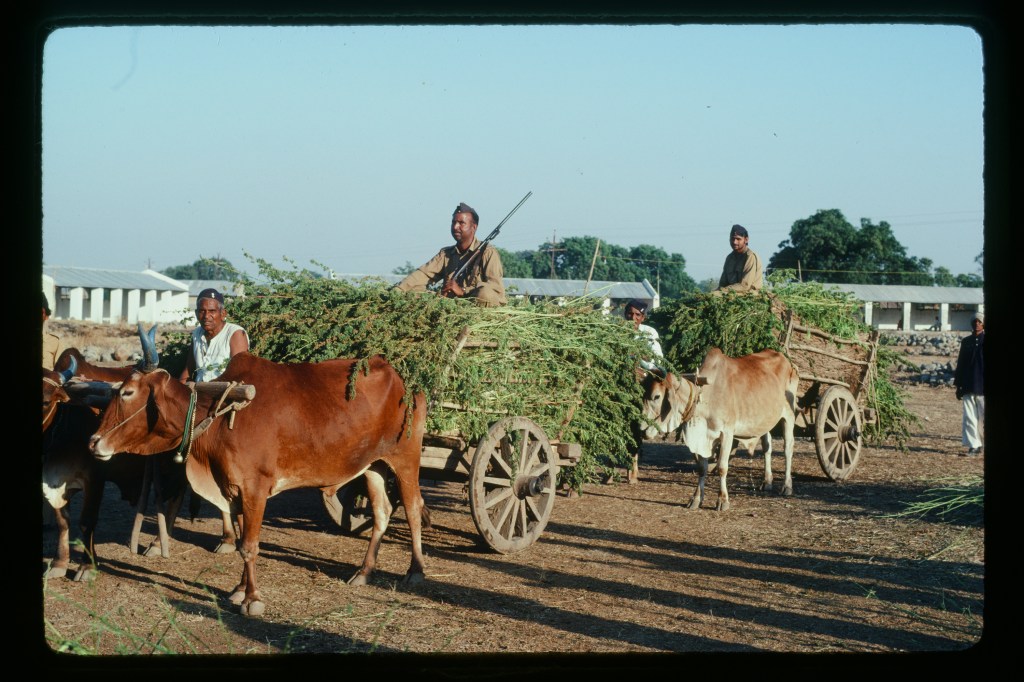
That history is at the core of his new mission. Rosenthal is advocating not just for legalization, but for re-legalization, a deliberate framing that reminds India that cannabis was legal until the mid-1980s, when the Narcotic Drugs and Psychotropic Substances Act criminalized ganja and charas under pressure from international treaties. “We’re not legalizing it,” he said. “We’re re-legalizing it, because it was legal until the mid-1980s, and before that, for centuries.”
Rosenthal’s current work is split between two priorities. One is the preservation of landrace genetics. India’s native cannabis strains are genetically unique, offering terpene and cannabinoid profiles not found anywhere else. Rosenthal believes they need to be preserved, not necessarily for immediate commercial cultivation, but for their breeding potential and scientific value. “If you’re a farmer, you want to grow what brings the best price,” he explained. “That won’t be the landraces, but those genetics are irreplaceable.” The other is pushing for regulated, legal markets. With a population of more than a billion people and a deep cultural history with the plant, India has the potential to lead the world in cannabis innovation, from medical research to sustainable hemp production.
His team is also in the early stages of planning an All India Cannabis Convention, envisioned as a hybrid in-person and digital event to make it accessible to as many people as possible. “Many Indians don’t have the disposable income or the time to travel for a conference,” Rosenthal said. “By making it digital, we can bring in speakers from around the world and make it truly inclusive.”
One of the most enduring contradictions in India’s drug policy is the treatment of bhang, a cannabis-based drink tied to centuries of Hindu tradition. While ganja and charas were outlawed, bhang remained legal, largely because of its association with Lord Shiva. “Shiva drank bhang,” Rosenthal said. “That’s why it’s still legal. It’s a religious sacrament.” Today, bhang is still widely consumed during festivals like Holi, though most of it is made from weak leaves harvested before flowering, a shadow of the potent versions of the past.
That contradiction underscores Rosenthal’s point. Cannabis is not an imported vice or a Western trend in India. It is a native plant, woven into spiritual practice, medicine, and daily life for thousands of years. Criminalizing it, he argues, is both culturally destructive and economically shortsighted.
The arguments for re-legalization in India are overwhelming. The underground market is thriving despite four decades of prohibition, enriching criminal networks while denying the government billions in potential tax revenue. Farmers cultivating illicit crops are left vulnerable to raids and extortion, while consumers risk exposure to unregulated, unsafe products. Legalization would bring transparency, safety, and economic opportunity, and protect India’s unique cannabis genetics from disappearing into foreign seed banks without acknowledgment or compensation.
Rosenthal isn’t shy about his role in this effort. “I’m not an organizer,” he said. “I’m a rabble rouser. My job is to bring this to the attention of the people who can make a difference.” By raising the issue, documenting the history, and offering a platform for dialogue, he’s doing what he’s always done: pushing the fight forward and challenging policymakers to catch up with the culture.
In an essay shared with Pot Culture Magazine, Rosenthal laid out the full case for why India must return ganja to its legal status. Here it is, in full, exactly as he wrote it:
Why Ganja Should Be Re-Legalized in India
By Ed Rosenthal
Ganja use has been a part of Indian culture and religious practice for millennia. It has rarely been considered a cause for concern. Even the Indian Hemp Drugs Commission, established by the British in 1893 and reporting in 1894, concluded that cannabis was not a significant problem but should be regulated and taxed.
The tax and regulation laws continued after independence in 1948. It was only in 1961, 13 years after independence, that India was compelled by Western governments to sign the Single Convention on Narcotics and Dangerous Drugs, which called for the criminalization of all cannabis.
Because of the special relationship between cannabis and Indian traditions, two special conditions were placed on the cannabis provisions as concerned India. First, the transition to criminalization would take place over a 25-year period, and a religious exemption for bhang, which has remained legal.
The 25-year exemption served several purposes for the government. First, its enforcement later on meant that the current administration would not face too much opposition. All of its members would be retired by the time the law went into effect. Secondly, in 25 years, perhaps the world might come to its senses and the provisions regarding ganja might never actually come into effect. However, the second possibility was not realized. The result was that the last legal harvest of mature buds occurred in 1985. Since then, legal bhang has been made from immature plants.
There are many reasons why India should revise the ganja laws, once again making it legal, regulated, and taxed.
Ganja and charas are readily available throughout the country. Although illegal for 40 years, the government has not been able to stop its cultivation, distribution, or use, and in fact, it’s become more popular in the last few years.
Users view ganja as a benign herb with minimal negative side effects. Enforcement of these laws causes the public to question the legitimacy of other laws and the justice system as a whole.
Considering that ganja is consumed throughout India, it is a multi-billion-dollar industry that operates outside the purview of the government. Legalization would bring this market under government oversight.
Since the police know that ganja is a victimless crime, they readily accept bribes to overlook cannabis-related cases. Every day, corruption like this erodes society’s attitude toward law enforcement and justice.
Any time that police or prosecution spend on ganja cases is a waste of the employees’ valuable services and a waste of taxpayer money. The reason is that no measures they can take will have a significant effect on supply.
In countries where marijuana is legal, the herb is tested to make sure that it contains no heavy metals nor bacterial or fungal contamination. Without the substance being legal, no examination of the product can occur.
When ganja becomes scarce, often due to legal crackdowns, users may turn to alcohol as a substitute. This has public health consequences, as alcohol is associated with liver disease, accidents, and violence, while ganja is not. In the U.S., more people now use marijuana on a given day than alcohol.
In states where cannabis is legal in the U.S.A., billions of dollars are collected each year in excise taxes. This has encouraged states to allow more cannabis stores to open, resulting in lower consumption of alcohol.
Indian Cannabis has unique chemistry that is not found in European or American cannabis. These cannabinoids, terpenes, and flavonoids are likely to become important in the future. Without investigating and cataloging them, which can only happen efficiently in a legal environment, these are likely to be removed from India with no remuneration to the state.
Legal manufacturers of cannabis pharmaceuticals in India have access only to inferior, unripe material, which is more costly to work with because of the low percentage of cannabinoids and terpenes they contain. This puts India at a disadvantage in the world market.
Consumption of ganja has been an integral part of religious practice in India for millennia. The weak material now available to religious participants is not respectful to them or the Gods they worship. Bhang, although used religiously, is a poor substitute for ganja and charas, which have traditionally been used by devotees.
The current prohibition of ganja in India is ineffective, unjust, and economically counterproductive. A regulated, legal market would protect public health, reduce crime and corruption, generate revenue, support pharmaceutical development, and honor cultural and religious traditions. It is time for India to return to its roots and re-legalize ganja through thoughtful regulation and oversight.
Explore Ed Rosenthal’s 1981 photo essay, Ganja in India, now available at edrosenthal.com. This book offers a look at a large government-regulated farm, providing a historical snapshot of India’s relationship with cannabis.
This article is issued free of copyright and may be used freely and rebroadcast without seeking specific permission.
India’s conversation about cannabis is starting to shift. In 2020, the country supported a UN resolution to reclassify cannabis and recognize its medical uses. Grassroots groups are forming, state-level conversations are happening, and medical research is quietly advancing. What’s missing, Rosenthal argues, is a coherent, national-level approach that acknowledges both the plant’s heritage and its modern potential.
For Rosenthal, the fight is about more than policy. It’s about restoring a cultural legacy that prohibition tried to erase, while opening the door to scientific discovery and economic progress.

Readers interested in supporting or following Rosenthal’s work can email info@edrosenthal.com, explore his limited-edition book Ganja in India, or follow him on Instagram @edrosenthal420. His collaboration with Humboldt Seed Company on Super Highlife Feminized Seeds is available here.
For India, the question isn’t whether cannabis belongs in its future. It’s whether the country is willing to acknowledge the truth about its past. Rosenthal is betting that it will, and that when it does, the world will be watching.
©2025 Pot Culture Magazine. All rights reserved. This content is the exclusive property of Pot Culture Magazine and may not be reproduced, distributed, or transmitted in any form or by any means without prior written permission from the publisher, except for brief quotations in critical reviews.
F O R T H E C U L T U R E B Y T H E C U L T U R E
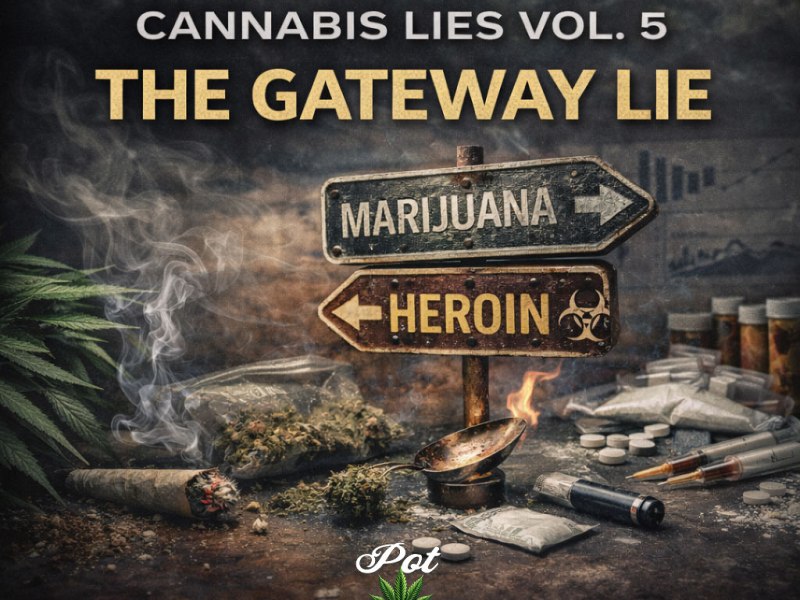
CANNABIS LIES Vol. 5: The Gateway Lie
For decades, politicians have claimed marijuana is a gateway to heroin and harder drugs. Federal youth surveys, NSDUH data, and NIDA’s own language tell a different story. Cannabis use is widespread, hard drug use remains rare, and most users do not progress. The data dismantles one of prohibition’s most durable fear narratives.

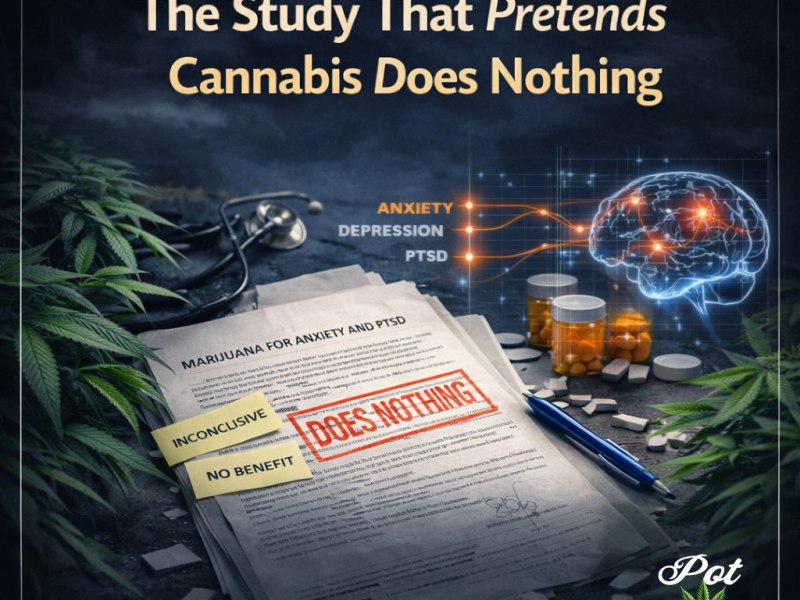
The Study That Pretends Cannabis Does Nothing
A new cannabis study claims marijuana does nothing for anxiety, depression, or PTSD. The reality is far more complicated. Decades of federal restrictions, limited research access, and synthetic substitutes have shaped the science. This breakdown exposes how incomplete data and selective interpretation continue to drive misleading headlines about cannabis and mental health.
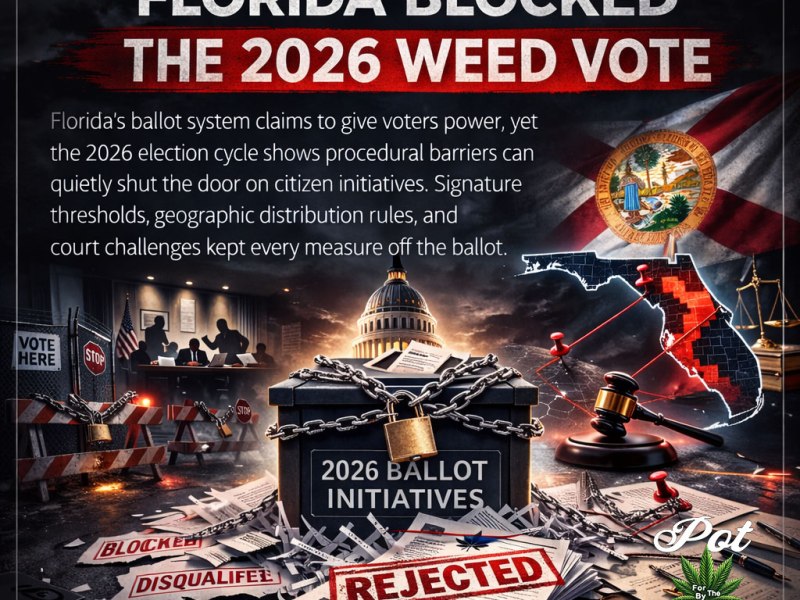
Florida Blocked the 2026 Weed Vote
Florida’s ballot system claims to give voters power, yet the 2026 election cycle shows how procedural barriers can quietly shut the door on citizen initiatives. Signature thresholds, geographic distribution rules, and court challenges blocked every measure from reaching voters, revealing how cannabis legalization fights are often decided by bureaucratic design long before election day.
Discover more from POT CULTURE MAGAZINE
Subscribe to get the latest posts sent to your email.

Leave a comment