Filed Under: Panic Pays
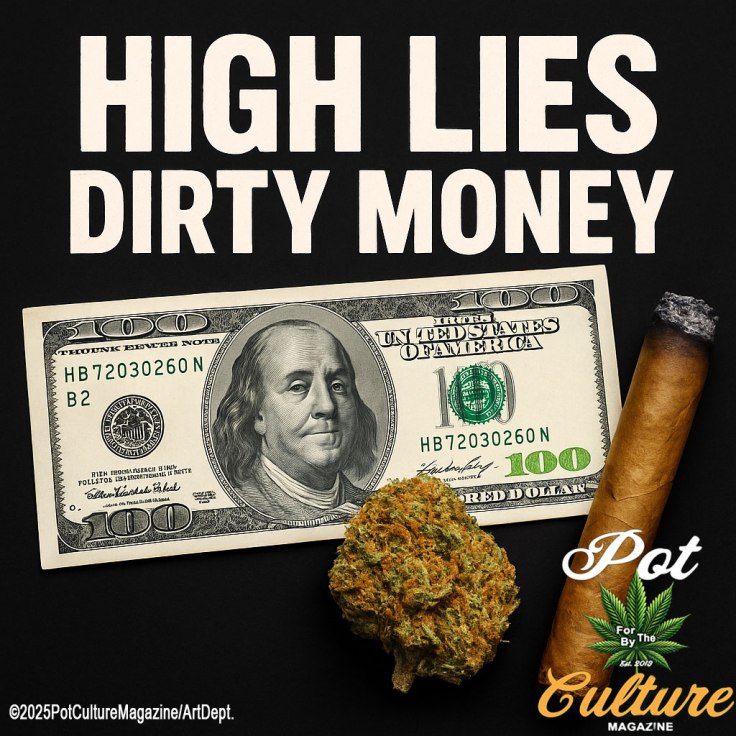
The Washington Examiner wants you to believe it cares about public health. That is the joke of the year. On August 21, the paper ran an op-ed from Arizona Congressman Paul Gosar, draped in the branding of the White House’s new “health and wellness” initiative, a shiny government program built to appear concerned while it runs the same tired drug war script. Gosar’s piece warned that rescheduling cannabis would unleash “high potency chaos,” addict kids, and wreck the nation. It is an old con dressed up as concern, and every bit of it is rotten.
The problem with Gosar’s panic is that it is not about health; it is about power and money. It is about protecting the industries that have bankrolled prohibition for decades. It is about a newspaper owned by a billionaire whose empire is soaked in alcohol sponsorships, quietly selling you the idea that weed is the villain while his venues run rivers of beer and liquor every night.
Follow the money. The Examiner is owned by Clarity Media Group, controlled by billionaire Philip Anschutz. Anschutz also owns AEG, the entertainment company that runs Crypto.com Arena in Los Angeles, The O2 in London, Coachella, and Stagecoach. Those places are shrines to alcohol money. Beer brands and liquor companies pay millions to keep taps flowing and logos plastered across stages, screens, and seating. You will never see that context disclosed when the Examiner gives Gosar a platform to peddle fear. You will just see the same tired talking points served up as public health, while the checks keep clearing.
Look closer at Gosar. His record on cannabis is a wall of obstruction. Arizona legalized medical marijuana in 2010 and adult-use in 2020. The industry is a billion-dollar market, employing thousands and paying millions in taxes. Gosar has fought every inch of that progress. He voted against banking reform for state-legal businesses. He voted against bills to give veterans better access to medical cannabis. He voted against easing research barriers. At the same time, his campaign filings show contributions from alcohol and pharmaceutical interests and law enforcement unions that thrive under prohibition. That is who wrote that op-ed, a politician who has been on the wrong side of history for decades and is happy to keep selling fear if it keeps his donors happy.
advertisement
F O R T H E C U L T U R E B Y T H E C U L T U R E
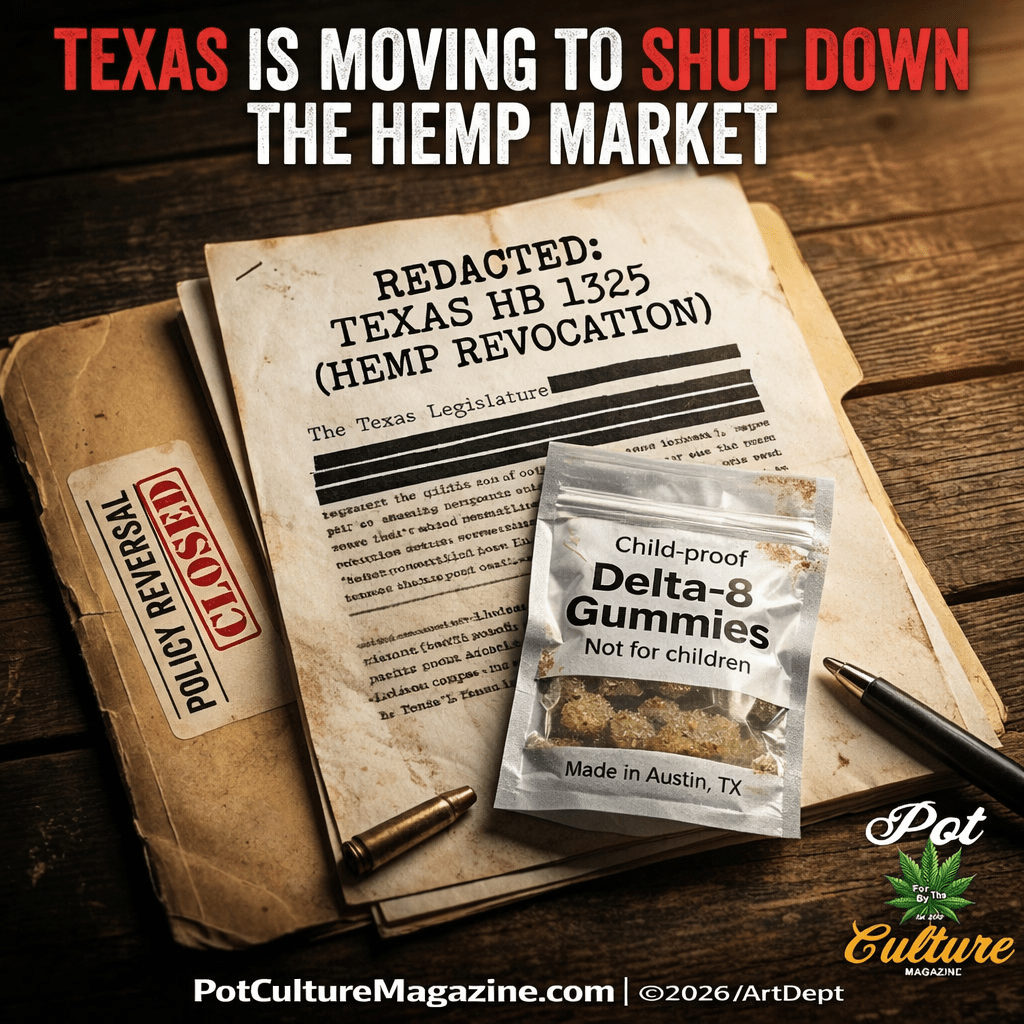
Texas Is Moving to Shut Down the Hemp Market
Texas helped build one of the largest hemp THC markets in the country, then moved to shut it down. As regulators tighten rules and enforcement increases, businesses are left exposed and the future of hemp-derived cannabinoids hangs in the balance. This is not a simple crackdown. It is a full policy reversal with real economic…

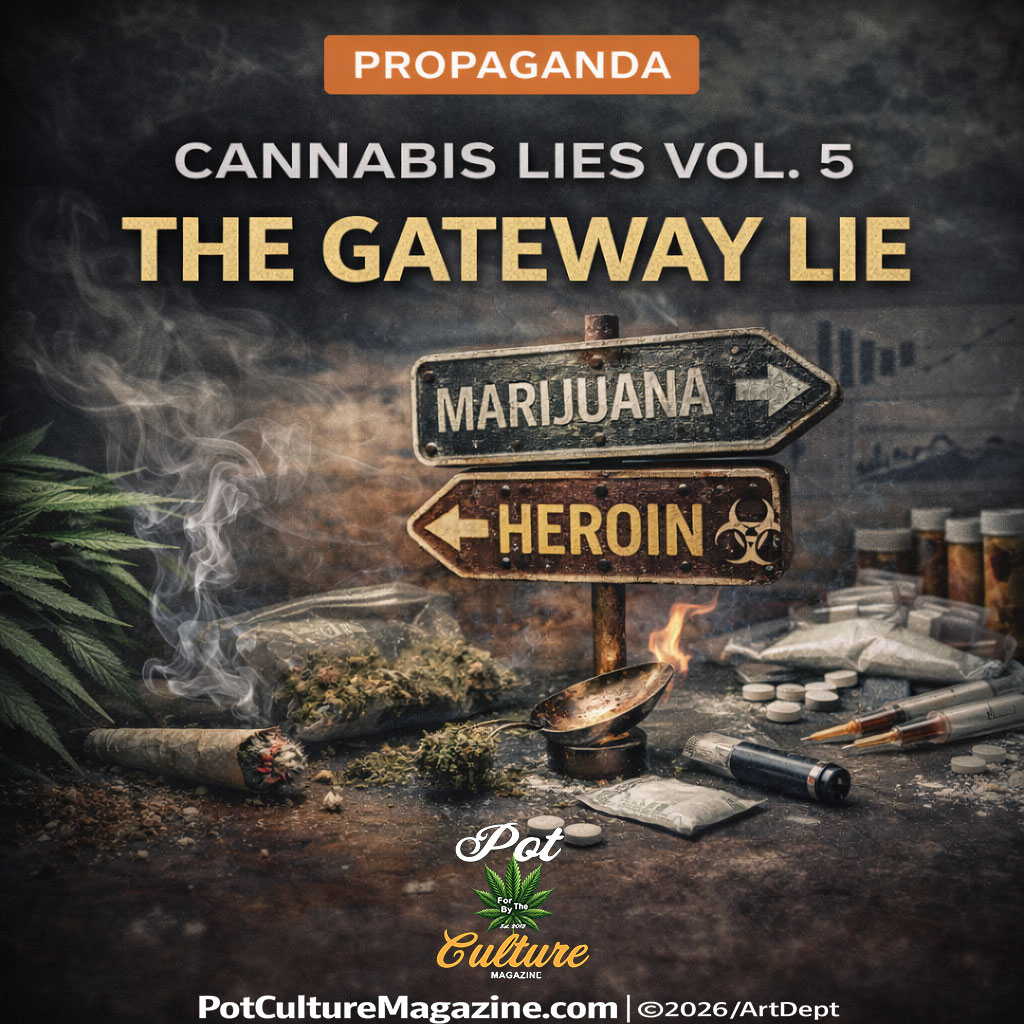
CANNABIS LIES Vol. 5: The Gateway Lie
For decades, politicians have claimed marijuana is a gateway to heroin and harder drugs. Federal youth surveys, NSDUH data, and NIDA’s own language tell a different story. Cannabis use is widespread, hard drug use remains rare, and most users do not progress. The data dismantles one of prohibition’s most durable fear narratives.
advertisement
Then there are the lies. Gosar claims today’s cannabis “often exceeds 15 to 90 percent THC.” That is a deliberate distortion. No flower in any legal market is anywhere near 90 percent THC. Flower is typically far lower. The only products that reach the 60 to 90 percent range are certain concentrates, cartridges, and dabs, which are regulated, labeled, and sold to adults who know exactly what they are buying. Pretending every joint is a nuclear weapon is like saying every beer is a shot of grain alcohol. It is dishonest, and they know it.
Here is the part the Examiner will never print. Cannabis does not kill people. A fatal overdose from cannabis alone is virtually unheard of. Alcohol, on the other hand, kills about 140,000 Americans every year. It causes cancer, liver failure, heart disease, and violence. It fuels drunk driving deaths. It tears families apart. It drains billions in healthcare costs and lost productivity. That is the public health crisis. But you will never see that op-ed because the owner of the paper is knee-deep in the alcohol business.
The numbers tell the story. On August 13, 2025, Gallup reported that alcohol use in America is at its lowest point since they started tracking in 1939. Only 54 percent of Americans drink, down from 65 percent in 2019. The number of drinks per week has dropped, too. Back in 2001, the average was nearly five drinks a week. Now it is less than three. And here is the kicker: 53 percent of Americans now believe even moderate drinking is bad for your health, almost double what it was a few years ago.
Cannabis use? Steady. Not skyrocketing, not surging, steady. People are not giving up beer to get high all day. They are simply drinking less, living healthier, and sometimes choosing cannabis because it does not come with the violence, the disease, and the hangovers. That is the cultural shift that terrifies the alcohol industry. That is what keeps executives awake at night, and that is what makes a billionaire publisher greenlight junk op-eds about “protecting kids” from cannabis while his arenas sell those same kids $14 beers.
This is not public health. It is business. Dirty, cynical business.
Gosar’s op-ed warns that rescheduling cannabis would “normalize” use. That ship sailed years ago. Cannabis is already normalized. Two-thirds of Americans support legalization. Dozens of states have legal markets. Millions of people use cannabis responsibly every day. Rescheduling would not trigger chaos in the streets. What it would do is end the punitive tax rule that bleeds small operators dry. It would make research easier. It would open the door for veterans to get real medical support without stigma or risk. It would start to close the legal gaps that let law enforcement keep using cannabis as a pretext to harass and arrest, especially in Black and brown communities that have borne the brunt of the drug war for decades. That is what scares them, not health, but power.
That is why you get op-eds full of scary words about psychosis and addiction, but never a mention of what the science actually says. Because the science blows their entire argument apart.
Cannabis carries risks, every substance does, but it is not the demon they make it out to be. The National Academies of Science, Engineering, and Medicine have said for years that while some harms are associated with heavy use, the evidence is mixed and far too often exaggerated. On dependence, cannabis rates are lower than alcohol and far lower than tobacco. About one in ten regular users develops a dependency, compared to about one in seven for alcohol and one in three for tobacco. On the so-called gateway theory, decades of research have shown that correlation is not causation. Most people who try cannabis never “graduate” to harder drugs. The first drug most Americans ever try is alcohol, not weed. That is the real gateway.
The medical benefits of cannabis are also real, documented, and mainstream. It helps with chronic pain, chemotherapy-induced nausea, spasticity, PTSD, and anxiety. Millions of people use it for those reasons and live better lives because of it. None of that fit Gosar’s narrative, so none of it made it into the Examiner.
And that is where the ethical rot sets in. A newspaper that pretends to care about facts and fairness is letting a politician with a financial and political stake in prohibition write propaganda without a single disclosure. They know Gosar’s donors. They know their own owner’s empire is built on alcohol revenue. They know rescheduling cannabis is about basic fairness, research, and access, not chaos. And they ran it anyway.
It is the same playbook they have run for years. Manufacture fear. Protect power. Keep the money flowing.
The public is not buying it. Americans are waking up. They have seen what alcohol does. They have seen it kill friends and family. They have seen it tear communities apart. And they are choosing something different. They are choosing to drink less or not at all. They are exploring cannabis in ways that are deliberate and responsible. They are trying low-dose THC seltzers instead of shots. They are hanging out in lounges instead of bars. They are rewriting social rules that for a century were written by alcohol companies and enforced by a government that cashed the tax checks while looking the other way on the carnage.
The culture is moving on. And that scares the hell out of the people who built their fortunes on keeping us drunk.
Follow the money and you see the whole picture. The Examiner is owned by a billionaire who makes millions from alcohol. The politician writing their op-eds takes money from industries that fear cannabis reform. Those same industries have spent decades bankrolling fear campaigns, think tanks, and lobbying groups to keep prohibition in place. They cannot admit that out loud, so they hide behind kids and public health and try to scare people back into line.
It is cynical. It is manipulative. And it is exactly why Americans do not trust institutions anymore.
What they cannot control is reality. Cannabis is safer than alcohol. That is not an opinion. That is a fact backed by decades of data. Cannabis has never been linked to the kind of mass health crises alcohol creates every year. And cannabis is here to stay. That is not a wish. That is reality.
Gosar can keep writing his fear pieces. The Examiner can keep pretending it is an honest broker. None of it will change what is already happening. Cannabis reform is not just inevitable. It is underway. Support grows every year. Legal markets keep proving that the sky does not fall. Every month brings new research and new evidence that cannabis is not the threat it was painted to be.
If this really were about health, they would be talking about those 140,000 annual alcohol deaths. They would be talking about the billions in costs, the broken families, the violence, and the disease. They would be asking why alcohol is plastered on every sports broadcast and stadium while cannabis companies cannot even open bank accounts. They would be pressing for balance and fairness instead of panic. But they will not, because that would mean turning on their own. That would mean biting the hand that feeds them.
So they will keep printing the lies. They will keep handing the mic to politicians like Paul Gosar, men who have never cared about the truth so long as the checks keep coming. They will keep running interference for industries terrified of a future where cannabis is legal, regulated, and accepted, because that future cuts into their profits and their power.
They can stall, they can lie, and they can scream, but they are going to lose anyway. Americans are done being lied to. They are done with drug war hysteria. They are done watching lives ruined over a plant that is safer than a six-pack. And they are done taking lectures from institutions that sell disease and call it entertainment while pretending to protect public health.
The shift is here. It is cultural. It is generational. And it is irreversible. No amount of fearmongering from Paul Gosar or the Washington Examiner is going to stop it.
©2025 Pot Culture Magazine. All rights reserved. This content is the exclusive property of Pot Culture Magazine and may not be reproduced, distributed, or transmitted in any form or by any means without prior written permission from the publisher, except for brief quotations in critical reviews.
F O R T H E C U L T U R E B Y T H E C U L T U R E
The Study That Pretends Cannabis Does Nothing
A new cannabis study claims marijuana does nothing for anxiety, depression, or PTSD. The reality is far more complicated. Decades of federal restrictions, limited research access, and synthetic substitutes have shaped the science. This breakdown exposes how incomplete data and selective interpretation continue to drive misleading headlines about cannabis and mental health.
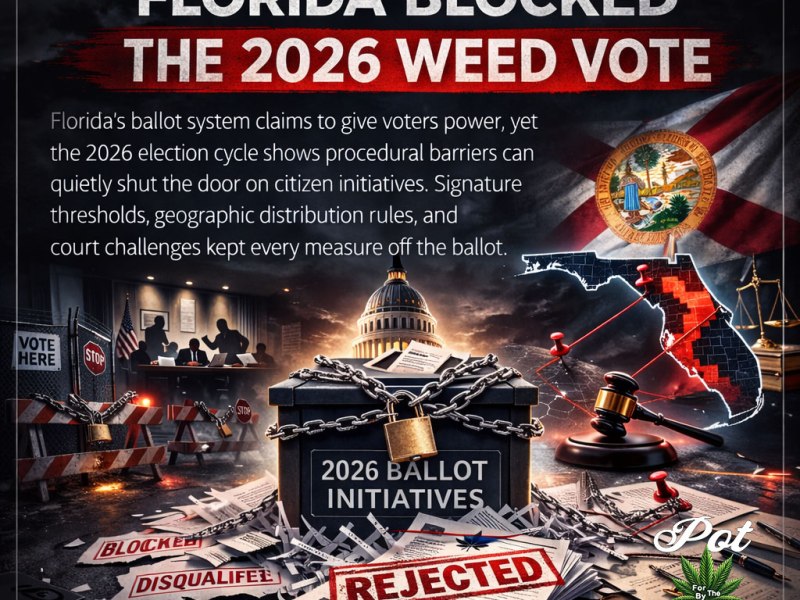
Florida Blocked the 2026 Weed Vote
Florida’s ballot system claims to give voters power, yet the 2026 election cycle shows how procedural barriers can quietly shut the door on citizen initiatives. Signature thresholds, geographic distribution rules, and court challenges blocked every measure from reaching voters, revealing how cannabis legalization fights are often decided by bureaucratic design long before election day.
The Cannabis Lie: Vol. 4 — The Crime Wave Lie
Politicians and pundits warned that legal cannabis would unleash a crime wave. The data tell a different story. From Colorado’s violent crime trends to DOJ time-series research and statewide arrest declines, the evidence shows no consistent long-term surge tied to legalization. The numbers never matched the panic.
Discover more from POT CULTURE MAGAZINE
Subscribe to get the latest posts sent to your email.

Leave a comment