Filed Under: Bureaucratic Bong Rip
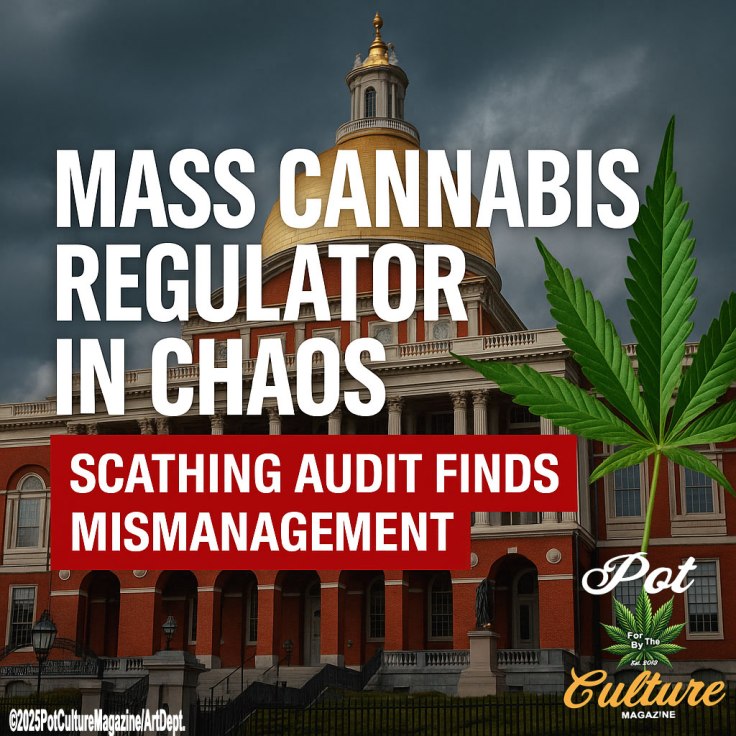
The Massachusetts Cannabis Control Commission just got stripped naked in the town square. No polite audit language could hide it. The State Auditor called them out for losing track of money, letting rules rot, and running the shop like a backroom handshake club. Fees that should have been in the state’s pocket vanished. Enforcement limped along or never showed up. Paperwork was treated like a suggestion. And all of it played out while the people who keep the legal market alive were told to follow the rules or else.
It started with a tip. In July 2024 the Office of the Inspector General got a hotline complaint. The allegation was simple. The commission was not collecting the fees it was supposed to collect. This was not fraud with a mastermind behind it. It was something more basic. It was business left undone.
The Inspector General found that the CCC had approved temporary license extensions and told staff to collect prorated extension fees. The fees did not come in. About $553,000 in extension fees went uncollected, and provisional license fees invoiced at one point totaled about $1.2 million. This is not theory. This is money that should have gone into public accounts.
The IG’s office called it an egregious operational breakdown. No one could even say who had the authority to grant some of these extensions. Verbal agreements took the place of written procedures. In the language of government, that is an invitation to chaos. In the language of the street, it is a signal that no one is in charge.
The Inspector General told the state to dig deeper. The Auditor examined July 1, 2022 through June 30, 2024. What they found made the fee problem look like the opening act.
Regulations were not enforced on time. Fines were not assessed promptly. There was no designated hearing officer. The absence of a hearing officer and slow timelines left cases to linger. Host Community Agreements went unreviewed, letting illegal provisions stand and letting towns squeeze more from smaller operators. Verbal exceptions were treated like policy. The paper trail was missing or incomplete. Staff made calls without formal approval.
Internal controls were so thin that duplicate license payments went by, revenues were not coded and classified, and the internal control plan failed state standards. When the money map is wrong, nothing works the way it should.
advertisement
F O R T H E C U L T U R E B Y T H E C U L T U R E
CANNABIS LIES Vol. 5: The Gateway Lie
For decades, politicians have claimed marijuana is a gateway to heroin and harder drugs. Federal youth surveys, NSDUH data, and NIDA’s own language tell a different story. Cannabis use is widespread, hard drug use remains rare, and most users do not progress. The data dismantles one of prohibition’s most durable fear narratives.


The Study That Pretends Cannabis Does Nothing
A new cannabis study claims marijuana does nothing for anxiety, depression, or PTSD. The reality is far more complicated. Decades of federal restrictions, limited research access, and synthetic substitutes have shaped the science. This breakdown exposes how incomplete data and selective interpretation continue to drive misleading headlines about cannabis and mental health.
advertisement
Employment settlement agreements were another blind spot. Some included nondisclosure or non-disparagement terms, but there was no transparent process for handling them. In a public agency, that is a bad look. The public has a right to know who is being paid, why, and under what terms. The files did not have the answers.
Last week the CCC flagged more than 7,000 products for possible yeast and mold after finding a lab underreported results. Hours before the auditor released the report, the commission voted to reinstate that lab under fines and conditions. The timing was a gut punch. A regulator with shaky systems now had to explain a public health scare.
The culture inside the CCC has been toxic for years. High turnover. Infighting. Suspensions. Power struggles that leave no one certain who is actually in control. The Inspector General has publicly floated the idea of putting the agency into receivership. That is not normal rhetoric. That is a warning shot.
For business owners, this dysfunction is not theoretical. They apply for licenses, hire staff, pay rent, and then wait while the rules shift under their feet. They watch the commission rewrite timelines without warning. They see some operators get grace periods while others get punished. The audit did not prove favoritism, but it documented the appearance of it. In public service, the appearance is enough to damage trust.
The CCC says it has been working with the Auditor for almost a year. It has hired new leadership, updated standard operating procedures, started reviewing Host Community Agreements, and is fixing fee collection. It is building a governance charter and upgrading its software so license holders can see progress online. That list is welcome. It is also the baseline for doing the job.
Lawmakers have their own plans. The House already passed a cannabis reform bill that touches the commission’s structure and licensing limits. The Senate will have to decide who really runs the CCC. If the answer is a committee chorus, the answer is no one.
The state needs a regulator that is boring in the best way. Write clear rules, enforce them on time, collect the money, and keep the receipts. Do it for everyone the same way. Do it without excuses. The CCC’s job is not to make headlines. It is to keep the market fair, safe, and predictable.
Trust is the missing currency. Operators do not have to like the rules, but they have to believe the rules are real and apply equally. They need to know their fees fund a working system. They need a regulator that catches a lab slip fast and tells the public the truth. They need competence, not slogans.
Fixing this will take more than new leadership bios and a list of intentions. It will take clear systems that everyone follows. No verbal exceptions. Every fee documented. Every enforcement step written down. Every Host Community Agreement screened and posted. A hearing officer in place with a calendar that means something. A public fee recovery plan with a running total. A live enforcement docket. A transparent HCA review pipeline. Software that works.
If the commission can deliver, the case for receivership fades. If it stalls, lawmakers will move to take the wheel. Receivership would clean house but add another layer of bureaucracy. The choice will come down to results, not rhetoric.
Some defenders will say this is normal turbulence for a young market. They will point to funding shortages, complex rules, and the growing pains every legal cannabis program faces. But you do not need a flush budget to collect the fees you set. You do not need decades of experience to follow your own procedures. You do not need a special committee to assign someone to hear cases. What you need is the will to stop winging it.
For the industry, this is about payroll, rent, and survival. It is about trusting lab results and knowing the regulator is competent. It is about keeping a market from collapsing under the weight of its own referee. A credible cannabis industry requires a credible commission. Not perfect. Not political. Just competent and consistent.
The audit confirmed what operators already knew. The CCC was not in order. It handed lawmakers a map for reform. Now the commission can either use it or wait for someone else to drive. The culture has weathered worse than bureaucrats who cannot count, but it should not have to.
The Auditor will check back in six months. The Inspector General will keep watching. Lawmakers will posture. Operators will grind. Consumers will keep buying. The next headline can show a cleaned-up commission or a deepened mess. The CCC gets to choose which one we all read.
©2025 Pot Culture Magazine. All rights reserved. This content is the exclusive property of Pot Culture Magazine and may not be reproduced, distributed, or transmitted in any form or by any means without prior written permission from the publisher, except for brief quotations in critical reviews
F O R T H E C U L T U R E B Y T H E C U L T U R E
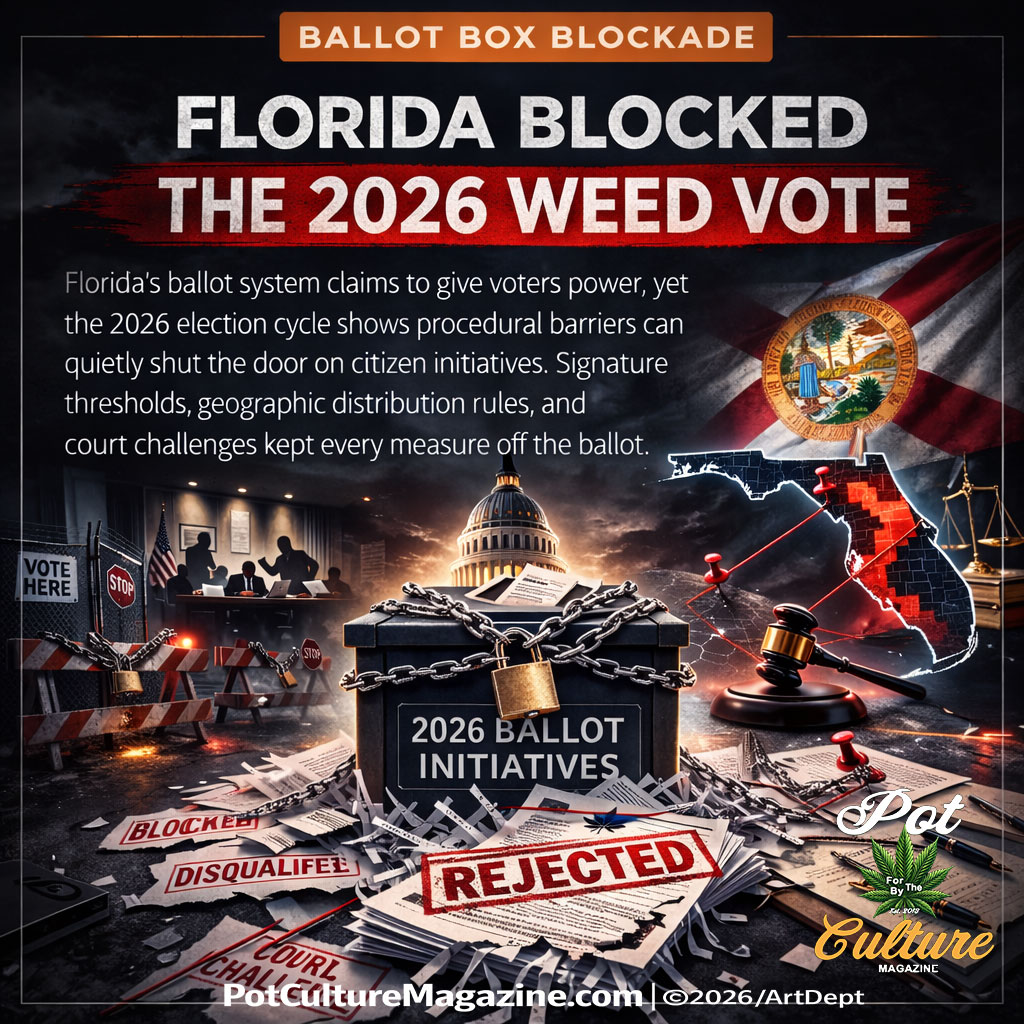
Florida Blocked the 2026 Weed Vote
Florida’s ballot system claims to give voters power, yet the 2026 election cycle shows how procedural barriers can quietly shut the door on citizen initiatives. Signature thresholds, geographic distribution rules, and court challenges blocked every measure from reaching voters, revealing how cannabis legalization fights are often decided by bureaucratic design long before election day.

The Cannabis Lie: Vol. 4 — The Crime Wave Lie
Politicians and pundits warned that legal cannabis would unleash a crime wave. The data tell a different story. From Colorado’s violent crime trends to DOJ time-series research and statewide arrest declines, the evidence shows no consistent long-term surge tied to legalization. The numbers never matched the panic.

South Africa Legalized Weed, But Not the Market
South Africa recognized private adult cannabis use and home cultivation, but never built a legal domestic market around them. With buying and selling still largely outside the law, the illicit trade remains dominant while regulators scramble to set limits, draft rules, and prepare a broader Cannabis Bill that could finally address commerce.
Discover more from POT CULTURE MAGAZINE
Subscribe to get the latest posts sent to your email.

Leave a comment