Filed Under: This Is Your Weed on ICE
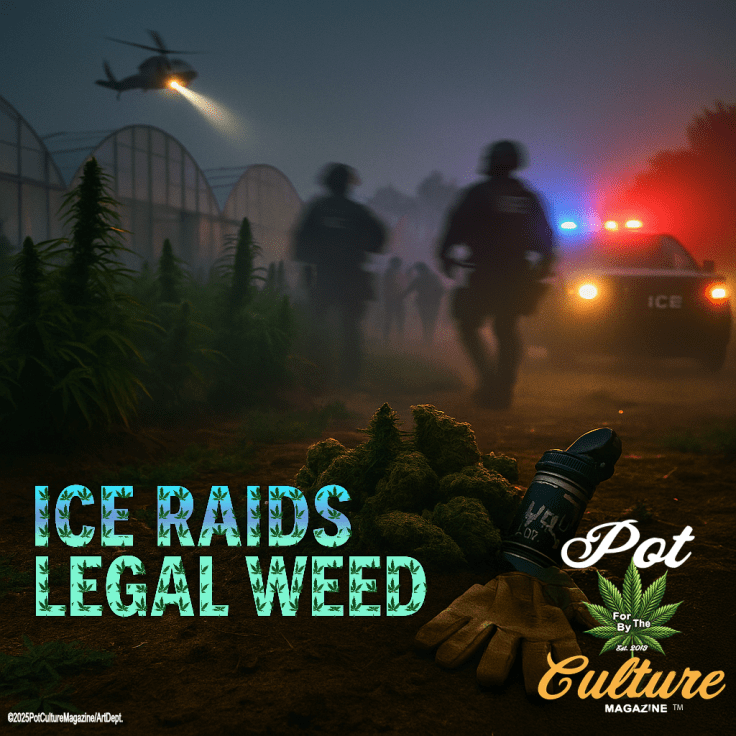
The morning of July 10, 2025, started like any other at Glass House Farms in Camarillo. Trimmers and cultivators clocked in early, ready to tend the rows of legal cannabis growing under glass. By noon, the sky was buzzing with helicopters. Armored vehicles rolled down the dirt roads flanking the greenhouses. Then came the agents, rifles up, commands in English and Spanish, boots in the dirt. Workers in gloves and hairnets were ordered to their knees. Some were zip-tied. Others ran.
By the end of the day, over 200 workers had been detained at the Camarillo and Carpinteria farm sites. The Department of Homeland Security (DHS) later announced 361 total arrests tied to the operation statewide. Fourteen minors were “rescued,” including ten listed as unaccompanied.
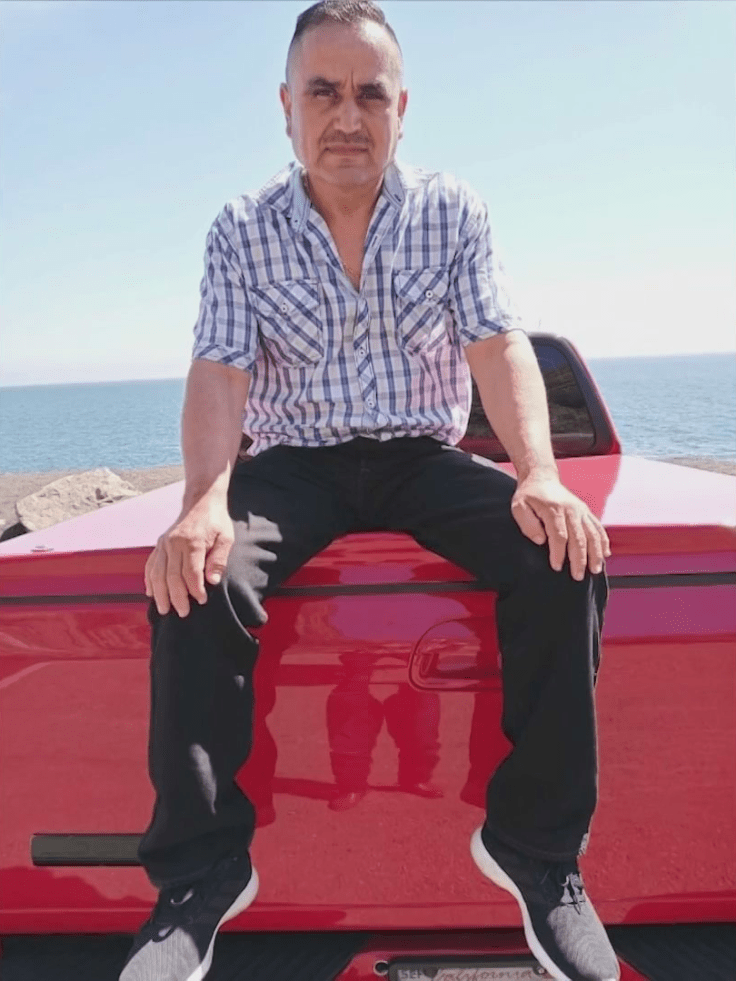
In the middle of the chaos, 57-year-old farmworker Jaime Alanis García fell from the roof of a greenhouse while trying to escape. He died two days later in a hospital. His family still wants answers. How does a man cultivating legal cannabis in a legal state end up dead in a federal raid that looked more like a military operation than labor enforcement?
Among those arrested was Jonathan Anthony Caravello, a California professor who had been observing the raid as part of a legal accountability effort. ICE claimed he interfered with federal enforcement.
The official spin came fast. DHS accused Glass House Farms of “hiring and harboring minors” and framed the raid as a counter-trafficking mission. A press release claimed the agents acted to “protect children from exploitation,” linking the cannabis industry to underground labor networks.
“SLIMEBALLS.” That was Trump’s description of California leaders as he praised ICE and DHS for the operation. He called the raids “a big win for law and order” and a warning shot for other states resisting federal immigration enforcement.
FOR THE CULTURE BY THE CULTURE
CANNABIS LIES Vol. 5: The Gateway Lie
For decades, politicians have claimed marijuana is a gateway to heroin and harder drugs. Federal youth surveys, NSDUH data, and NIDA’s own language tell a…
The Study That Pretends Cannabis Does Nothing
A new cannabis study claims marijuana does nothing for anxiety, depression, or PTSD. The reality is far more complicated. Decades of federal restrictions, limited research…
Glass House Farms denied every allegation. In a public statement, the company said it “does not and has never employed minors” and insisted it complies fully with California labor law. State regulators later confirmed that a child labor investigation into Glass House had already been opened before the raid, but had uncovered no evidence of violations. They had not yet issued any penalties when the feds arrived.
To immigrant-rights organizers and cannabis insiders, this was not about kids. It was about control.
“Farmworkers are terrified. These violent and cruel federal actions terrorize American communities, disrupt the food supply chain, threaten lives, and separate families.”
— Teresa Romero, president of the United Farm Workers
“They have gassed little kids and broken up families.”
— Gavin Newsom, Governor of California
“There is absolutely heightened risk working for a cannabis facility. It shouldn’t be that way.”
— Caren Woodson, California Cannabis Industry Association
On the ground, the fear was visceral. Alicia Flores, a longtime organizer in Ventura County, described workers hiding in freezers, car trunks, and greenhouse rafters as helicopters circled overhead.
“They were running for their lives.”
— Alicia Flores
The message was clear. Legal cannabis doesn’t mean legal protection, especially not for the undocumented. California’s cannabis market supports over 80,000 jobs and generates hundreds of millions in tax revenue, yet federal law still treats the entire industry as criminal. The Glass House raid made that painfully clear.
For immigrant laborers, it was a warning shot. Even in a blue state, cannabis can be used as cover for mass enforcement. Labor unions are now quietly advising undocumented members to avoid cannabis work altogether, a bitter irony considering legalization was once framed as a path out of the underground economy.
And for all the official noise about “rescuing minors,” the justification remains weak. California law already prohibits anyone under 21 from working in the cannabis industry. If minors were truly present, there were legal channels to investigate, issue citations, and penalize violations. Instead, ICE brought armored trucks and flash-bangs to a workplace that pays taxes and registers with the state.
This wasn’t enforcement. It was an escalation.
Prohibition didn’t die. It adapted. The war on drugs now wears the face of federal agents storming legal farms, detaining tax-paying workers, and branding it justice. Trump may celebrate the optics, but on the ground, families are grieving, communities are terrified, and the cannabis industry is wondering if legalization was ever real to begin with.
Outside the hospital where Jaime Alanis died, his family held a vigil. His daughter clutched a photo of her father and asked the question now echoing across California’s cannabis community:
“How does growing a legal plant lead to this?”
©2025 Pot Culture Magazine. All rights reserved. This content is the exclusive property of Pot Culture Magazine and may not be reproduced, distributed, or transmitted in any form or by any means without prior written permission from the publisher, except for brief quotations in critical reviews.
Discover more from POT CULTURE MAGAZINE
Subscribe to get the latest posts sent to your email.

Leave a comment