Before the TED Talks. Before the memoir. Before the legacy tributes, this was the raw beginning. A raw, honest, funny-as-hell 2012 conversation with Kelly Carlin, daughter of comedy icon George Carlin. At the time, she was stepping into the spotlight with her one-woman show A Carlin Home Companion, carving out her voice after a lifetime of being known as “George’s daughter.”
Revisiting this more than a decade later, it’s clear: Kelly wasn’t just finding her voice—she was claiming it. Her insight into comedy, parenting, rebellion, and identity hits even harder now in 2025, as culture keeps recycling the same conversations Carlin was having decades ago.
This isn’t just a flashback. It’s a time capsule that still speaks volumes.
During the Occupy Wall Street protests, your dad’s words were often quoted by activists. How did he influence your worldview? That’s a good question. He inspired me to think differently—to see the world from a slightly different angle than everyone else—and to feel free expressing that point of view. He always inspired me on stage because he would speak truth to power or point out the absurdity in our culture. That made me feel hopeful—like not everyone was asleep. The fact that the audience “got it” gave me hope for the planet.
courtesy of Kelly Carlin via X (@kelly_carlin)
Did he ever encourage civil disobedience at home? No, he never encouraged anything. He was a man who did his work and supported others in their endeavors. He wasn’t the type to say, “You should go do this or that.” That just wasn’t his style.
What was a “typical” day like in the Carlin household? There was nothing typical about a day in the Carlin household.
What decade? (laughs) It changed over the years. In the late ’60s and early ’70s, my parents were often sleeping in because they’d been up for days doing drugs—or my dad was on the road. Sometimes we’d just watch TV together, which we loved. Usually, he was in his office working, writing, putting together new material. But honestly, there was no real routine.
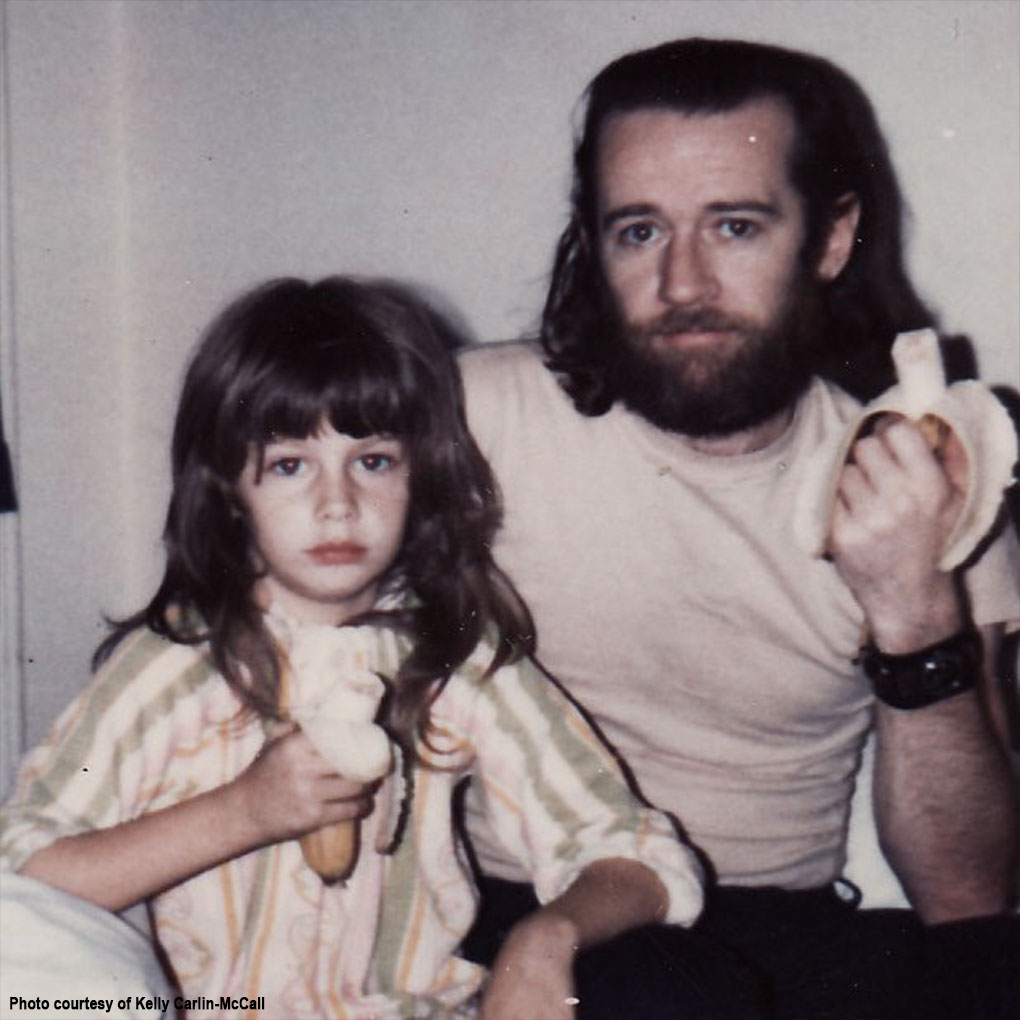
How would you describe his approach to parenting? Was he strict? What do you think? (laughs) Actually, I open my solo show with this. I play a clip of my dad doing a bit about parenting and talk about his unique approach. No, he wasn’t strict. He spoiled me. There was a lot of freedom in our house—very few limits, very few rules.
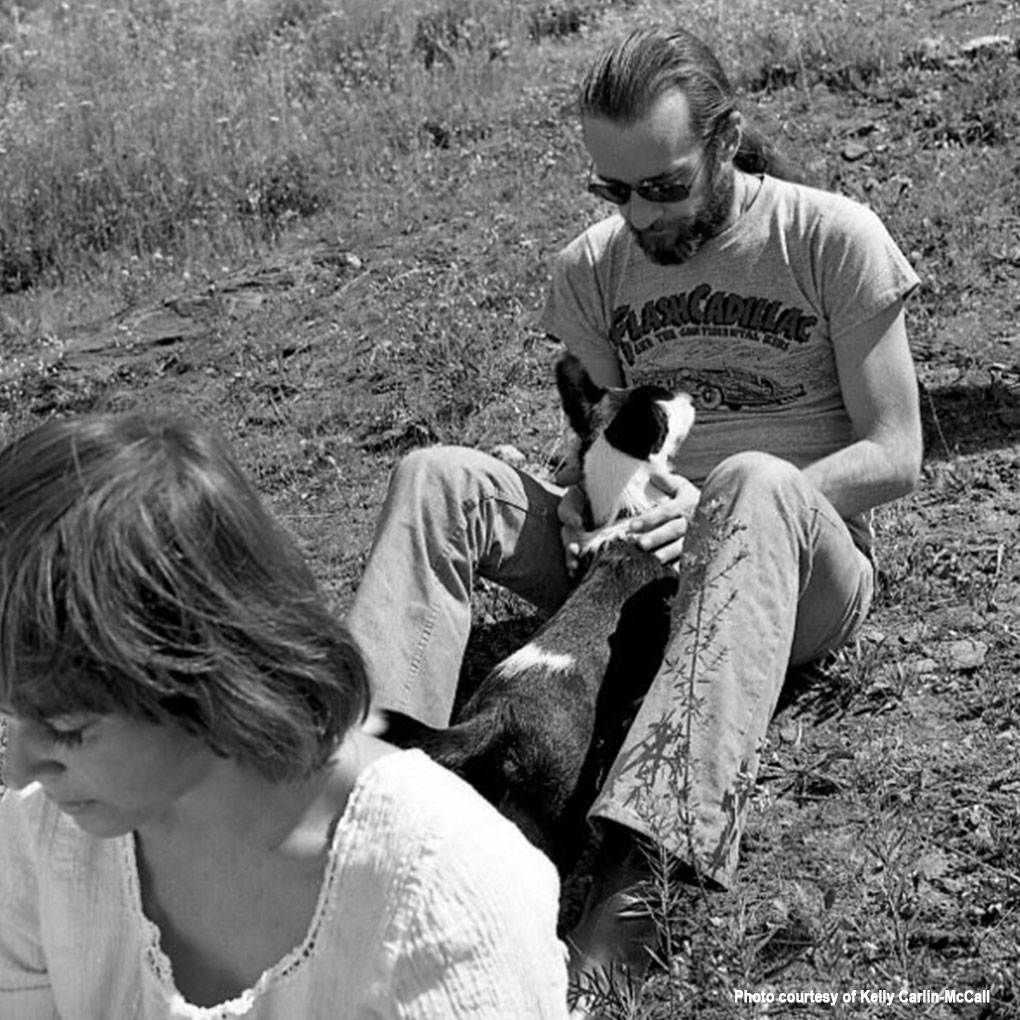
Image of George, Brenda, and Tippy courtesy of Kelly Carlin via X (@kelly_carlin)
What was your social scene like in high school? Were you “the kid with the famous dad”? I went to a high school where a lot of kids had famous parents. But yeah, some boys had memorized my dad’s entire act and would perform it in front of me. I didn’t get it—I was like, “Why are you doing this?” I think they thought I was cool, but I was just one fish in a big sea of celebrity culture.
At what point did you realize your dad was a cultural icon?
“FM & AM” (1972) marked George Carlin’s split from mainstream comedy—into the uncensored, unpredictable world of counterculture legend.
Probably in the early ’70s, when FM & AM, Class Clown, and Occupation: Foole all hit within two years. His career took off. When he visited college campuses, he was treated like a god.
But in mainstream culture, he was seen as a freak—someone the “straights” looked down on, and vice versa.
I remember when he played Carnegie Hall in ’72—the crowd chanted his name for five minutes before he even came on stage.
That’s when I knew something big was happening.
Did you ever struggle with sharing him with the world? Yeah. He was usually on the road or working. We didn’t get a lot of quality time. Just little moments here and there.
You worked on one of his HBO specials when you were 15. What was that experience like? That was in Phoenix, 1978. I was a production assistant—basically a gofer. I got coffee, made Xeroxes. But it was fun. I was a smart, helpful kid with common sense, and I liked being part of the process.
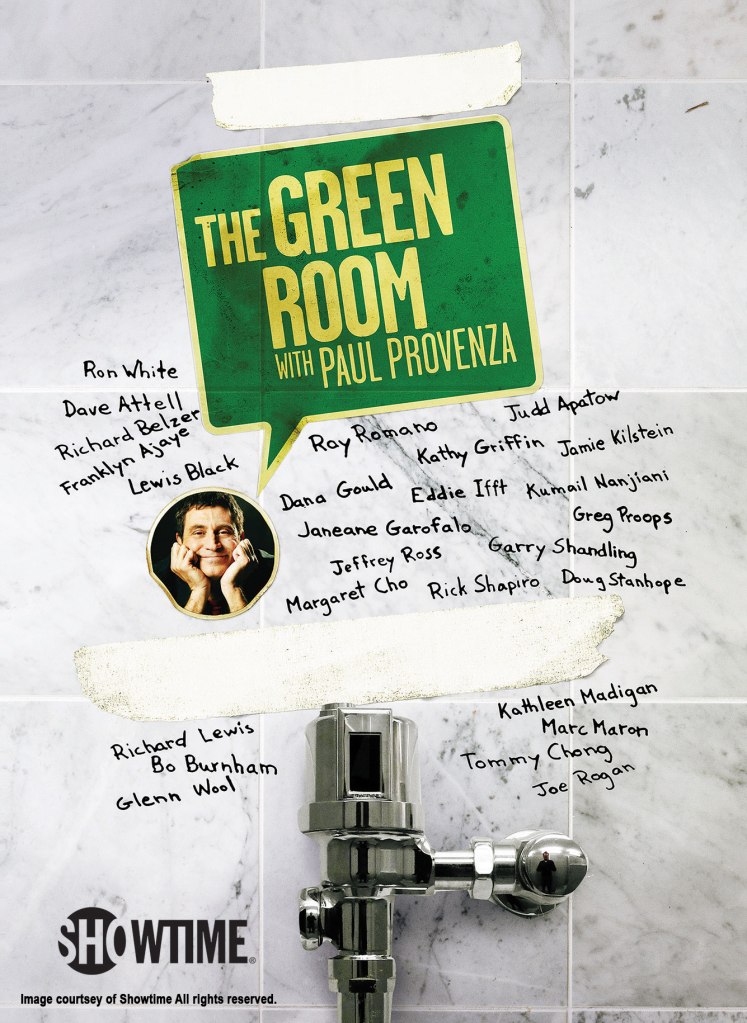
You now work as a producer on The Green Room with Paul Provenza. Any wild behind-the-scenes moments with comedians? Not really! Our show’s vibe is more like a reunion. A lot of these comics have known each other for 20 or 30 years, and even if they don’t know Paul, they’re still comedians. It’s not a diva situation. It’s very normal.
Is there going to be a third season? We don’t know yet—we’re waiting to hear. We love doing the show and have some great people we’d love to get on.
If it does come back, who are you hoping to book? That’s really Paul’s department—he’s the one with the master list. But we’d love to have Robin Williams, Dave Chappelle, and Steve Martin. The trick is scheduling—our shooting window is tight. But yeah, we’ve got dream guests in mind.
How important is it for audiences—and especially young comics—to understand the art of comedy? It’s hugely important. Comedy plays a vital role in our culture. It questions authority, speaks truth to power, and brings people together through laughter. Paul and I are like comedy anthropologists—we’re obsessed with how it works, how it lands, and how it evolves across different contexts.
I’ve been doing it for about a year. It’s a space where I get to have real conversations with comedians, artists, and thinkers. Comedians are my people—they’re smart, funny, kind, and deeply thoughtful. But I also like bringing in people with completely different worldviews. Next week, I’ve got John Dean on—he was White House Counsel during the Nixon administration.
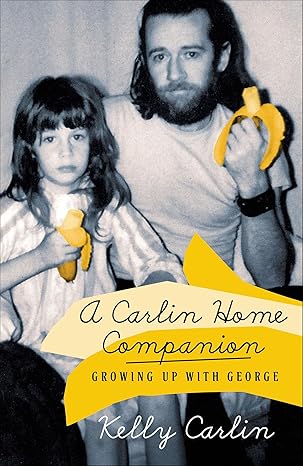
Tell us about A Carlin Home Companion. It’s my solo show, where I tell stories about growing up in the Carlin family, interwoven with clips from my dad’s career. It spans from when my parents met in 1960 to my dad’s death in 2008. It’s about our family dysfunction, how it shaped me, how it shaped our relationship—and how, in the end, we healed.
One reviewer from Laughspin described your show like this: “The audience was so enraptured, it felt like George himself had dropped in for a posthumous performance.” Does that kind of feedback help you feel like you’ve truly stepped into your own light? Yes, absolutely. I feel like I’ve finally arrived.
Where can people find tour info and tickets? KellyCarlin.com. All my tour info will be posted there.
If you could go back and talk to your younger self, what would you say? That’s a great question. I’d talk to the Kelly who was under 15 and say: Trust yourself. Trust your intelligence. Trust your creativity. You have something to say to the world, and you’ll find your own way to say it.
In a world still catching up to the truths her father shouted from the stage, Kelly Carlin-McCall isn’t just carrying the torch—she’s lighting her own path. With equal parts wit, depth, and defiance, she’s moved from the shadows into the spotlight with purpose. And if this conversation proves anything, it’s that she has plenty more to say—and she’s saying it in her own damn way.
🎙️ Check Out Her Podcast: Humans on the Verge with Kelly Carlin-McCallis a bold and insightful series that explores creativity, consciousness, and the chaos of being human—with honesty, humor, and heart. 📺 Watch the full playlist on YouTube. Humans on the Vere is also available on all other podcast outlets.
Editor’s Note: Select images in this feature were sourced from the verified X account of Kelly Carlin (@kelly_carlin). All photographs are used respectfully for editorial purposes only. All copyrights and image rights remain the sole property of their original owners.



Leave a comment