Filed Under: CHS, Cannabis Science, Media Narratives

Actor David Krumholtz, best known for his roles in iconic stoner films like Harold & Kumar Go to White Castle, never thought he’d find himself on the receiving end of cannabis-related medical issues. But after years of heavy consumption, he was repeatedly hit with Cannabinoid Hyperemesis Syndrome (CHS). This rare, debilitating condition left him hospitalized, suffering from extreme nausea, dehydration, and pain so unbearable that he described it as worse than cancer surgery.
“Many have called me ‘weak,’ but man, I challenge anyone to deal with this pain on their own without being absolutely desperate for help.”
His experience is undeniably real. The suffering he endured is no joke. But the way his story has been framed in the media and the backlash he has faced reveal a bigger problem. CHS is poorly understood and widely debated, and now, it’s being weaponized in the cannabis legalization fight.
CHS: Real, But Misunderstood
CHS remains one of the biggest medical mysteries in cannabis science. What causes it? Who is at risk? Why do some lifelong users never experience it, while others suffer through cycles of unimaginable pain? The medical community doesn’t have definitive answers. While research has identified patterns mostly among long-term, heavy daily users, there’s no universally accepted explanation for why it happens.
“They TOLD me and thousands of others that this is CHS. Whether it is or not, my experience tells me that the only cure is to stop smoking. Worked every time.”
What’s clear is that CHS is not some widespread, lurking killer. The vast majority of cannabis users will never experience it. Yet, sensational headlines have made it seem like anyone who lights up is rolling the dice with their health.
Krumholtz’s Reality vs. Media Panic
When Krumholtz shared his story, he wasn’t trying to wage war against cannabis; he was simply trying to warn people who may be suffering in silence. Yet, instead of a nuanced discussion, the media seized on the most dramatic angle: Former Stoner Actor Nearly Dies from Weed! Never mind that no one has ever died from a cannabis overdose that wouldn’t generate clicks.
“People that loved and championed and relied on cannabis, just like you do… We are left with no answers and tremendous scrutiny. So much so, that ONE of us (me) shared our experience and received everything from basic ridicule to death threats.”
HELP POT CULTURE MAGAZINE STAY ALIVE, AND INDEPENDENT
Support Pot Culture MagazineIndependent cannabis journalism survives on reader support. If you can, chip in a few dollars and help keep this work going.Support PCM
Krumholtz has since received everything from basic skepticism to outright death threats. Why? The cannabis culture has been engaged in a decades-long battle against misinformation. After years of fighting propaganda that claimed cannabis would make you psychotic, lazy, or violent, many consumers are instantly defensive when a new scare tactic appears.
The Real Danger: Fear-Mongering & Misinformation
The biggest risk of CHS isn’t just the condition itself; it’s how it’s being used to push fear-based narratives. Medical cannabis patients, veterans, and those with chronic pain rely on this plant. They don’t need another roadblock between them and their medicine. The moment CHS is turned into a political weapon, it becomes harder for people to access the relief they need.
“I love weed. It’s redundant at this point to even mention all the things I love about it, how important I think it is… I just think people need to be aware.”
Does CHS need more research? Absolutely. Does cannabis affect people differently? Of course. But fear shouldn’t replace facts.
The Bottom Line: More Science, Less Stigma
Krumholtz’s story deserves attention not as a reason to fear cannabis, but as a call for more medical research. If CHS is affecting a growing number of users, we need science to figure out why, not media hysteria making weed sound like a hidden killer.
At the end of the day, cannabis isn’t for everyone, and that’s fine. But one person’s extreme reaction shouldn’t define the plant for millions. Responsible use, honest discussion, and deeper research will do far more good than sensational headlines ever could.
© 2025 Pot Culture Magazine. All rights reserved. This content is the exclusive property of Pot Culture Magazine. It may not be reproduced, distributed, or transmitted in any form or by any means without prior written permission from the publisher, except for brief quotations in critical reviews.
F O R T H E C U L T U R E B Y T H E C U L T U R E
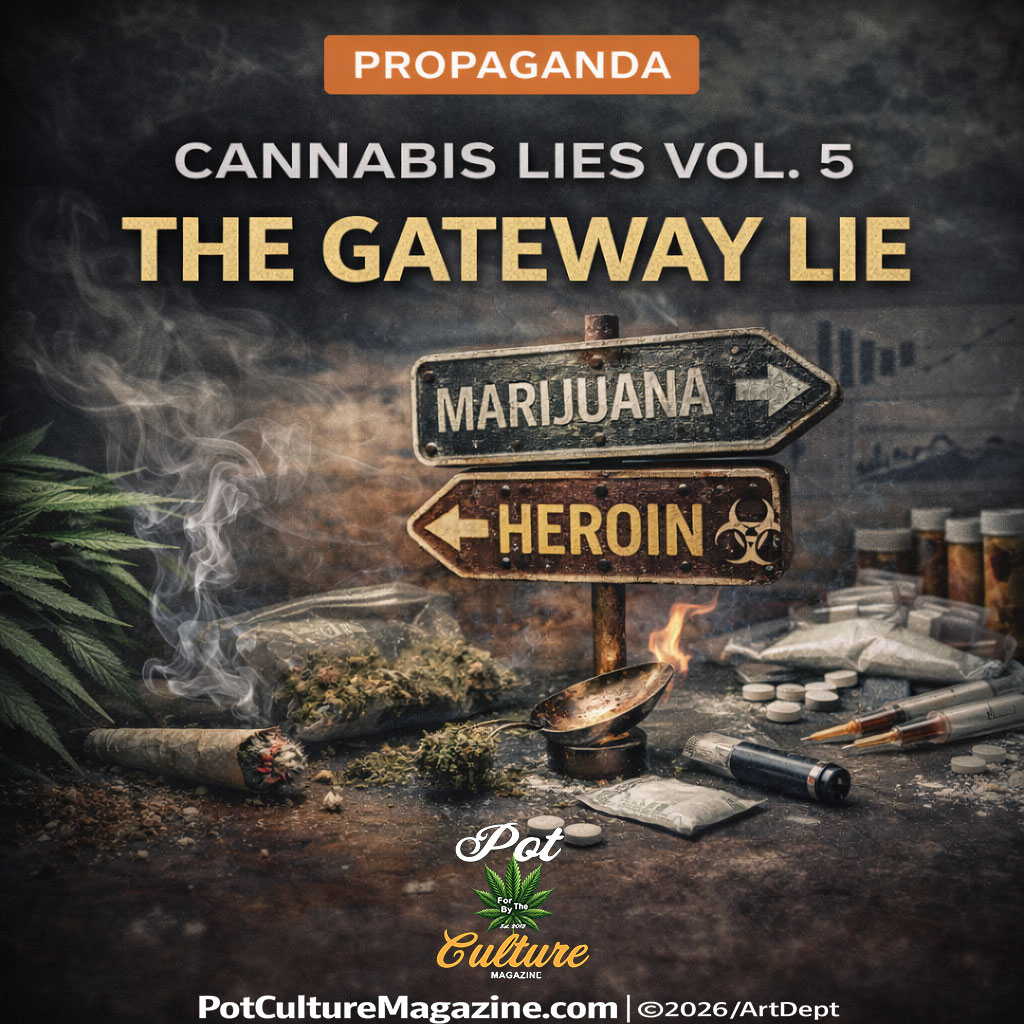
CANNABIS LIES Vol. 5: The Gateway Lie
For decades, politicians have claimed marijuana is a gateway to heroin and harder drugs. Federal youth surveys, NSDUH data, and NIDA’s own language tell a different story. Cannabis use is widespread, hard drug use remains rare, and most users do not progress. The data dismantles one of prohibition’s most durable fear narratives.

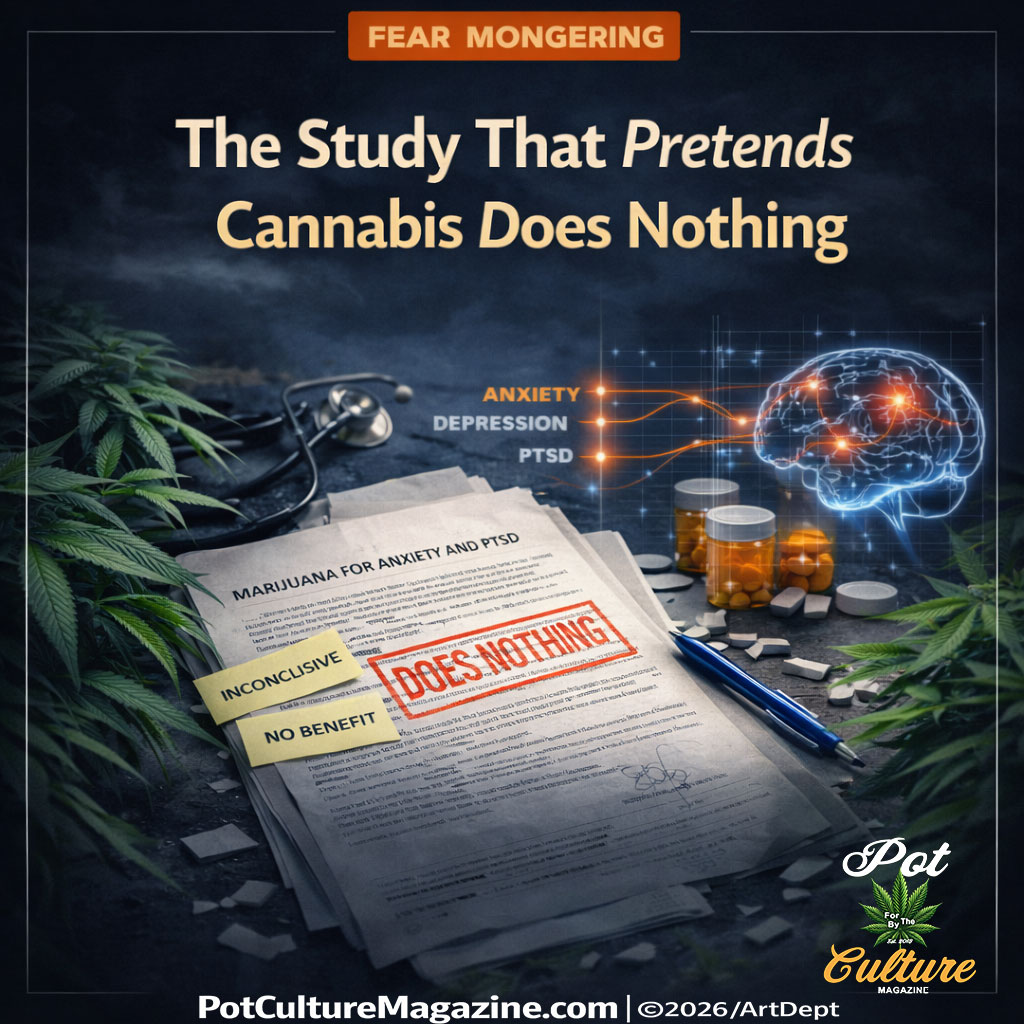
The Study That Pretends Cannabis Does Nothing
A new cannabis study claims marijuana does nothing for anxiety, depression, or PTSD. The reality is far more complicated. Decades of federal restrictions, limited research access, and synthetic substitutes have shaped the science. This breakdown exposes how incomplete data and selective interpretation continue to drive misleading headlines about cannabis and mental health.
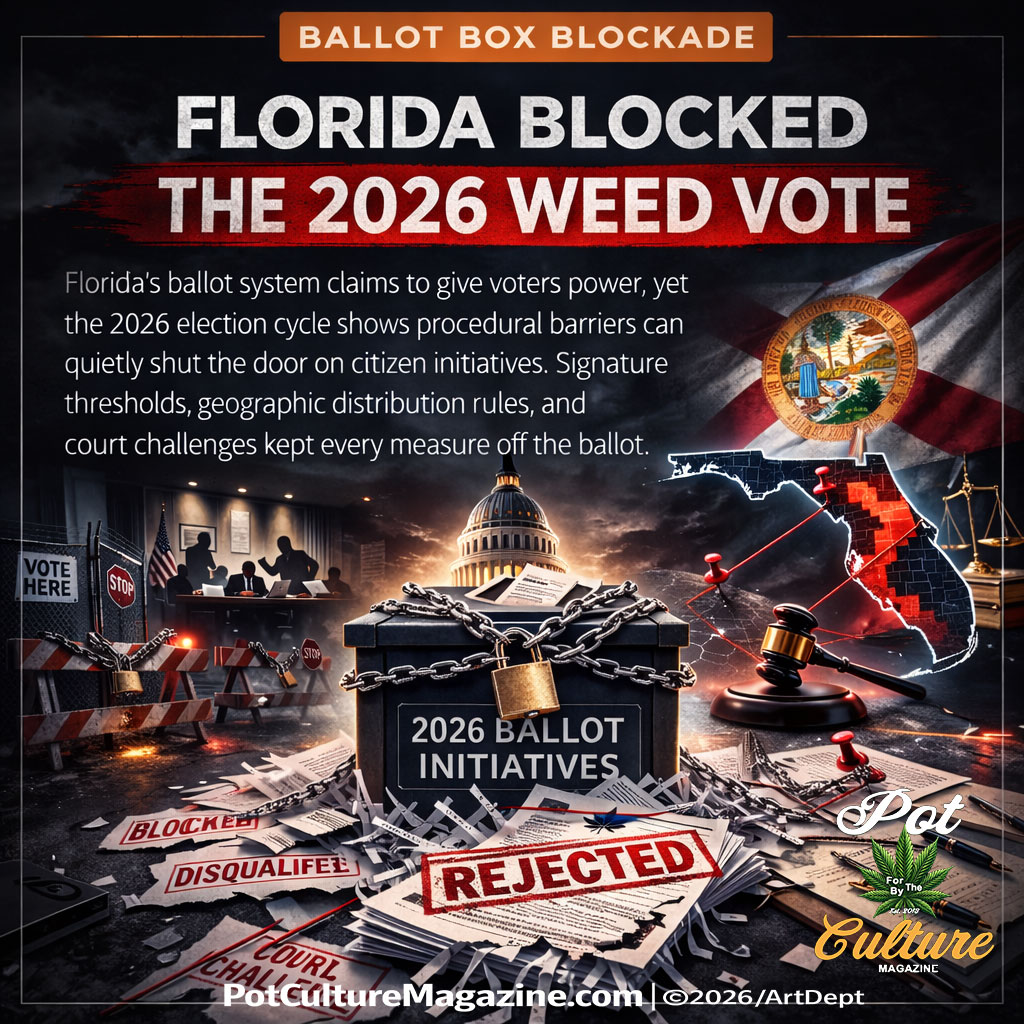
Florida Blocked the 2026 Weed Vote
Florida’s ballot system claims to give voters power, yet the 2026 election cycle shows how procedural barriers can quietly shut the door on citizen initiatives. Signature thresholds, geographic distribution rules, and court challenges blocked every measure from reaching voters, revealing how cannabis legalization fights are often decided by bureaucratic design long before election day.
Discover more from POT CULTURE MAGAZINE
Subscribe to get the latest posts sent to your email.
