Filed Under: Jazz, Joints & Left-Handed Lore

Some slang fades into obscurity, while others stick around like resin in an old pipe. Left-handed cigarette is one of those phrases that lingers in the hazy corners of weed culture, a relic of jazz clubs, prohibition-era paranoia, and the never-ending war on fun. But where did it come from? And why was marijuana singled out as left-handed?
The Sinister Origins of “Left-Handed”
To get why weed got the left-handed treatment, you have to understand one thing: lefties have always been screwed over by history.
- The word sinister literally comes from the Latin word for “left” because anything associated with the left side was considered evil, unlucky, or outright demonic.
- Throughout history, left-handedness was beaten out of children, criminalized, and feared. Some cultures believed the devil himself was a lefty.
- Even in language, being left-handed meant being suspect. A left-handed compliment is an insult in disguise. To do something in a left-handed way meant doing it dishonestly.
So when the jazz scene of the 1920s and ‘30s in Harlem adopted marijuana, a substance already on the government’s shit list, calling it a left-handed cigarette was a natural fit. It wasn’t just an illicit cigarette; it was a sinister, rebellious, and law-breaking one.
Harlem, Jazz, and the Devil’s Lettuce
The phrase left-handed cigarette is speculated to have originated in Harlem during the height of the jazz explosion. Marijuana was deeply embedded in the jazz culture of the 1920s and ‘30s, long before weed culture had its Woodstock moment.

- Jazz musicians swore by it, claiming it enhanced their creativity and loosened up their playing.
- Harlem speakeasies and underground clubs were full of jazz greats passing joints between sets, so much so that weed had its own slang within jazz circles (muggles, gage, tea).
- The government caught on, and prohibitionists latched onto the “reefer madness” narrative, demonizing both the drug and the Black musicians who used it.
In the eyes of the law, Harlem was a hotbed of “left-handed” activity, weed, music, and rebellion. The phrase “left-handed cigarette” was likely a coded way of referencing marijuana without tipping off the wrong people.
HELP POT CULTURE MAGAZINE STAY ALIVE, AND INDEPENDENT
Passing to the Left: The Ritual Theory
Some believe that the term might have also been influenced by the way a joint is traditionally passed to the left.
- In many circles, passing to the left is considered a golden rule (though some argue it’s just a Bob Marley-inspired myth).
- If Harlem jazz musicians established an early version of this tradition, it would make sense for their weed of choice to be labeled a left-handed cigarette.
But whether the phrase was a reference to passing habits or just another way of marking weed as taboo, the name stuck, and it carried through decades of stoner slang.
From Slang to Relic: What Happened to “Left-Handed Cigarette”?
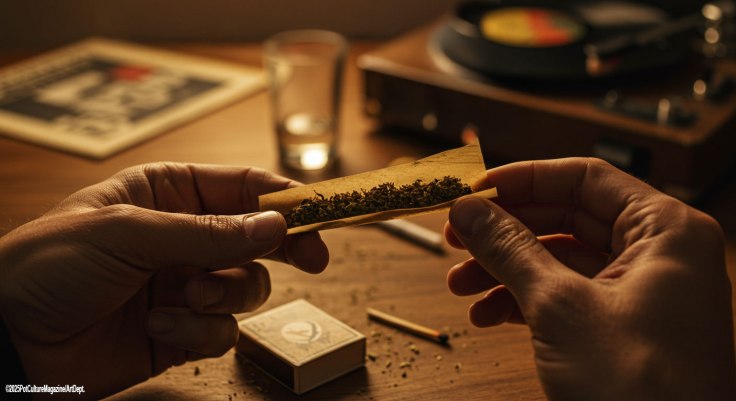
As the decades rolled on, left-handed cigarettes got pushed aside for shorter, punchier slang joint, doobie, reefer, spliff.
- By the time hippies and counterculture movements of the ‘60s took over, the term had already started to fade.
- By the ‘80s and ‘90s, even among old-school smokers, it sounded like something your grandpa might say in a “back in my day” rant.
- In 2024, it’s practically extinct, aside from the occasional novelty reference.
Still, the phrase has a certain vintage charm, a reminder that every joint carries a history of rebellion, stigma, and cultural evolution.
Will It Make a Comeback?
With nostalgia for vintage cannabis culture on the rise, there’s always a chance left-handed cigarettes could resurface. It might never replace joint or blunt, but in an era where everything old gets rebranded as “retro cool,” who’s to say it won’t pop up again?
After all, weed history is written in smoke, and like a ghost of jazz clubs past, this little phrase might still have a few puffs left in it.
Final Hit: Bring It Back
The left-handed cigarette wasn’t just a phrase; it was a coded nod to a subculture, a rebellion, and a middle finger to prohibition. Whether it came from Harlem, jazz musicians, or just the age-old belief that left meant wrong, one thing’s for sure: this piece of stoner slang deserves its place in history.
🔥 Now it’s up to you. Next time you light up, ditch the generic joint and call it a left-handed cigarette. See who catches on. Start the trend. Keep the culture alive. Pass it to the left.
© 2025 Pot Culture Magazine. All rights reserved. This content is the exclusive property of Pot Culture Magazine and may not be reproduced, distributed, or transmitted in any form or by any means without prior written permission from the publisher, except for brief quotations in critical reviews
F O R T H E C U L T U R E B Y T H E C U L T U R E

Texas Is Moving to Shut Down the Hemp Market
Texas helped build one of the largest hemp THC markets in the country, then moved to shut it down. As regulators tighten rules and enforcement increases, businesses are left exposed and the future of hemp-derived cannabinoids hangs in the balance. This is not a simple crackdown. It is a full policy reversal with real economic…


CANNABIS LIES Vol. 5: The Gateway Lie
For decades, politicians have claimed marijuana is a gateway to heroin and harder drugs. Federal youth surveys, NSDUH data, and NIDA’s own language tell a different story. Cannabis use is widespread, hard drug use remains rare, and most users do not progress. The data dismantles one of prohibition’s most durable fear narratives.

The Study That Pretends Cannabis Does Nothing
A new cannabis study claims marijuana does nothing for anxiety, depression, or PTSD. The reality is far more complicated. Decades of federal restrictions, limited research access, and synthetic substitutes have shaped the science. This breakdown exposes how incomplete data and selective interpretation continue to drive misleading headlines about cannabis and mental health.
Discover more from POT CULTURE MAGAZINE
Subscribe to get the latest posts sent to your email.

Leave a comment