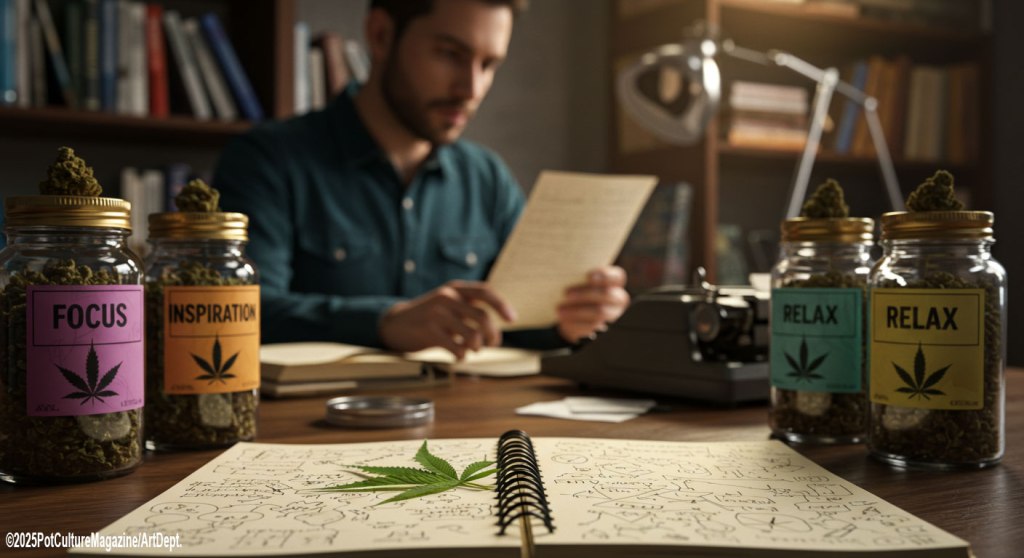
Picture this: the page stares back, blank and defiant. The cursor blinks, mocking your every half-formed thought. But there, just within reach, is a perfectly rolled joint or a steaming cup of herb-infused tea. You take a hit, exhale, and let the walls in your mind start to shift. Words flow. Ideas bloom. Cannabis and creativity a partnership older than your favorite dog-eared paperback.
Let’s get one thing straight: cannabis isn’t a magic wand that turns mediocre writers into literary gods. It’s a tool, like a well-worn pen or a perfectly tuned playlist. Used wisely, it can loosen the mental knots, quiet the inner critic, and push your writing into untapped territory. But use it wrong, and you’ll find yourself staring at a page of gibberish, wondering where the last three hours went.
So how do you make cannabis work for your words? Let’s break it down.
What’s Really Happening in Your Brain? THC, the main psychoactive compound in cannabis, gives dopamine levels a kick, nudging the brain into divergent thinking, the kind of thinking that’s all about generating ideas and making connections you wouldn’t normally see. That’s why some writers swear they find their best metaphors or plot twists after a puff or two. But too much THC? That’s when your brilliant ideas start to sound like the ramblings of a sleep-deprived philosophy major.
Science backs this up. Studies have shown cannabis can boost creativity, but it’s all about the dose. A little sparks inspiration; too much can send you spiraling into overthinking or, worse, a nap. Moderation is your muse.
Strains That Work for Writers. Not all weed is created equal, and that’s a damn good thing. Writers have different needs depending on the task at hand, and the right strain can make all the difference.
- Sativa: Your go-to for brainstorming and freewriting. Sativas are like a shot of adrenaline for your imagination. Perfect for generating wild ideas or diving into new projects.
- Indica: Best for editing, reflecting, or getting into the nitty-gritty of a complex scene. Indicas slow you down, making them ideal for detail-oriented tasks.
- Hybrids: A balanced choice for those marathon writing sessions that require both creativity and focus.
Pro tip: Keep a “strain journal” to track how different strains affect your writing. Note what you smoked, what you worked on, and whether the words flowed or fought you. Over time, you’ll build a personalized writer’s guide to cannabis.
Lessons from Legendary Writers: Some of the best writers in history weren’t shy about their love for cannabis. Hunter S. Thompson, the godfather of gonzo journalism, wove weed into his chaotic creative rituals. Jack Kerouac and Allen Ginsberg, the heart and soul of the Beat Generation, used it to break down societal norms and free their prose. Even Stephen King has spoken about how cannabis played a role in his early career.
What’s the takeaway? Cannabis isn’t a crutch; it’s a key. These legends didn’t rely on it to write; they used it to unlock doors they couldn’t open sober. If you’re going to use cannabis as part of your process, make it intentional. Build a ritual that grounds you in the work while letting your mind explore uncharted territory.
F O R T H E C U L T U R E B Y T H E C U L T U R E
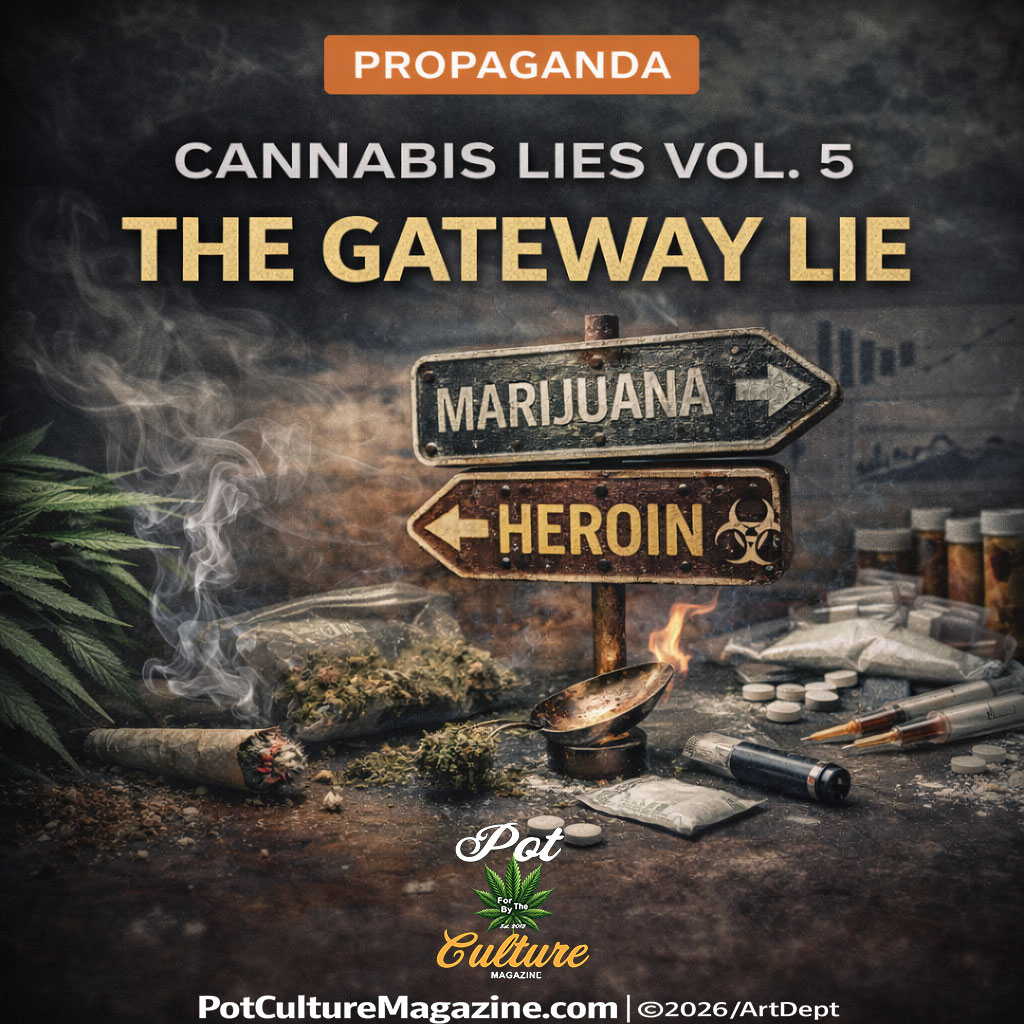
CANNABIS LIES Vol. 5: The Gateway Lie
For decades, politicians have claimed marijuana is a gateway to heroin and harder drugs. Federal youth surveys, NSDUH data, and NIDA’s own language tell a different story. Cannabis use is widespread, hard drug use remains rare, and most users do not progress. The data dismantles one of prohibition’s most durable fear narratives.

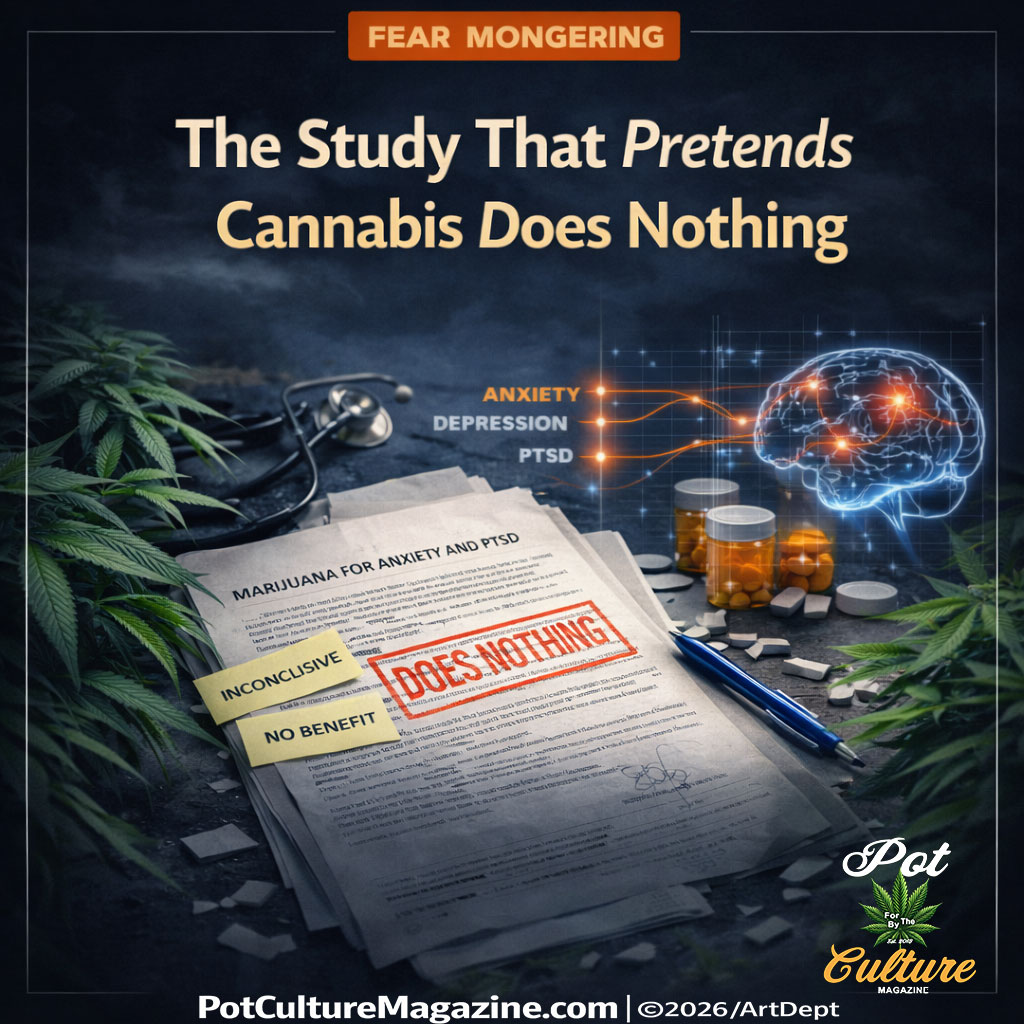
The Study That Pretends Cannabis Does Nothing
A new cannabis study claims marijuana does nothing for anxiety, depression, or PTSD. The reality is far more complicated. Decades of federal restrictions, limited research access, and synthetic substitutes have shaped the science. This breakdown exposes how incomplete data and selective interpretation continue to drive misleading headlines about cannabis and mental health.
Journaling While High If you’re not journaling while high, you’re missing out. Cannabis lowers inhibitions, which means the inner critic, that annoying voice that second-guesses every sentence, takes a backseat. This is your chance to let loose.
Grab a pen and try prompts like:
- What’s the most surreal place I can imagine?
- What would my protagonist do if they had nothing to lose? Don’t worry about coherence or grammar. Just write. Most of it will be junk, sure, but within that junk, you might find the seed of your next great idea.
Don’t Overdo It. Here’s the thing about cannabis: it’s a double-edged sword. A little can help you focus and free your mind. Too much, and you’re staring at the ceiling debating the meaning of life instead of hitting your word count.
Stick to microdosing. Pair cannabis with a timer to keep yourself on track. Balance it with coffee or tea to stay alert. And whatever you do, don’t edit while you’re high. What seems brilliant mid-session might turn out to be gibberish in the morning. What seemed brilliant in the moment might read like nonsense the next day.
Logging the Highs and Lows: Want to know if cannabis actually helps your writing? Track it. Keep a log of your sessions, noting what strain you used, how much, and what you worked on. Reflect afterward: Did you feel more focused? More creative? Or did you end up watching cat videos for two hours?
Apps like Daylio or a simple notebook can help you spot patterns. Over time, you’ll figure out when cannabis is your co-writer and when it’s just a distraction.
Writing is a journey, and cannabis is just one of many tools you can use to navigate it. So light up, write on, and let the herb do what it does best, unlocking the words waiting in the shadows. It’s not about dependence or shortcuts, it’s about finding what works for you, experimenting with intention, and embracing the process. So light up, write on, and let the words take you where they will.
© 2024 Pot Culture Magazine. All rights reserved. This content is the exclusive property of Pot Culture Magazine. It may not be reproduced, distributed, or transmitted in any form or by any means without prior written permission from the publisher, except for brief quotations in critical reviews.
F O R T H E C U L T U R E B Y T H E C U L T U R E
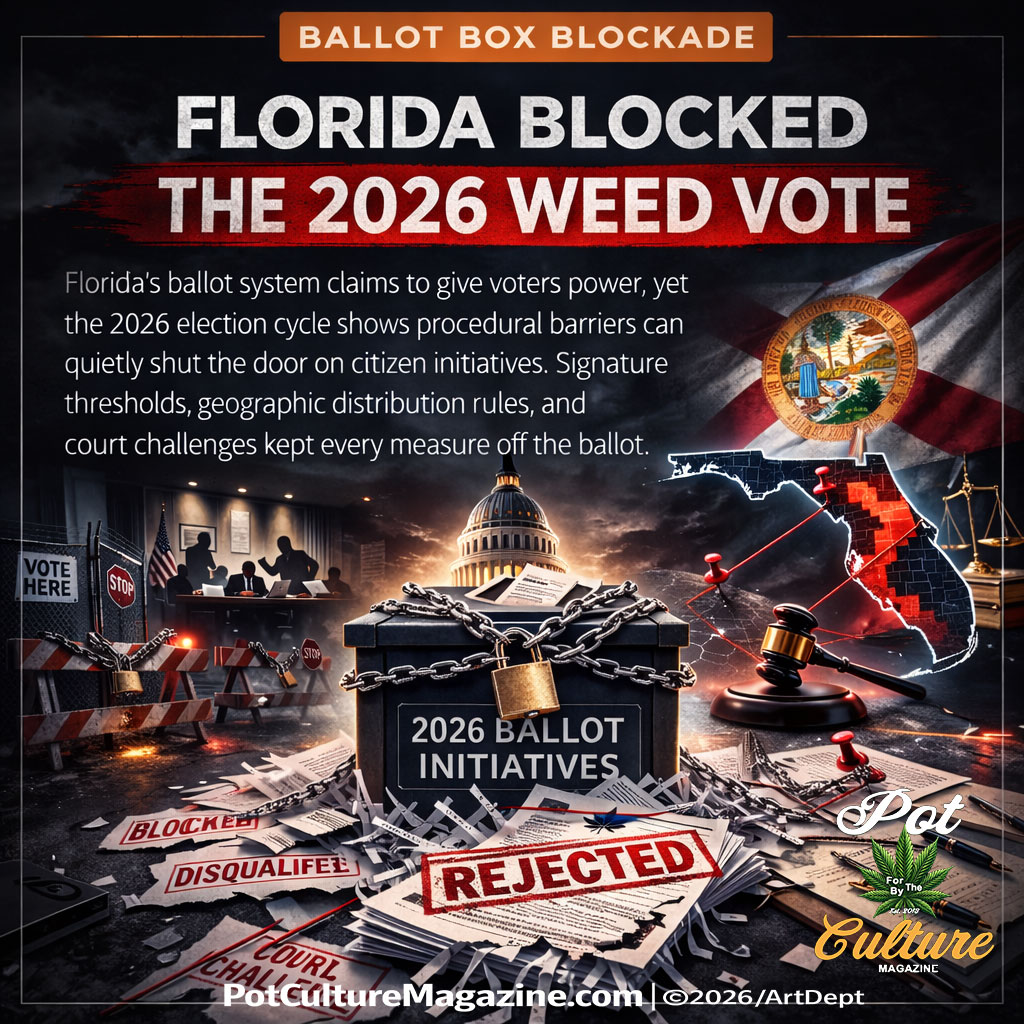
Florida Blocked the 2026 Weed Vote
Florida’s ballot system claims to give voters power, yet the 2026 election cycle shows how procedural barriers can quietly shut the door on citizen initiatives. Signature thresholds, geographic distribution rules, and court challenges blocked every measure from reaching voters, revealing how cannabis legalization fights are often decided by bureaucratic design long before election day.

The Cannabis Lie: Vol. 4 — The Crime Wave Lie
Politicians and pundits warned that legal cannabis would unleash a crime wave. The data tell a different story. From Colorado’s violent crime trends to DOJ time-series research and statewide arrest declines, the evidence shows no consistent long-term surge tied to legalization. The numbers never matched the panic.

South Africa Legalized Weed, But Not the Market
South Africa recognized private adult cannabis use and home cultivation, but never built a legal domestic market around them. With buying and selling still largely outside the law, the illicit trade remains dominant while regulators scramble to set limits, draft rules, and prepare a broader Cannabis Bill that could finally address commerce.
Discover more from POT CULTURE MAGAZINE
Subscribe to get the latest posts sent to your email.

Leave a comment