
It’s been nearly three decades since Chris Farley’s remarkable spark was snuffed out on a cold December day, and yet the memory of his frantic, big-hearted genius refuses to dim. Back in the late ‘80s and early ‘90s, Farley rocketed out of America’s heartland and barreled his way into the national imagination. He wasn’t just another funny guy; he was a human firecracker, lighting up rooms with an uproarious, body-slinging style all his own. Audiences howled at his shameless physical gags and the wild mischief dancing in his eyes. Beneath the antics, though, simmered a restless soul who struggled mightily with his own demons—and who would ultimately find himself caught in a fatal loop, mirrored by one of his greatest idols.
For Farley, who was born and raised in Wisconsin, the path to comic stardom seemed carved out by legends who came before him. He looked up to John Belushi, another broad-shouldered funnyman who worked the same Chicago comedy stages and earned his stripes on Saturday Night Live. In chasing Belushi’s brilliance, Farley also stumbled into the same pitfalls—an appetite for all sorts of excess. By the time television viewers knew him as the motormouthed motivational speaker crashing through coffee tables, or as one of the vacantly glamorous “Gap Girls,” Farley’s offstage life was already balancing on a dangerous tightrope.
Success kept rolling in. The world flocked to films like Tommy Boy, hungry to see him bumble and holler alongside friends like David Spade, delivering a uniquely awkward charm that made him impossible not to love. But that signature mania had a cost: Farley was devouring every thrill he could find. Addictions to alcohol, drugs, and food came and went in waves. Trips to rehab piled up. Friends pleaded. Health worries mounted. Despite moments of sobriety, he just couldn’t seem to outrun the shadow that was forever at his back.
By December of 1997, Farley’s once-limitless energy had spiraled into dangerous territory. He drifted through Chicago’s nightlife, searching for the next party, the next laugh, the next fleeting sense of validation. In the early afternoon of December 18, he was found in his high-rise apartment, motionless and alone. He was 33—the same age Belushi had been when addiction laid him low. The official cause: an overdose involving a deadly mix of substances, compounded by his failing heart. He left behind a legacy scattered across late-night sketches, box-office hits, and a legion of colleagues and fans who knew they would never again encounter that rare, reckless brilliance he carried inside.
HELP POT CULTURE MAGAZINE STAY ALIVE, AND INDEPENDENT
In the aftermath, few who knew him were shocked. Heartbroken, yes—but hardly surprised. Farley had openly acknowledged the tug-of-war raging within. The tragedy, to many, was less that it happened than that it seemed so heartbreakingly inevitable. He’d often hinted at surrendering control to a higher power, aware that his path might end abruptly if he didn’t find a way to change course. He recognized the trap. In the end, he just couldn’t escape it.
Reactions poured in as the comedy world tried to make sense of its fallen star. Friends like Adam Sandler and Chris Rock spoke often of Farley’s kindness and wild spirit, while David Spade—his closest partner-in-crime—found himself too shattered to attend the funeral, not out of anger or distance but from sheer emotional overload. Farley’s passing felt like a grim fairy tale ending: the big-hearted jester who made kings and commoners alike laugh until they cried, only to vanish too soon, leaving a quiet ache where his booming laughter used to be.
The years have since rolled by, and yet Chris Farley’s name still brings smiles. His style—equal parts locomotive force and teddy-bear warmth—inspired countless comedians who followed. Those who loved him keep the torch burning. They sing songs in his honor, share old stories, and imagine what he could have done if he’d found a way through his struggles. He remains a cautionary tale, a mythic figure in modern comedy’s tapestry. Even today, plans are underway for a film dramatizing his life, ensuring his story will reach new ears and stir new hearts.
So Chris Farley remains in the cultural bloodstream, not merely as the funnyman who took a tumble or the tragic star who couldn’t win his internal war. He endures as a complicated icon—a gentle, explosive soul who brought joy to millions, yet grappled privately with the very forces that would claim him. In remembering Farley, we recognize a man who blazed a dazzling trail straight into the limelight, then slipped heartbreakingly into the dark, leaving us forever laughing and mourning in equal measure.
© 2024 Pot Culture Magazine. All rights reserved. This content is the exclusive property of Pot Culture Magazine and may not be reproduced, distributed, or transmitted in any form or by any means without prior written permission from the publisher, except for brief quotations in critical reviews.
F O R T H E C U L T U R E B Y T H E C U L T U R E

CANNABIS LIES Vol. 5: The Gateway Lie
For decades, politicians have claimed marijuana is a gateway to heroin and harder drugs. Federal youth surveys, NSDUH data, and NIDA’s own language tell a different story. Cannabis use is widespread, hard drug use remains rare, and most users do not progress. The data dismantles one of prohibition’s most durable fear narratives.

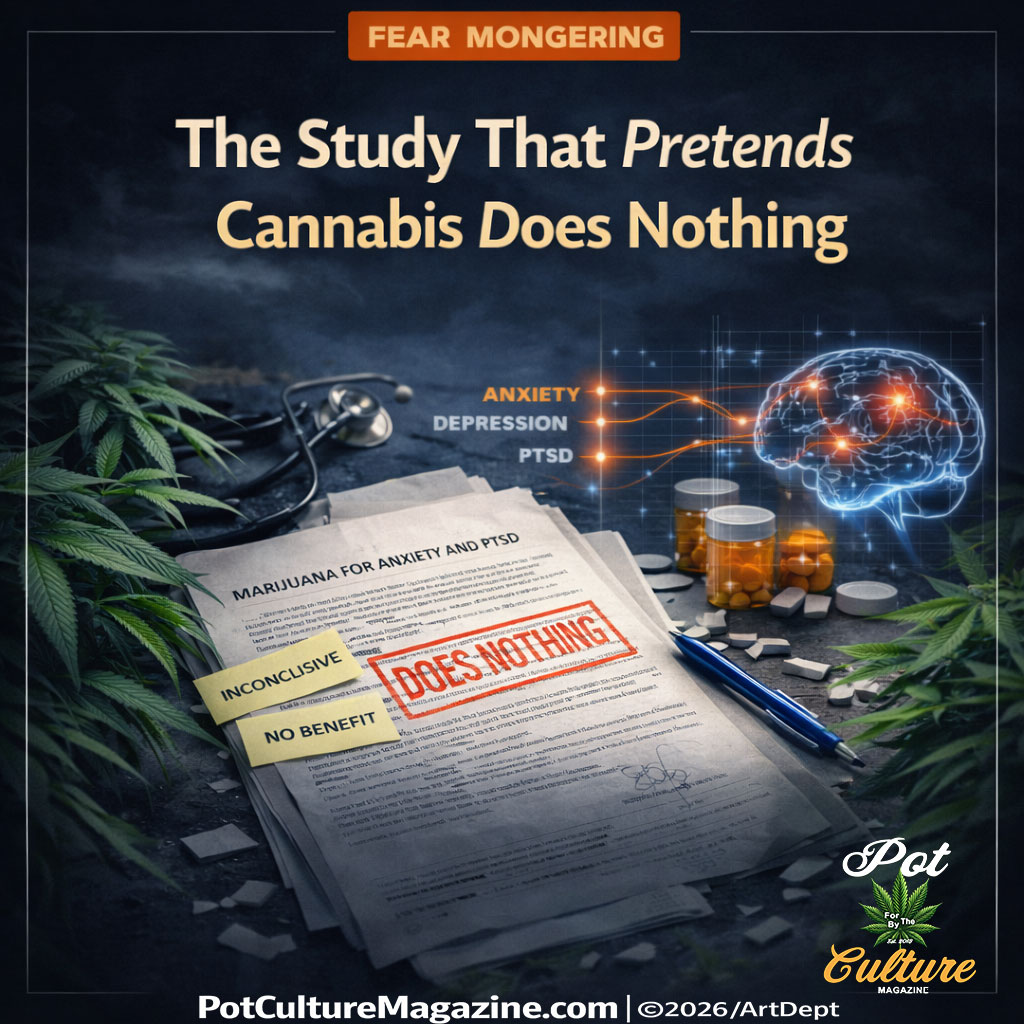
The Study That Pretends Cannabis Does Nothing
A new cannabis study claims marijuana does nothing for anxiety, depression, or PTSD. The reality is far more complicated. Decades of federal restrictions, limited research access, and synthetic substitutes have shaped the science. This breakdown exposes how incomplete data and selective interpretation continue to drive misleading headlines about cannabis and mental health.
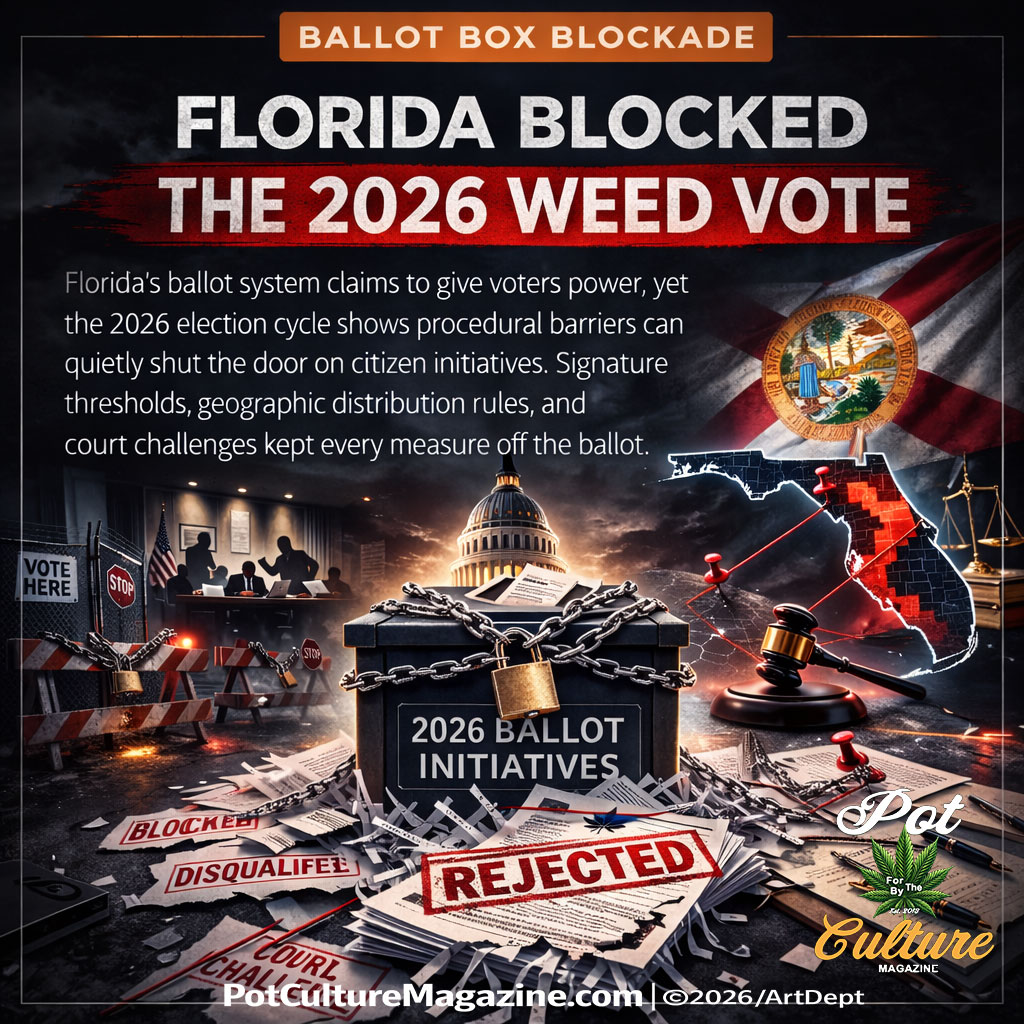
Florida Blocked the 2026 Weed Vote
Florida’s ballot system claims to give voters power, yet the 2026 election cycle shows how procedural barriers can quietly shut the door on citizen initiatives. Signature thresholds, geographic distribution rules, and court challenges blocked every measure from reaching voters, revealing how cannabis legalization fights are often decided by bureaucratic design long before election day.
Discover more from POT CULTURE MAGAZINE
Subscribe to get the latest posts sent to your email.

Leave a comment