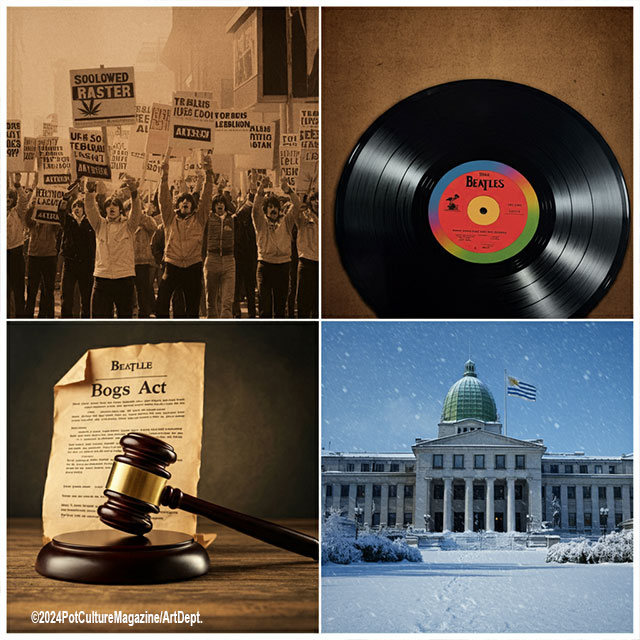
Winter doesn’t hibernate. It rebels. The chill in the air has always been a backdrop for revolution, transformation, and defiance. Between mid-November and December, the counterculture and cannabis movements lit up moments that shattered norms, pissed off authorities, and planted seeds for a freer future. Here’s how winter became the season of rebellion.
November 12, 1966: The Sunset Strip Riots

Picture this: neon signs glowing, cops wielding batons, and the streets of West Hollywood swarming with pissed-off kids. The Sunset Strip curfew riots weren’t just about a 10 p.m. bedtime for teenagers—they were a battle cry against conformity and a system that just didn’t get it. Protestors like Peter Fonda and Jack Nicholson weren’t just future icons; they were standing on the frontline of a generational war.
“We’re not bothering anyone!”
—Peter Fonda, shouting as riot cops pushed through the crowd.
But the establishment didn’t care about peace signs or guitars—they cared about control. And for the counterculture, that was reason enough to fight. This wasn’t some peaceful sit-in. It was the counterculture’s roar, shaking the establishment to its core. The result? A moment that reverberated through every antiwar march, every acid-drenched anthem, and every joint sparked in defiance of outdated laws.
November 24, 1967: Psychedelia Takes the Stage
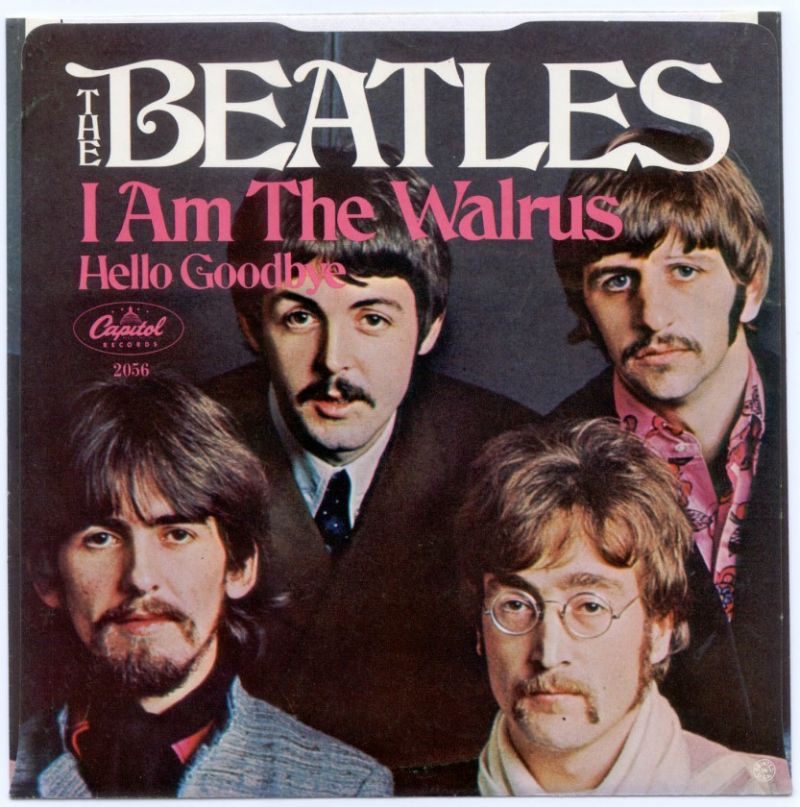
One year later, rebellion traded batons for basslines. The Beatles dropped “I Am the Walrus,” a kaleidoscope of sound that flipped the music industry on its head. This wasn’t just a song but a psychedelic manifesto, a middle finger to the buttoned-up music establishment. Every weird lyric, every warped chord screamed, “We’re not here to fit in.”
While the airwaves soaked in the bizarre brilliance, the counterculture had found its soundtrack—proof that sometimes, rebellion sounds better with a beat.
December 4–8, 1967: Draft Resistance Fires Up

Winter may freeze the ground, but it couldn’t chill the heat of antiwar resistance. Across the U.S., hundreds of protestors shut down draft board centers, refusing to let their generation be cannon fodder for a pointless war. Leaders like Allen Ginsberg weren’t just mouthing off—they were getting arrested for it, cementing their place as voices for a movement sick of bullshit excuses from Uncle Sam.
“Allen Ginsberg didn’t just write poetry; he lived it.”
Arrested during the protests, his actions became a rallying cry for a generation unwilling to let their lives be controlled by war.
This wasn’t just protest—it was war on the war, fought with sit-ins, chants, and enough courage to stand against one of the most powerful governments in the world.
November 2, 1951: The Boggs Act, AKA the Buzzkill Blueprint

Before the revolution, there was repression. The Boggs Act wasn’t just a law—it was a hammer, smashing the lives of anyone caught with a little weed. Mandatory minimum sentences turned harmless tokes into jail time. For decades, the act hung over cannabis culture like a dark cloud, fueling a war on drugs that hit hardest on marginalized communities.
But rebellion doesn’t die. It burns quietly, waiting for its moment.
December 10, 2013: Uruguay Blazes the Trail

Fast-forward to a very different December. Uruguay flipped the script, becoming the first country to legalize cannabis nationwide. This wasn’t just a law—it was a beacon, lighting the way for the global cannabis movement. While other nations dragged their feet, Uruguay stood tall, proving that legalization wasn’t just possible—it was necessary.
“We’re not making a law for the drug. We’re regulating a market.”
—President José Mujica, laying down the logic that still eludes much of the world.
For cannabis enthusiasts, this was a milestone that felt like a middle finger to decades of prohibition. One small country, one massive step for the plant we love.
The Winter Rebellion Lives On
Winter is supposed to be quiet, right? Wrong. From the Sunset Strip to Uruguay, these months have been a crucible for change, a time when rebellion turns into revolution. Whether it’s music that twists your mind, protests that shut down the system, or laws that finally reflect reality, winter doesn’t just wait for spring—it builds the fire.
“Whoever controls the media, the images control the culture.”
—Allen Ginsberg’s words remain a timeless reminder of what’s at stake.
As cannabis advocates still fight for federal legalization in the U.S., let’s remember this: rebellion doesn’t fade with the seasons. It just keeps blazing, louder and prouder, year after year. And winter? Winter is where it starts.
© 2024 Pot Culture Magazine. All rights reserved. This content is the exclusive property of Pot Culture Magazine and may not be reproduced, distributed, or transmitted in any form or by any means without prior written permission from the publisher, except for brief quotations in critical reviews.
Discover more from POT CULTURE MAGAZINE
Subscribe to get the latest posts sent to your email.

Leave a comment