Ever stared at that bearded face on your rolling papers and thought, “Who the hell is this guy?” If you’ve ever wondered while rolling one up, you’re not alone. The Zig-Zag Man has been a mysterious, silent witness to countless smoke sessions, evolving from a brand mascot to a full-blown cultural icon with a story as wild as a last-minute midnight run for snacks.
The legend kicks off in the bloody backdrop of the mid-1800s, during the chaos of the Crimean War. Picture it: a French soldier, part of the infamous Zouave regiment, those flashy daredevils known for their fierce fighting and even fiercer style, finds himself in the heat of battle. His clay pipe? Smashed by a stray bullet. But this guy wasn’t about to let that ruin his day. Quick thinking and desperate, he tears a scrap of paper from a musket cartridge, rolls his tobacco, and lights up. Improvised? Absolutely. Legendary? You bet. That one act of battlefield brilliance sparked a legacy that would blaze on long after the cannons stopped firing.
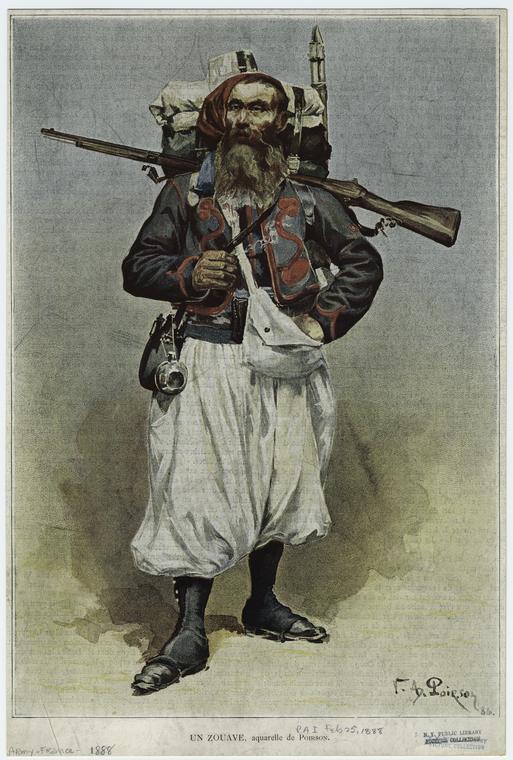
Fast forward to 1894, when Maurice and Jacques Braunstein, a couple of savvy French brothers, caught wind of this story. They turned it into a brand that would outlive empires, Zig-Zag, with that bearded, battle-hardened Zouave staring confidently from every pack. And why “Zig-Zag”? Because of their interleaving paper design that lets you pull out one sheet as smoothly as a well-rolled joint. No fuss, no tearing, just pure efficiency. Genius, right?
The Zig-Zag Man went from war hero to rolling paper deity, presiding over generations of smoke circles. By the time the Woodstock era hit, he was already an icon. Zig-Zag papers became the go-to for every free spirit who wanted more from life than just a quick puff. And when Dr. Dre’s The Chronic dropped with Zig-Zag in full view on the cover, it sealed the deal: this wasn’t just paper, it was part of the culture, woven into hip-hop, rebellion, and the cannabis movement itself.

The Zig-Zag Man has shown up beyond just the world of rolling papers. He’s been spotted on concert posters, merchandise, and even in the art of the counterculture era. His face has become a nod to those who value authenticity and creativity, a symbol that transcends smoking circles and finds its way into the broader cultural landscape. Whether referenced in street art or in underground zines, the image serves as a badge of nonconformity.
There’s a certain nostalgia attached to seeing that familiar bearded face. For those who rolled their first joint back in the day, that pack of Zig-Zags brings a rush of memories: the laughter, the music, the sense of rebellion that hung in the air like smoke. Zig-Zag papers have become more than just a tool; they’re a symbol of the past and present, a connection between generations of cannabis enthusiasts. They’ve become the paper of choice not just for their quality, but for the stories they hold and the rituals they’ve witnessed.
And with fame comes the lore. Some stoners will tell you that the Zig-Zag Man is more than just a face on a pack; he’s a kind of guardian spirit, watching over smoke sessions with that calm, knowing look. Others claim he holds the secrets to legendary nights that start with, “Pass me the Zig-Zags.” It’s fun to think that the silent mascot might have stories that could light up a room.
There are some quirky, fun facts, too. Ever heard about the time Zig-Zag built a life-sized paper boat for a marketing stunt? Or how the brand’s logo had subtle tweaks over the years to keep up with the times, but always kept that bearded figure intact? That’s the dedication to heritage right there.
So why does the Zig-Zag Man still matter? In a world where brands come and go like smoke in the wind, this guy sticks around. He’s more than an old-school logo; he’s the embodiment of every stoner who’s ever had to get creative when their piece broke or the lighter ran out. He’s proof that sometimes the best solutions are the simplest ones. The story of that French soldier rolling up under fire isn’t just a tale; it’s a metaphor for the stoner’s credo: adapt, improvise, keep rolling.
Even today, you can spot the Zig-Zag Man at festivals, on T-shirts, or inked as tattoos, an eternal nod to a legacy that’s lasted through generations. He’s a reminder that rolling isn’t just a means to an end; it’s a ritual, a rite of passage, a statement.
So next time you peel that rolling paper out and see him looking back at you, remember the story. The original innovator, the unsung hero of the rolling culture, and the keeper of countless smoke sessions. Light up, and give the old soldier a nod.
© 2024 Pot Culture Magazine. All rights reserved. This content is the exclusive property of Pot Culture Magazine and may not be reproduced, distributed, or transmitted in any form or by any means without prior written permission from the publisher, except for brief quotations in critical reviews.
F O R T H E C U L T U R E B Y T H E C U L T U R E

Florida Blocked the 2026 Weed Vote
Florida’s ballot system claims to give voters power, yet the 2026 election cycle shows how procedural barriers can quietly shut the door on citizen initiatives. Signature thresholds, geographic distribution rules, and court challenges blocked every measure from reaching voters, revealing how cannabis legalization fights are often decided by bureaucratic design long before election day.


The Cannabis Lie: Vol. 4 — The Crime Wave Lie
Politicians and pundits warned that legal cannabis would unleash a crime wave. The data tell a different story. From Colorado’s violent crime trends to DOJ time-series research and statewide arrest declines, the evidence shows no consistent long-term surge tied to legalization. The numbers never matched the panic.

South Africa Legalized Weed, But Not the Market
South Africa recognized private adult cannabis use and home cultivation, but never built a legal domestic market around them. With buying and selling still largely outside the law, the illicit trade remains dominant while regulators scramble to set limits, draft rules, and prepare a broader Cannabis Bill that could finally address commerce.
Discover more from POT CULTURE MAGAZINE
Subscribe to get the latest posts sent to your email.

Leave a comment