Filed Under: Viva la revolución

France, known for its progressive views on many issues, is dragging its feet on cannabis. Even though the country ranks among the highest in cannabis consumption in Europe, legalization is still off the table, mainly thanks to outdated political resistance and public health fears. But here’s the kicker: it’s not just about rolling a joint. The debate runs deeper, cutting into public safety, health, and, surprise, surprise, economics. Let’s break down why France needs to quit stalling and embrace cannabis legalization.
The Politics of Inaction
The biggest obstacle to cannabis legalization in France isn’t the people, it’s the politicians. Despite a growing number of people using cannabis recreationally and a successful medical cannabis pilot program, the French government refuses to make the next move. President Macron’s administration is playing it safe, avoiding any bold steps toward full legalization. Instead, they cite the need for more studies, which is a classic political cop-out. It’s less about science and more about not wanting to ruffle feathers.
And then there’s MILDECA (Mission Interministérielle de Lutte contre les Drogues et les Conduites Addictives), the government agency tasked with coordinating the country’s drug policies. MILDECA plays a major role in pushing back against any cannabis reform. They cite concerns over public health risks, particularly youth addiction and the potential for increased drug abuse. With such a powerful entity shaping drug policy, any significant move toward legalization faces an uphill battle.
Cultural Resistance
While the French might be smoking their weed behind closed doors, the culture still holds some resistance. There’s a stigma attached to cannabis that makes it seem like it’s only used by criminals or lazy stoners. It’s the same old story: some people can’t wrap their heads around the idea that cannabis can be used responsibly, just like alcohol or tobacco.
Opponents argue that legalizing cannabis will lead to an explosion of use, particularly among young people. But time and again, countries with legal cannabis have shown that’s simply not the case. If anything, legalization gives governments more control over who’s buying, and it takes the product out of the hands of illegal dealers.
Cannabis Could Light Up France’s Economy
It’s no secret that legalizing cannabis could rake in big bucks for the French economy. Look at Colorado, which collected hundreds of millions in tax revenue from legal cannabis sales. France could easily tap into this same economic boom, especially with one of the highest rates of cannabis use in Europe.
And it’s not just about tax revenue. Legal cannabis would create thousands of jobs in cultivation, distribution, and retail. France already has a booming agricultural sector; it’s not a stretch to imagine the country growing some of the best cannabis in Europe. Add in the potential for cannabis tourism, and you’ve got a recipe for serious economic growth.
Public Health Benefits of Legalization
Legalizing cannabis would actually help public health rather than hurt it. Right now, consumers are at the mercy of an unregulated market where they have no clue what’s in their weed. Legalization would allow for rigorous safety standards, meaning products would be tested for pesticides, mold, and other harmful contaminants. In short, legal weed is safe weed.
Another bonus: legalization would significantly cut down on black market activity. When people have access to a safe, legal alternative, why would they turn to illegal dealers? This would reduce the influence of criminal organizations and free up law enforcement to focus on more serious crimes.
Lessons from Abroad
France isn’t the only country grappling with cannabis legalization. Germany, Canada, and several U.S. states have already shown how to successfully roll out legal cannabis markets. The sky didn’t fall in those places. Instead, they saw economic benefits, improved public health, and reduced black market activity.
France has the opportunity to follow suit, but political foot-dragging is slowing things down. The government needs to note what’s happening globally and realize that legalization isn’t some dangerous experiment; it’s a proven success in other parts of the world.
It’s a Social Justice Issue Too
Cannabis legalization isn’t just about money and public health; it’s also about justice. Right now, cannabis-related arrests disproportionately affect minority communities. Legalizing cannabis would put an end to that by removing the criminal penalties associated with possession and use. It would free up the courts and reduce the burden on France’s overcrowded prisons.
It’s Time to Legalize
France can no longer afford to ignore the growing call for cannabis legalization. The benefits are clear: economic growth, public health improvements, job creation, and social justice reform. As countries around the world embrace cannabis, France risks being left behind.
It’s time for France to stop dragging its feet, ditch the outdated stigmas, and take bold action to legalize cannabis for the good of its economy, its people, and its future.
© 2024 Pot Culture Magazine. All rights reserved. This content is the exclusive property of Pot Culture Magazine and may not be reproduced, distributed, or transmitted in any form or by any means, including photocopying, recording, or other electronic or mechanical methods, without the prior written permission of the publisher, except in the case of brief quotations in critical reviews or analyses.
F O R T H E C U L T U R E B Y T H E C U L T U R E
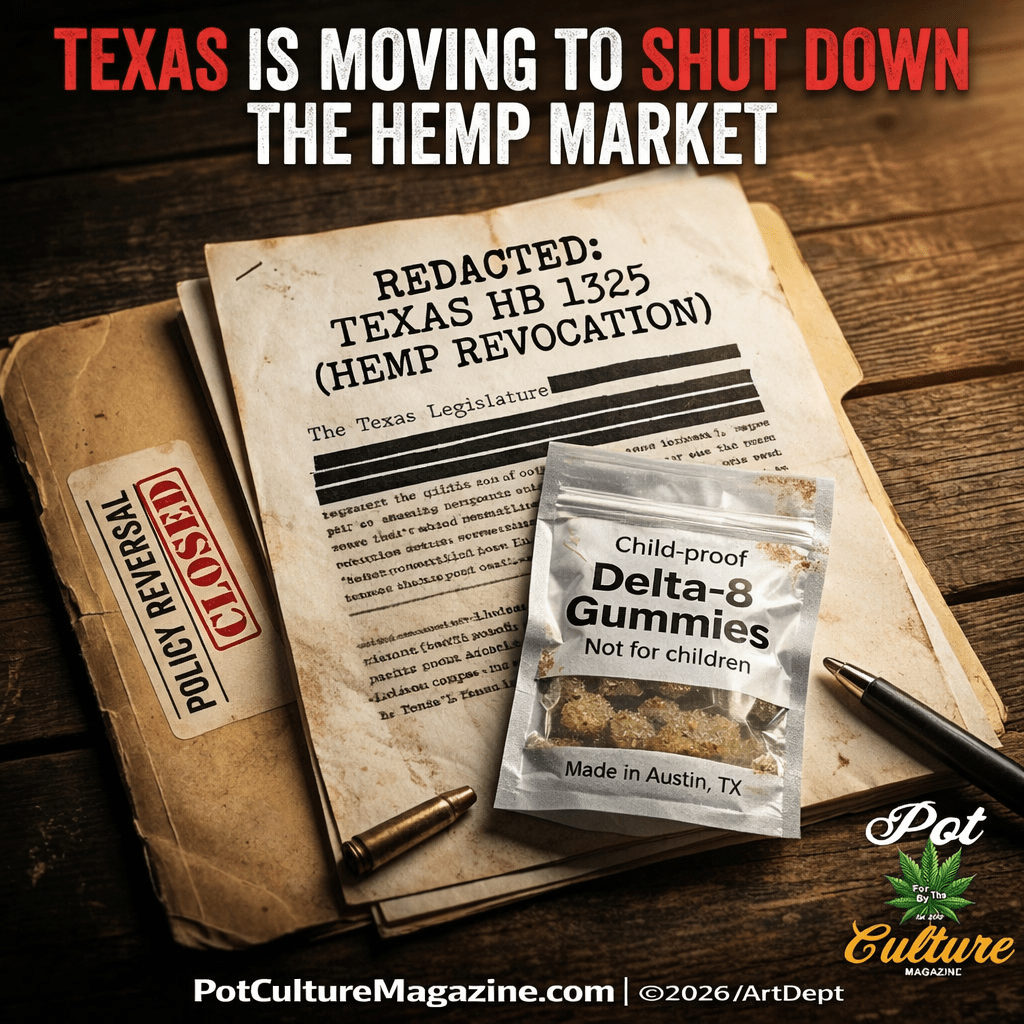
Texas Is Moving to Shut Down the Hemp Market
Texas helped build one of the largest hemp THC markets in the country, then moved to shut it down. As regulators tighten rules and enforcement increases, businesses are left exposed and the future of hemp-derived cannabinoids hangs in the balance. This is not a simple crackdown. It is a full policy reversal with real economic…

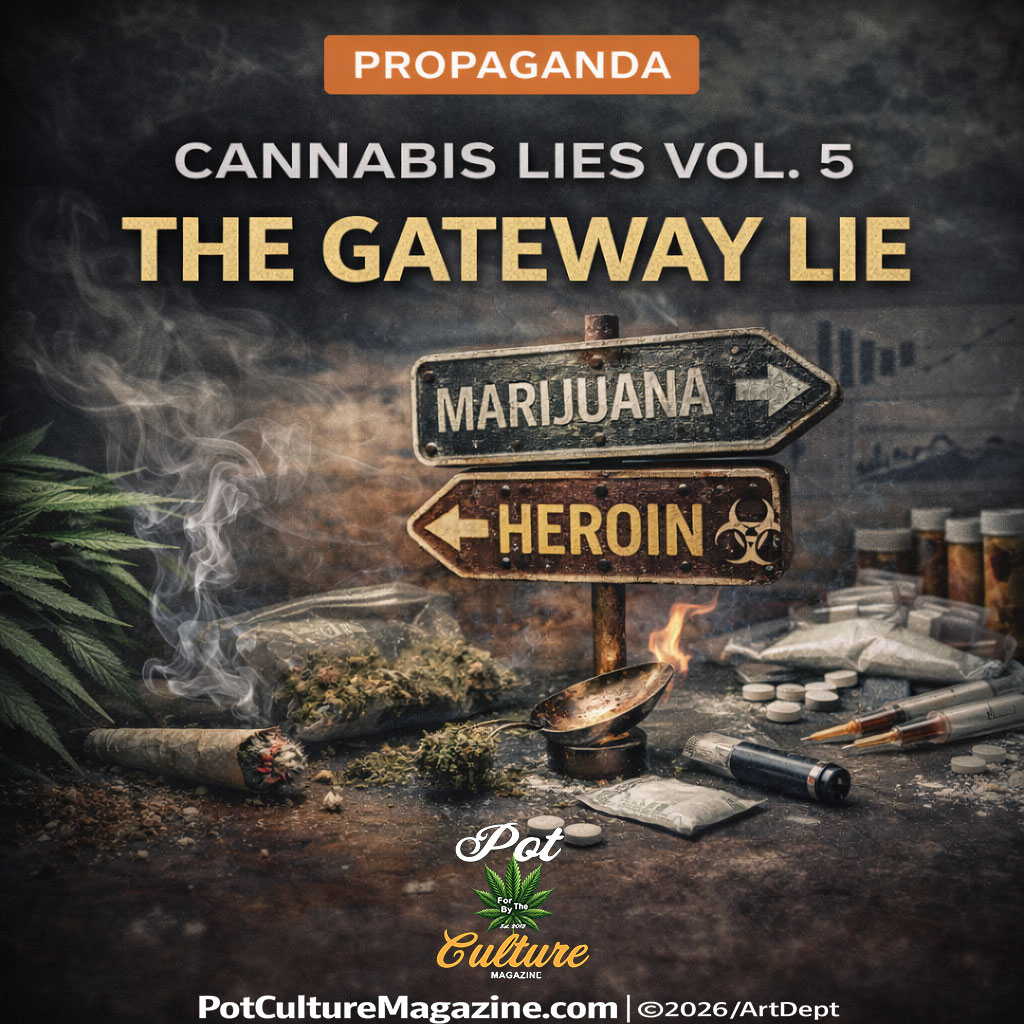
CANNABIS LIES Vol. 5: The Gateway Lie
For decades, politicians have claimed marijuana is a gateway to heroin and harder drugs. Federal youth surveys, NSDUH data, and NIDA’s own language tell a different story. Cannabis use is widespread, hard drug use remains rare, and most users do not progress. The data dismantles one of prohibition’s most durable fear narratives.
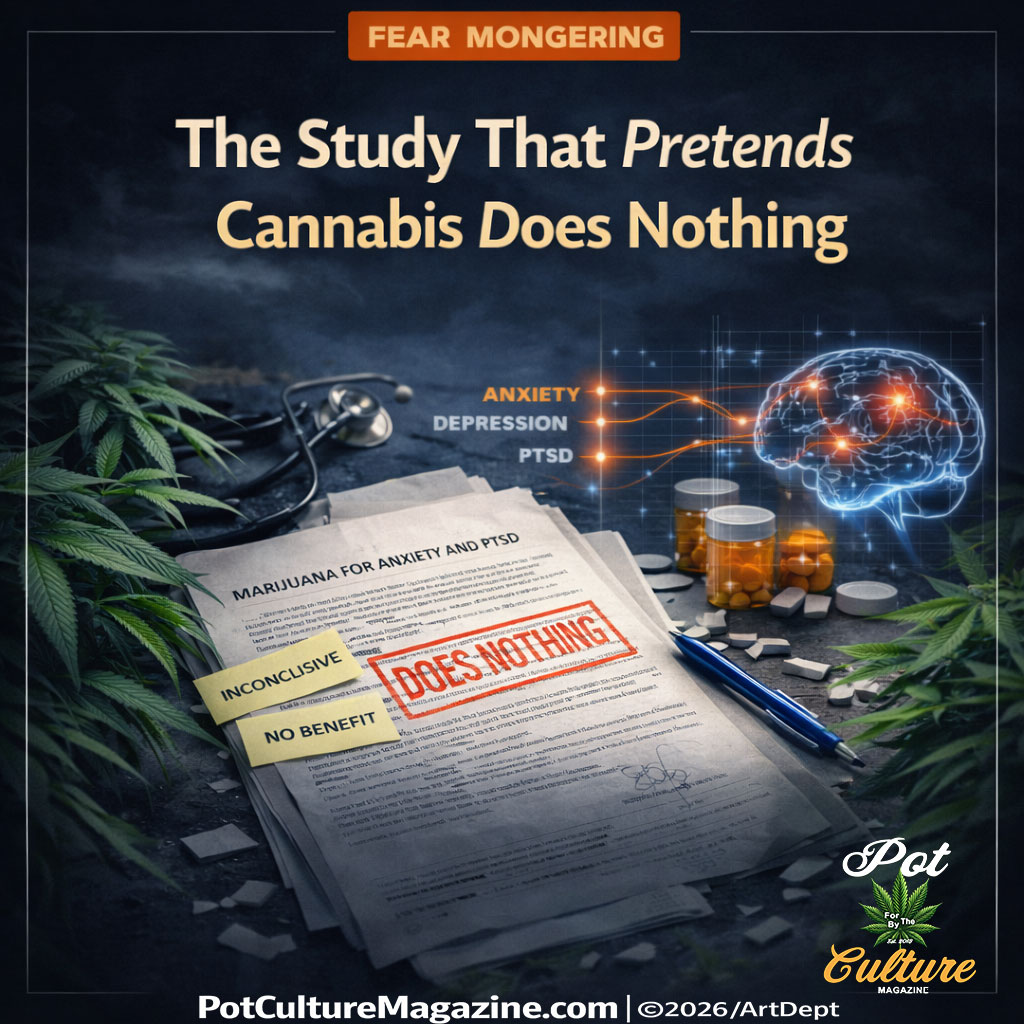
The Study That Pretends Cannabis Does Nothing
A new cannabis study claims marijuana does nothing for anxiety, depression, or PTSD. The reality is far more complicated. Decades of federal restrictions, limited research access, and synthetic substitutes have shaped the science. This breakdown exposes how incomplete data and selective interpretation continue to drive misleading headlines about cannabis and mental health.
Discover more from POT CULTURE MAGAZINE
Subscribe to get the latest posts sent to your email.

Leave a comment