
Millennials have been at the forefront of a seismic shift in cannabis culture, shaped by a rapidly changing legal landscape and the rise of digital media. Born between 1981 and 1996, this generation came of age during a time when the world of cannabis was transforming from underground to mainstream. With the advent of social media, the normalization of cannabis use, and the growing focus on health and wellness, Millennials have redefined what it means to get high.
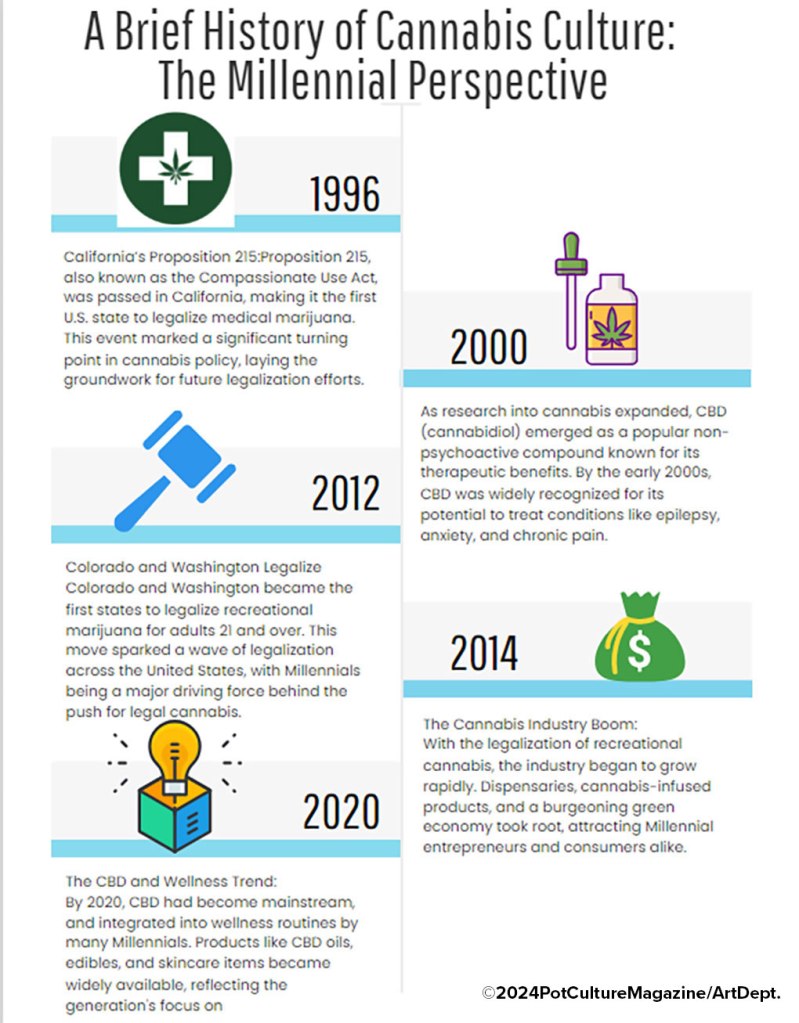
The Seismic Shift: California’s Proposition 215

Millennials grew up during an era of significant change in cannabis policy, a change that began with a seismic shift in California in 1996. The passage of Proposition 215, which legalized medical marijuana, was the first law of its kind in the U.S. and set a powerful precedent. This landmark decision not only provided relief to countless patients but also opened the door for broader legalization efforts. States like Colorado and Washington built on California’s legacy, eventually leading to the legalization of recreational marijuana—a movement that Millennials would come to champion as they sought to reshape the cannabis landscape.
Cultural Shifts and Cannabis Legalization
Millennials have witnessed and contributed to the growing momentum behind cannabis legalization. As they entered adulthood, the legalization movement gained traction, with Colorado and Washington becoming the first U.S. states to legalize recreational marijuana in 2012. This was a watershed moment for cannabis, signaling a shift in public perception and setting the stage for a wave of legalization efforts across the country.
The rise of social media platforms like Facebook, Twitter, and Instagram coincided with this cultural shift, playing a crucial role in normalizing cannabis use. Influencers, celebrities, and everyday users alike began to share their cannabis experiences openly, creating a digital landscape where cannabis was no longer taboo. The internet also democratized access to information about cannabis, allowing Millennials to educate themselves on its benefits, risks, and legal status, further destigmatizing its use.
A New Approach to Cannabis: Health and Wellness

Unlike previous generations that primarily associated cannabis with recreation, Millennials have embraced cannabis as part of a broader health and wellness trend. This generation is more likely to use cannabis for its purported therapeutic benefits, such as stress relief, anxiety reduction, and sleep improvement. The popularity of products like CBD oils, edibles, and vape pens reflects this shift toward a more health-conscious approach to cannabis consumption.
Cannabis has also become a social tool among Millennials, used to enhance social gatherings or as part of activities like yoga or meditation. The rise of cannabis-friendly events, social clubs, and wellness retreats speaks to this generation’s desire to integrate cannabis into a balanced, healthy lifestyle. Microdosing, where small amounts of cannabis are used throughout the day to maintain productivity and focus without becoming too intoxicated, has also gained popularity, reflecting a more sophisticated and intentional use of cannabis.
Navigating Challenges: Workplace Policies and Mental Health

Despite the growing acceptance of cannabis, Millennials still face challenges related to workplace drug policies. Even in states where cannabis is legal, many employers maintain strict drug-free policies, leading to potential conflicts and legal issues for those who use cannabis medicinally or recreationally.
The conversation around cannabis and mental health is another area where Millennials are navigating new territory. While many use cannabis to manage anxiety and depression, there is ongoing debate about its impact on mental health. Some studies suggest that heavy cannabis use can exacerbate mental health issues, leading to a more nuanced conversation within the Millennial community about responsible consumption.
Modern Cannabis Vernacular: Language of a New Generation

With the evolution of cannabis culture, Millennials have also contributed to the development of modern cannabis slang. Terms like “dank,” “budtender,” and “420-friendly” are now commonly used, reflecting both the normalization of cannabis and the influence of internet culture on language.
The shift in language also mirrors the broader cultural acceptance of cannabis. No longer confined to underground subcultures, cannabis-related terms have entered the mainstream, used by everyone from casual consumers to industry professionals.
Economic Impact: The Green Rush
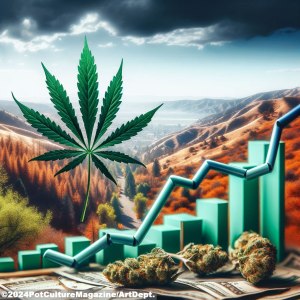
Millennials are leading the charge in the cannabis industry, with many starting their own businesses, from dispensaries to cannabis-infused product lines. This “green rush” has attracted young entrepreneurs eager to capitalize on the burgeoning legal market, bringing innovation and new ideas to the industry.
Cannabis tourism has also become a significant industry, with Millennials driving demand for cannabis-friendly travel experiences. Tours of cannabis farms, dispensary visits, and cannabis-infused dining experiences are now part of a growing market catering to a generation that views cannabis as an integral part of their lifestyle.
© 2024 Pot Culture Magazine. All rights reserved. This content is the exclusive property of Pot Culture Magazine and may not be reproduced, distributed, or transmitted in any form or by any means, including photocopying, recording, or other electronic or mechanical methods, without the prior written permission of the publisher, except in the case of brief quotations in critical reviews or analyses.
F O R T H E C U L T U R E B Y T H E C U L T U R E
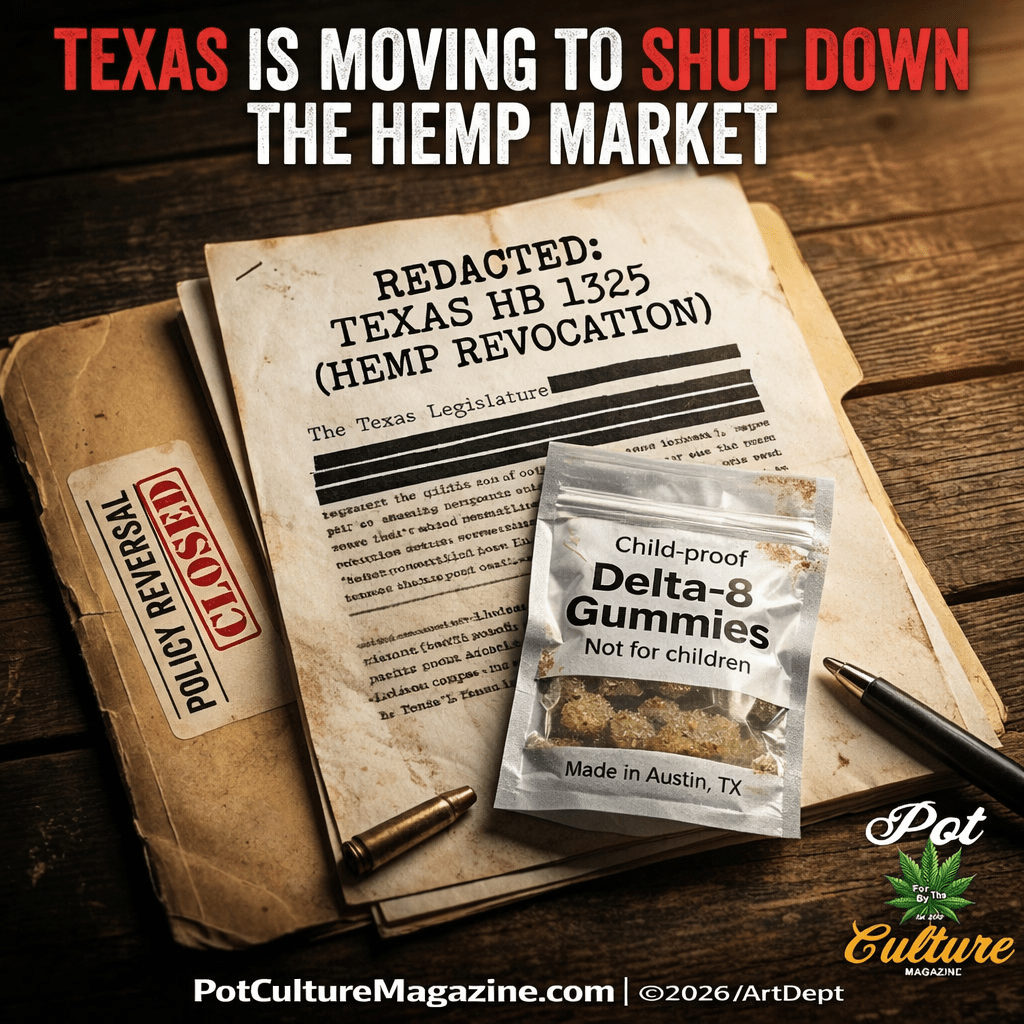
Texas Is Moving to Shut Down the Hemp Market
Texas helped build one of the largest hemp THC markets in the country, then moved to shut it down. As regulators tighten rules and enforcement increases, businesses are left exposed and the future of hemp-derived cannabinoids hangs in the balance. This is not a simple crackdown. It is a full policy reversal with real economic…

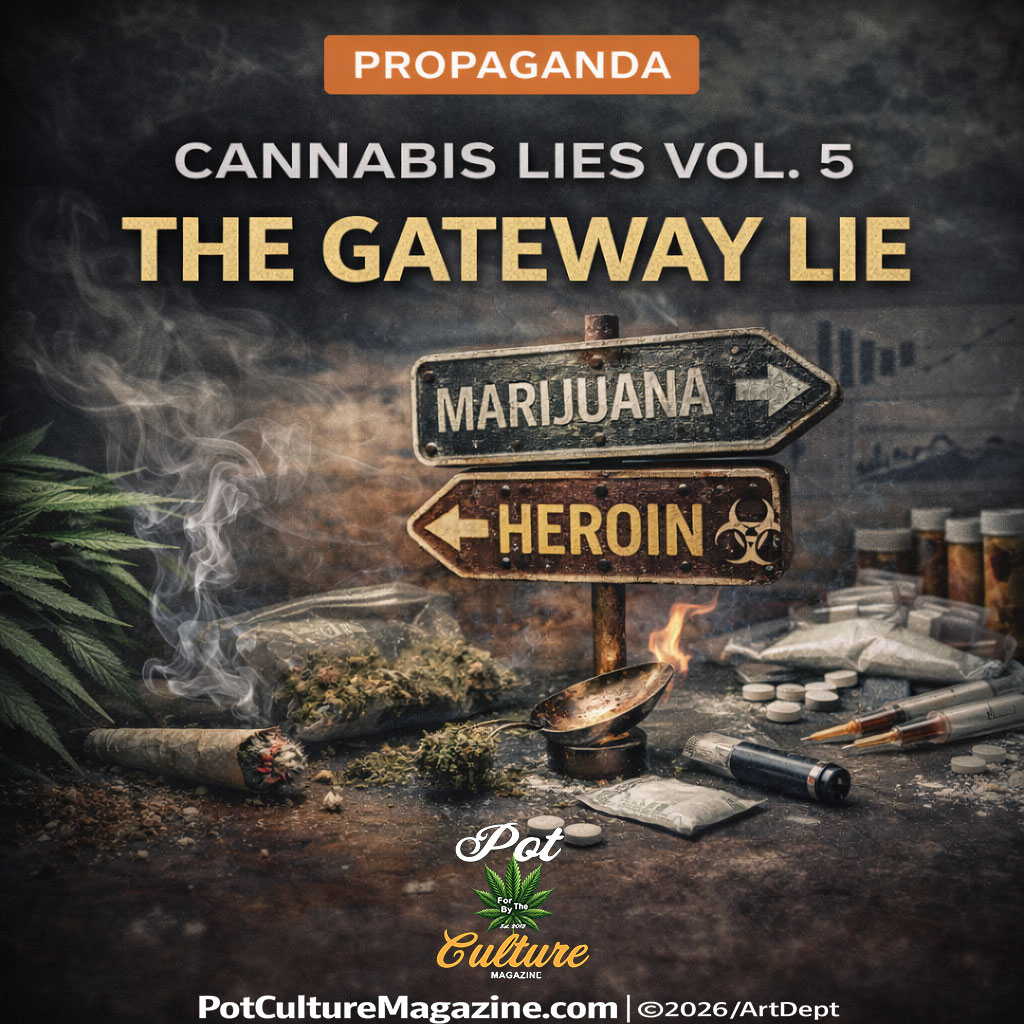
CANNABIS LIES Vol. 5: The Gateway Lie
For decades, politicians have claimed marijuana is a gateway to heroin and harder drugs. Federal youth surveys, NSDUH data, and NIDA’s own language tell a different story. Cannabis use is widespread, hard drug use remains rare, and most users do not progress. The data dismantles one of prohibition’s most durable fear narratives.
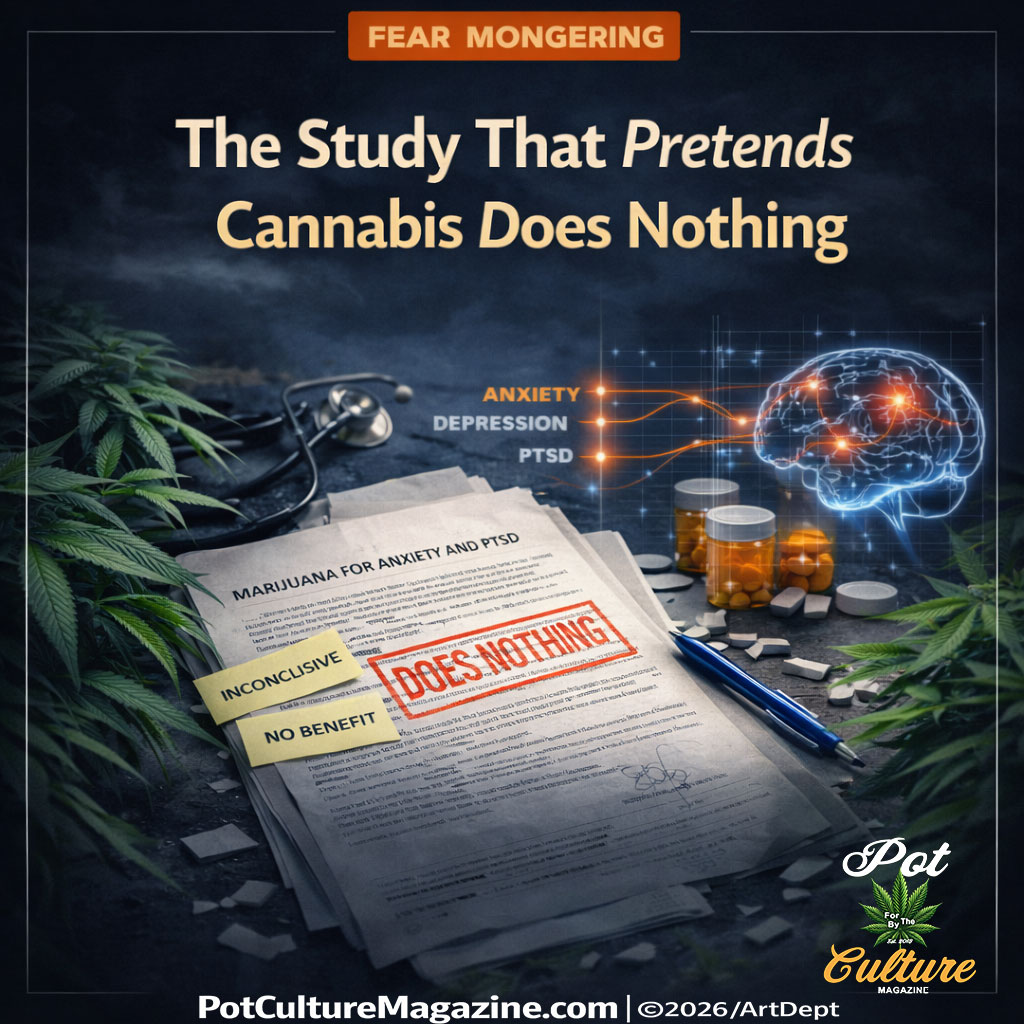
The Study That Pretends Cannabis Does Nothing
A new cannabis study claims marijuana does nothing for anxiety, depression, or PTSD. The reality is far more complicated. Decades of federal restrictions, limited research access, and synthetic substitutes have shaped the science. This breakdown exposes how incomplete data and selective interpretation continue to drive misleading headlines about cannabis and mental health.
Discover more from POT CULTURE MAGAZINE
Subscribe to get the latest posts sent to your email.

Leave a comment