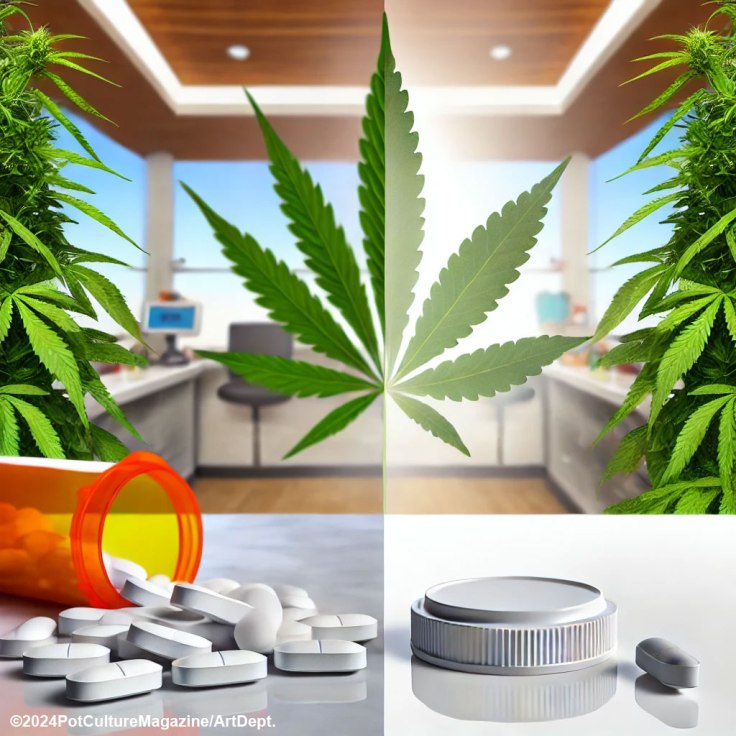
The war between natural remedies and synthetic drugs has raged for decades, but now, cannabis is storming the gates of Big Pharma’s fortress. As legalization sweeps across the globe, the pharmaceutical industry’s iron grip on medicine is loosening, making room for a green revolution that promises to transform healthcare.
For years, the pharmaceutical industry has peddled a cocktail of pills for everything from chronic pain to anxiety, often with a laundry list of side effects. But cannabis, with its myriad of cannabinoids, offers a natural alternative that threatens to upend this lucrative market. Take opioids, for example. These potent painkillers, while effective, have sparked an addiction crisis of epic proportions. Enter cannabis—a plant that can alleviate pain without the risk of fatal overdose. Studies show that states with legal medical cannabis have seen a significant drop in opioid prescriptions, suggesting that patients are swapping out their pills for pot.
It’s not just pain management where cannabis is making waves. Anxiety and depression, often treated with SSRIs and benzodiazepines, are seeing a new contender. Cannabidiol (CBD), a non-psychoactive component of cannabis, has shown promise in reducing anxiety without the numbing effects of traditional meds. Patients are waking up to the possibility of managing their mental health with fewer side effects, and Big Pharma is starting to sweat.

But the pharmaceutical giants aren’t going down without a fight. They’re lobbying hard, pumping money into campaigns to stymie cannabis legalization and protect their turf. The legal hurdles are significant, with cannabis still classified as a Schedule I drug in the United States, indicating a high potential for abuse and no accepted medical use—an irony not lost on those who benefit from its healing properties. This classification restricts research and limits the ability of patients and doctors to access and understand the full potential of the plant.
Financially, the stakes are colossal. The global cannabis market is projected to hit $90.4 billion by 2026, and pharmaceutical companies are scrambling to get a piece of the pie. Some are hedging their bets by investing in cannabis research or acquiring cannabis-related businesses. GW Pharmaceuticals, for instance, has developed Epidiolex, the first FDA-approved drug derived from cannabis, used to treat rare forms of epilepsy. It’s a tacit acknowledgment that cannabis has undeniable medicinal value.
Despite the pushback, the momentum behind cannabis is unstoppable. Grassroots movements and patient advocacy groups are fighting to decriminalize and destigmatize cannabis use. The evidence is mounting—cannabis can be a safer, more effective treatment for a host of conditions. It’s not just about getting high; it’s about harnessing the plant’s therapeutic properties to improve quality of life.
As the battle rages on, the question isn’t if cannabis will disrupt Big Pharma, but when. The pharmaceutical industry has long enjoyed a monopoly over our health, but the tide is turning. Cannabis represents a return to natural medicine, a rejection of synthetic solutions in favor of something purer, and ultimately, more human. The future of medicine is not just about what we can create in a lab, but what we can grow in our gardens.
© 2024 Pot Culture Magazine. All rights reserved. This content is the exclusive property of Pot Culture Magazine and may not be reproduced, distributed, or transmitted in any form or by any means, including photocopying, recording, or other electronic or mechanical methods, without the prior written permission of the publisher, except in the case of brief quotations in critical reviews or analyses.
Discover more from POT CULTURE MAGAZINE
Subscribe to get the latest posts sent to your email.

Leave a comment