
Amid the smoke of societal norms and economic barriers, a revealing pattern emerges: cannabis is not just a plant, but a reflection of deeper socioeconomic divides. Recent findings indicate that 9% of U.S. adults indulge in cannabis regularly, engaging with the plant at least ten times a month. This statistic alone doesn’t tell the full story—it’s who makes up this 9% that speaks volumes.
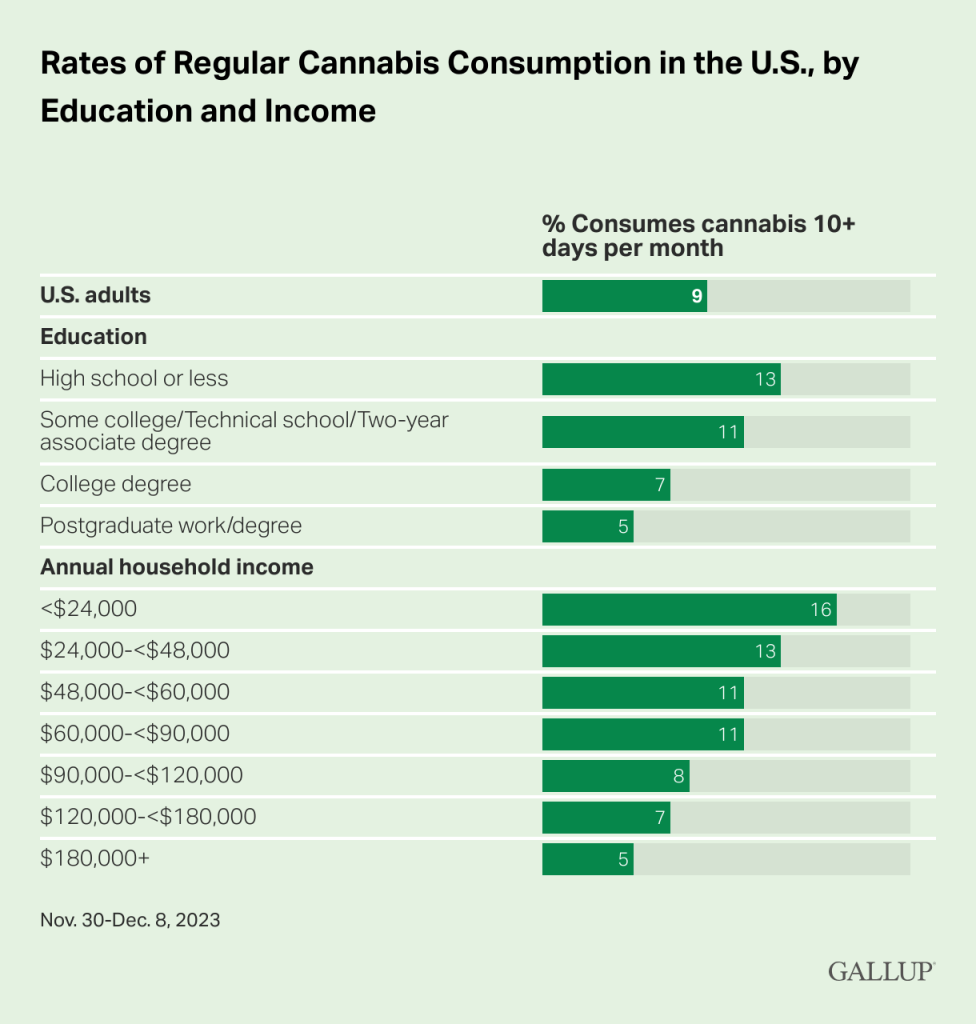
Predominantly, those lighting up are individuals from lower-income households, earning less than $24,000 annually, with a notable 16% reporting regular use. Similarly, those with no more than a high school diploma represent a significant portion of regular users, with a 13% usage rate. In contrast, only 5% of individuals with postgraduate degrees and those in the highest income bracket share this habit.
This divergence is stark, laying bare a cultural and economic map where cannabis use mirrors financial and educational disparities. The data, derived from the Gallup National Health and Well-Being Index, offers a glimpse into how lifestyle choices correlate with social and economic factors. The survey, encompassing a diverse demographic of 6,386 adults across the U.S., poses questions about cannabis habits confidentially, ensuring honest responses.
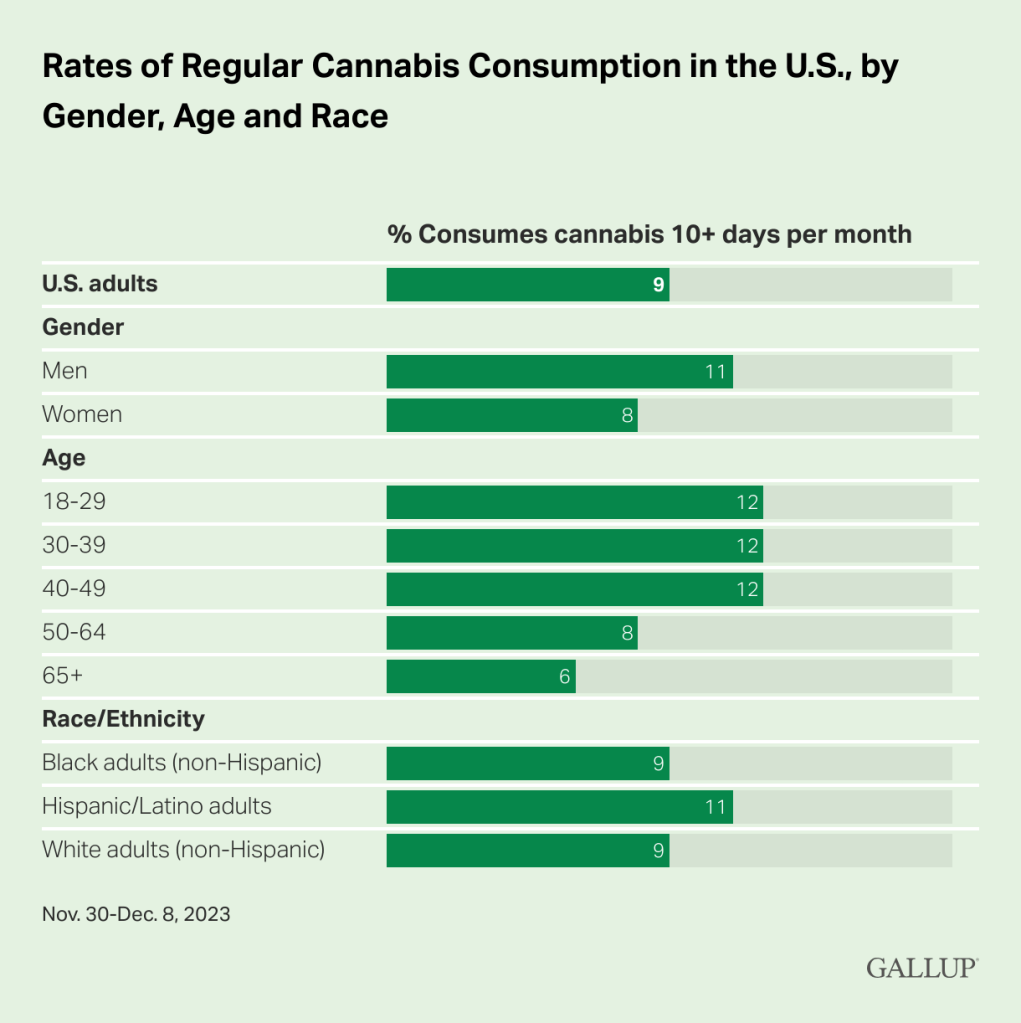
Moreover, the age and gender of cannabis consumers add another layer to the pattern. Adults under 50 are more likely to partake regularly compared to their senior counterparts, with 12% of younger adults using cannabis regularly versus 6% of those 65 and older. Men also tend to use cannabis slightly more than women, with an 11% to 8% split.
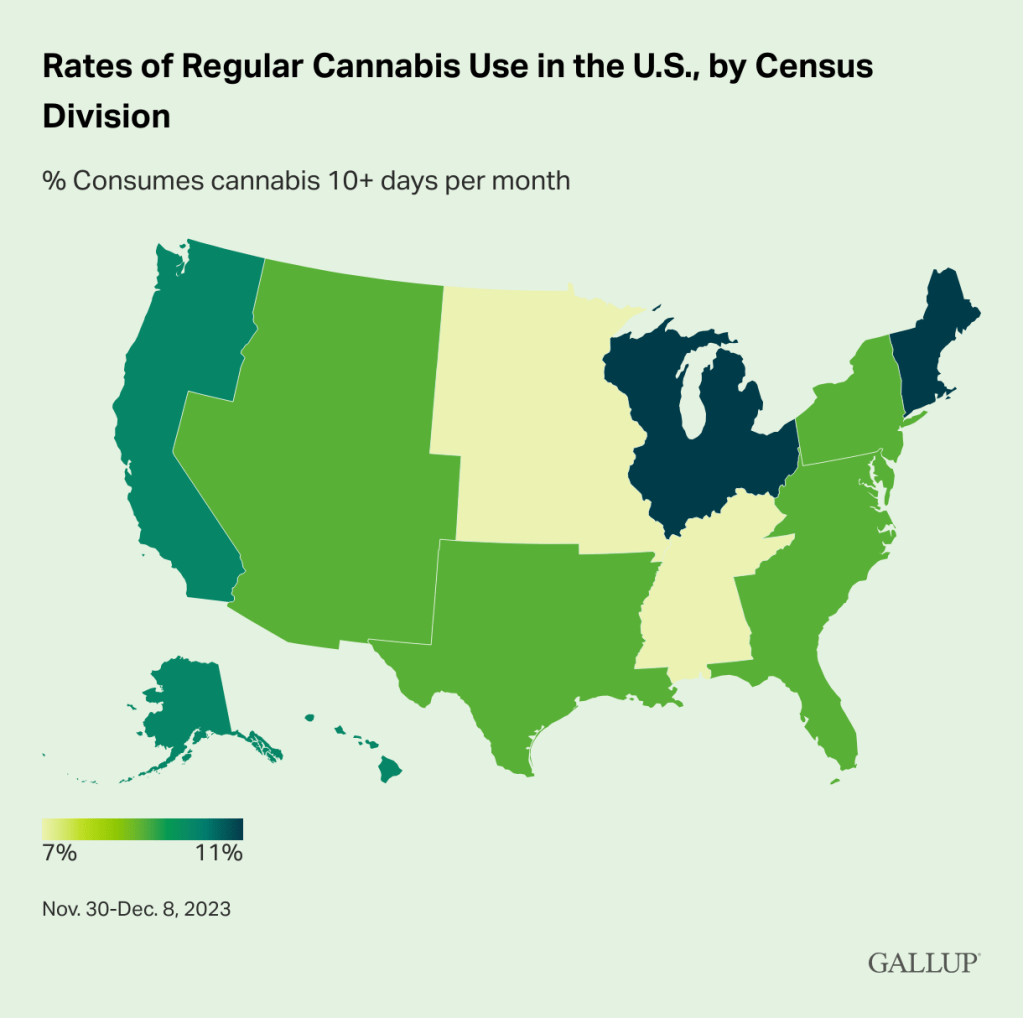
Regional differences further color these findings. The Middle Atlantic and East North Central U.S. census divisions report the highest rates of regular use at 11%. On the other hand, the East South Central and West North Central divisions report the lowest at 7%. Political leanings also play a role, with regular cannabis use more common in blue states than red.
Legalization seems to barely shift usage patterns. In states where cannabis is legal, the average consumption is 2.9 days per month, only slightly higher than the 2.5 days in states where it remains illegal. This challenges the assumption that legal restrictions significantly deter use.
As legalization spreads—now legal for recreational use in 18 states and medically in 12—public sentiment has dramatically shifted. Support for legalization has soared from 25% in 1995 to 70% in recent years. The acceptance and normalization of cannabis are reflected in the rising numbers admitting to its use, with current figures showing 17% of adults smoking marijuana, up from 7% a decade ago.
The method of consumption is also evolving. Vaping has become increasingly popular, particularly among younger adults, marking a shift from more traditional methods of consumption. This evolution in habits speaks to broader social changes and a growing acceptance of cannabis in various forms.
Understanding these dynamics is crucial for addressing the needs of those at greater risk due to their socioeconomic status. With a significant portion of users coming from lower-income and less-educated backgrounds, targeted educational and support initiatives could help mitigate the risks associated with regular use, particularly among vulnerable populations.
This narrative isn’t just about who smokes and how much; it’s about understanding the why behind the statistics and the social factors that drive these decisions. As society grapples with these issues, the cannabis conversation continues to evolve, reflecting a complex interplay of economics, education, and legality.
©2024, Pot Culture Magazine. All Rights Reserved. The content herein, including text, graphics, images, and any other material, is the exclusive property of Pot Culture Magazine. This material is safeguarded by both U.S. and international copyright laws. The unauthorized replication, dissemination, or broadcasting of any portion of this material, be it textual or visual, in any form or medium, without prior written consent from Pot Culture Magazine, is strictly forbidden.
Discover more from POT CULTURE MAGAZINE
Subscribe to get the latest posts sent to your email.

Leave a comment