Filed Under: The First Lady of Hypocrisy

Eight years ago today, the world said goodbye to Nancy Reagan, a figure whose legacy is mired in controversy and hypocrisy, particularly around her infamous “Just Say No” anti-drug campaign. As we reflect on her life and the policies she championed, it’s clear that the irony of her personal battles starkly contrasts with the public persona she meticulously crafted alongside her husband, former President Ronald Reagan.
Nancy Reagan’s “Just Say No” mantra became emblematic of the 1980s War on Drugs, a simplistic solution to a complex crisis. Spearheading this campaign, she took to the airwaves, urging the nation’s youth to reject drugs outright. But what does it say about the effectiveness and sincerity of a campaign when its leader is embroiled in her own quiet struggle with prescription drugs? Patti Davis, Nancy’s daughter, paints a damning picture of her mother as a pill-popper, habitually using tranquilizers, sleeping pills, and diuretics, even as she presided over an anti-drug crusade that would affect millions.
This isn’t just about the private failings of a public figure; it’s about the devastating impact of the Reagans’ policies on the country. The “Just Say No” campaign and the broader War on Drugs were a failure by nearly every metric, leading to mass incarceration, a militarized police force, and a nation no closer to solving its drug problem. Programs like D.A.R.E., launched under the same zero-tolerance ideology, proved to be ineffective at best and harmful at worst, fostering environments in schools that led directly to the school-to-prison pipeline.
advertisement
F O R T H E C U L T U R E B Y T H E C U L T U R E
CANNABIS LIES Vol. 5: The Gateway Lie
For decades, politicians have claimed marijuana is a gateway to heroin and harder drugs. Federal youth surveys, NSDUH data, and NIDA’s own language tell a different story. Cannabis use is widespread, hard drug use remains rare, and most users do not progress. The data dismantles one of prohibition’s most durable fear narratives.

The Study That Pretends Cannabis Does Nothing
A new cannabis study claims marijuana does nothing for anxiety, depression, or PTSD. The reality is far more complicated. Decades of federal restrictions, limited research access, and synthetic substitutes have shaped the science. This breakdown exposes how incomplete data and selective interpretation continue to drive misleading headlines about cannabis and mental health.
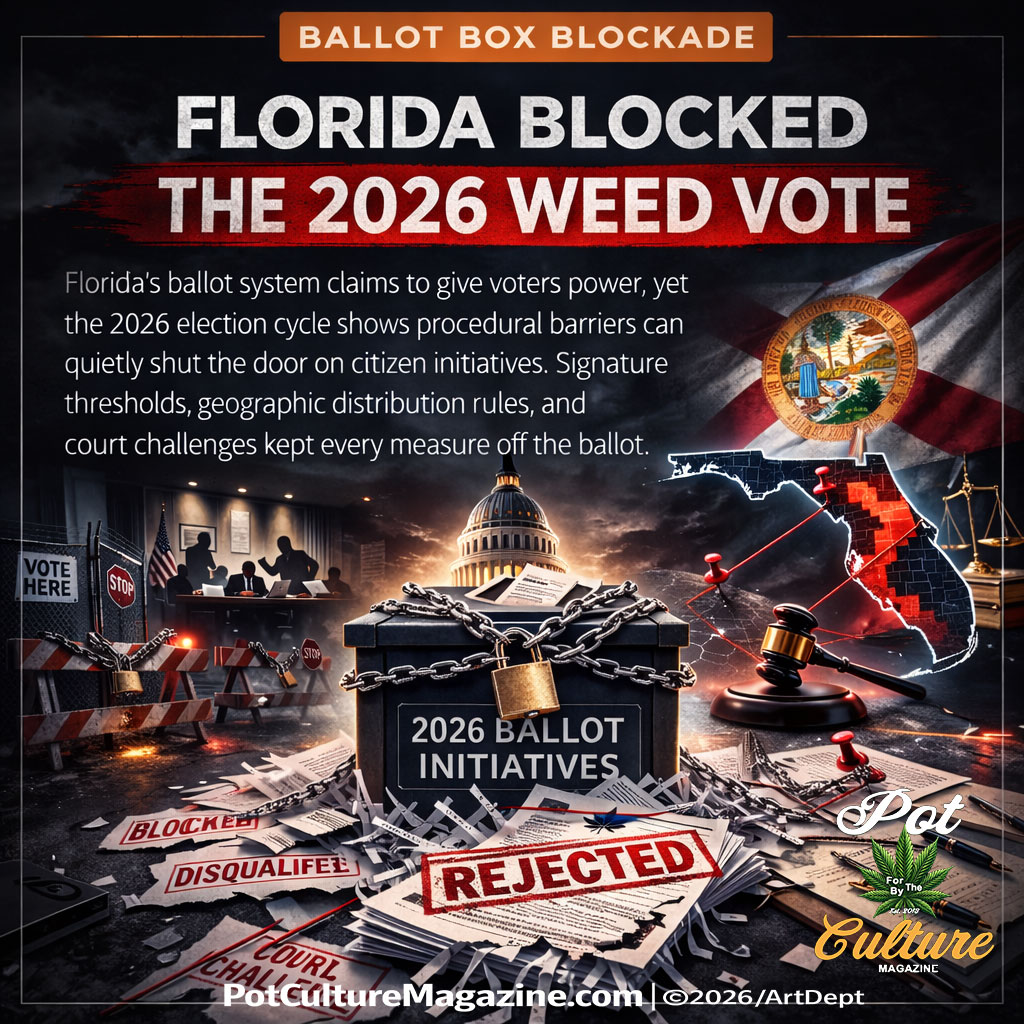
Florida Blocked the 2026 Weed Vote
Florida’s ballot system claims to give voters power, yet the 2026 election cycle shows how procedural barriers can quietly shut the door on citizen initiatives. Signature thresholds, geographic distribution rules, and court challenges blocked every measure from reaching voters, revealing how cannabis legalization fights are often decided by bureaucratic design long before election day.
advertisement
The hypocrisy of Nancy Reagan’s position becomes even more glaring in the face of her daughter’s revelations. Despite the public denials from the Reagan camp, the stark contrast between Nancy Reagan’s public admonitions and her personal habits highlights a blatant disregard for the nuances of addiction and drug use. This wasn’t just an individual failing; it was a policy failure, a societal failure, exacerbated by the Reagan administration’s unwillingness to approach drug abuse with the complexity and compassion it required.
The narrative pushed by Nancy Reagan and her “Just Say No” campaign did more than just fail to stem drug use; it criminalized a health issue, disproportionately affecting minority communities and perpetuating cycles of poverty and incarceration. It ignored the reasons people turn to drugs in the first place, offering a catchphrase instead of a cure.
As we look back on the legacy of Nancy Reagan, it’s crucial to remember the real cost of her and her husband’s policies. The “Just Say No” campaign, while catchy, was a smokescreen, a distraction from the lack of meaningful action and understanding needed to address America’s drug problem. It’s a poignant reminder of the dangers of oversimplification in tackling complex social issues and the need for policies rooted in empathy, evidence, and equity. The Reagans’ tenure is a chapter in American history that we must learn from, lest we continue to repeat the same mistakes.
© 2025 Pot Culture Magazine. All rights reserved. This content is the exclusive property of Pot Culture Magazine and may not be reproduced, distributed, or transmitted in any form or by any means without prior written permission from the publisher, except for brief quotations in critical reviews.
F O R T H E C U L T U R E B Y T H E C U L T U R E

The Cannabis Lie: Vol. 4 — The Crime Wave Lie
Politicians and pundits warned that legal cannabis would unleash a crime wave. The data tell a different story. From Colorado’s violent crime trends to DOJ time-series research and statewide arrest declines, the evidence shows no consistent long-term surge tied to legalization. The numbers never matched the panic.

South Africa Legalized Weed, But Not the Market
South Africa recognized private adult cannabis use and home cultivation, but never built a legal domestic market around them. With buying and selling still largely outside the law, the illicit trade remains dominant while regulators scramble to set limits, draft rules, and prepare a broader Cannabis Bill that could finally address commerce.

NY’s Legal Weed Market Is Running Out of Weed
New York legalized cannabis and opened hundreds of stores, but regulators now warn the legal market may not produce enough weed to keep them stocked. With nearly 600 stores open and sales nearing $3 billion, the state is discovering that legalization alone does not guarantee a functioning market.
Discover more from POT CULTURE MAGAZINE
Subscribe to get the latest posts sent to your email.

Leave a comment