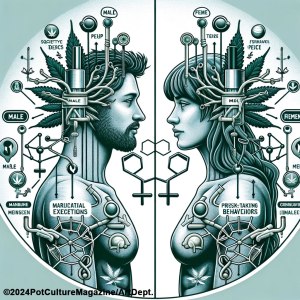
In the intricate mosaic of cannabis culture, a stark contrast draws the eye: 15% of men partake in the ritual of smoking weed, while only 9% of women do the same. This discrepancy isn’t a mere footnote in the grand narrative of cannabis; it’s a reflection of the deep-seated interplay between gender, societal norms, and personal choice. Let’s unpack the layers behind this gendered green divide without resorting to clichés about the changing times.
Societal Norms and the Gendered Experience
The canvas of societal expectations paints men and women in different hues when it comes to substance use. Men often operate under a societal umbrella that not only tolerates but, in some circles, celebrates the use of cannabis as a marker of rebellion or masculinity. Women, conversely, navigate a more scrutinized social landscape where their cannabis use is more likely to be met with judgment. This societal dichotomy could be a driving force behind the differing rates of cannabis use.
Risk-Taking: A Gendered Lens
Delving into the psychology of risk, it’s observed that men are generally more inclined towards risk-taking behaviors. Cannabis use, with its historical baggage of legal and social prohibition, fits neatly into a category of actions that appeal more to those with a penchant for the edge. This inherent draw towards the forbidden or risky may help explain why a higher percentage of men find themselves enveloped in cannabis smoke.
Peer Influence and Social Circles
The social ecosystems in which men and women orbit play no small part in shaping behaviors, including cannabis use. Men’s social networks might offer more opportunities or social endorsements for cannabis use, making it a shared activity that reinforces group bonds. This aspect of socialization could contribute to the higher percentage of men engaging with cannabis.
Marketing to Men: A Cultural Reflection
A glance at the portrayal of cannabis users in media and marketing reveals a bias towards male audiences. This isn’t merely a reflection of existing consumer patterns but a reinforcement of the idea that cannabis is a predominantly male domain. Such marketing strategies not only mirror but potentially perpetuate the gender gap in cannabis consumption.
Emotional Coping and Recreation
The reasons behind turning to cannabis can be as varied as the strains available, yet there seems to be a gendered pattern in seeking out its psychoactive solace. With more men reporting usage, it suggests that they might be leveraging cannabis for stress relief, recreational enjoyment, or social bonding more so than their female counterparts.
Biological Differences in Play
Beneath the surface, biological differences between men and women could influence the prevalence of cannabis use. From the way THC is metabolized to its effects on the body and mind, these underlying biological factors might make cannabis a more appealing choice for men, either due to the experience it offers or its perceived benefits.
In dissecting the reasons behind the 15% of men and 9% of women who light up, we uncover not just a matter of personal choice but a complex web of societal, psychological, and biological influences. This gender gap in cannabis use invites deeper reflection on how we understand, regulate, and engage with this ancient plant in our modern world.
© 2024 Pot Culture Magazine. All rights reserved. This content is the exclusive property of Pot Culture Magazine and may not be reproduced, distributed, or transmitted in any form or by any means, including photocopying, recording, or other electronic or mechanical methods, without the prior written permission of the publisher, except in the case of brief quotations in critical reviews or analyses.
Discover more from POT CULTURE MAGAZINE
Subscribe to get the latest posts sent to your email.

Leave a comment