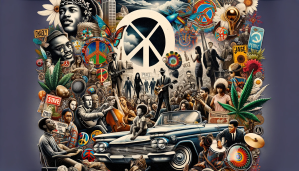
In the inaugural piece of “Back in High Day,” we journey through two transformative decades – the 1950s and 1960s – to uncover how cannabis intertwined with the cultural and social revolutions that defined an era.
The 1950s: The Silent Prelude
Amidst the post-war conformity of the 1950s, beneath the veneer of American prosperity, a counterculture quietly simmered. The Beat Generation, led by figures like Jack Kerouac and Allen Ginsberg,

whispered of freedom and rebellion, setting the stage for the seismic shifts of the coming decade. Jazz clubs and artistic circles, pulsating with the undercurrents of change, saw cannabis as a symbol of nonconformity – a quiet rebellion against the mainstream.
The 1960s: The Crescendo of Change
As the 60s dawned, the whispers grew into roars. The Vietnam War, a catalyst for widespread dissent, and the Civil Rights Movement, a clarion call for equality, saw young people rise in a chorus of protest. Cannabis, once the secret of the underground, emerged as a symbol of peace, love, and unity. It was inhaled in student protests, shared at gatherings, and celebrated in the art and music that defined the time.
The Summer of Love and Woodstock: Peak of the Wave
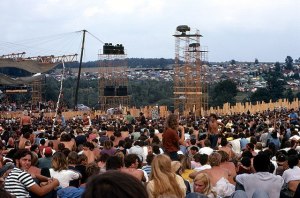
1967’s Summer of Love in San Francisco and the iconic Woodstock festival of 1969 became emblematic of this era. Thousands gathered, united by a vision of peace and a rejection of war, with cannabis as a communal bond. It was more than a drug; it was a sacrament of the counterculture, a tangible representation of a generation’s ideals.
Altamont: The Turning Point
But as the decade neared its end, the optimism began to fracture. The Altamont Free Concert of 1969, marred by violence and chaos, stood in stark contrast to Woodstock’s harmony. It was a jarring
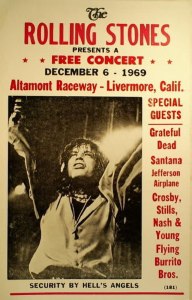
wake-up call, a realization that the ideals of the 60s could not sustain themselves indefinitely.
Conclusion: The Wave Recedes
In the aftermath, as the 70s dawned, Hunter S. Thompson poignantly captured the sentiment in “Fear and Loathing in Las Vegas”: “you can go up on a steep hill in Las Vegas and look West, and with the right kind of eyes you can almost see the high-water mark—that place where the wave finally broke and rolled back.” Altamont became that high-water mark of the counterculture movement, a turning point where the wave of idealism, so intrinsically linked with cannabis, began to roll back.
The legacy of these two decades, however, endures. Cannabis, which
rose from the underground to become a symbol of a generation’s aspirations, continues to shape cultural, social, and legal landscapes. As we reflect on this journey “Back in High Day,” we understand that while eras pass, their echoes remain, shaping the future in ways unseen and voices unheard.
Discover more from POT CULTURE MAGAZINE
Subscribe to get the latest posts sent to your email.

Leave a comment