In the rapidly evolving world of cannabis, myths and misconceptions continually arise, reflecting the complexities of a maturing industry and a more informed public. Moving beyond the rudimentary misunderstandings of the past, today’s cannabis myths are subtler, woven into the fabric of a society increasingly familiar with cannabis yet still grappling with its intricacies. This article aims to unravel some of these contemporary myths, providing insights that resonate with both seasoned connoisseurs and newcomers to the cannabis culture.
Myth 1: CBD is Completely Non-Psychoactive:
CBD, renowned for its medicinal properties, is often marketed as completely non-psychoactive. This claim, however, oversimplifies its effects. While CBD doesn’t induce the intoxication or euphoria associated with THC, it does interact with the brain. It can influence mood, anxiety levels, and perception of pain, exhibiting a form of psychoactivity that is often overlooked. Recognizing this subtle but significant effect is crucial to understanding CBD’s full therapeutic profile and the nuances of its interaction with the human body.
Myth 2: Stronger Strains are More Effective Medically:
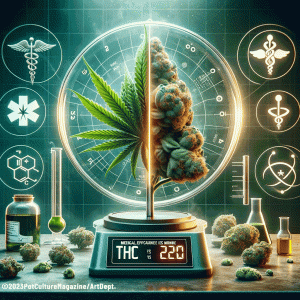
In the medical cannabis sphere, there’s a growing perception that strains with higher THC levels are inherently more effective. This belief, however, overlooks the complexity of cannabis’ medicinal properties. The therapeutic efficacy of a strain isn’t solely determined by its THC content. The entourage effect, a phenomenon where cannabinoids and terpenes interact synergistically, plays a vital role in the medicinal impact of cannabis. This interplay often dictates the effectiveness of a strain in treating specific conditions, highlighting the importance of considering the full spectrum of a strain’s chemical composition, rather than focusing on THC concentration alone.
Myth 3: Edibles’ Effects are Predictable:

Edibles are often perceived as a more controlled and predictable method of cannabis consumption. However, the reality of edibles is far more variable. The effects of edibles can differ significantly based on individual factors such as metabolism, the concentration of THC, and the method of cannabis infusion. Unlike inhalation, where effects are almost immediate, edibles undergo a complex metabolic process, leading to delayed and sometimes unpredictable results. This variability can catch users off guard, leading to overconsumption and discomfort. Understanding the unique dynamics of edibles is essential for safe and enjoyable use.
Myth 4: More Cannabis Means Better Sleep:
Many turn to cannabis as a natural sleep aid, but the assumption that more cannabis equates to better sleep is a misconception. While certain strains and dosages can promote relaxation and improve sleep quality, excessive cannabis use can have the opposite effect. Overuse can disrupt sleep architecture, reducing REM sleep and leading to less restful nights. The key to cannabis as a sleep aid lies in balance and understanding one’s individual response. Finding the right strain and dosage is critical, as too much can be counterproductive to achieving restful sleep.
Myth 5: Legalization Has Solved Social Justice Issues:

The legalization of cannabis is often viewed as a solution to the social injustices associated with its prohibition. However, this perspective is overly simplistic. While legalization has made significant strides in reforming drug policy, challenges persist. Issues such as the disproportionate impact of drug laws on marginalized communities and unequal access to the burgeoning cannabis industry remain pressing concerns. Legalization is a step forward, but it’s not a panacea for the deep-rooted inequalities and injustices of past drug policies. Addressing these continuing challenges is vital for a truly equitable cannabis landscape.
Tackling modern cannabis myths is crucial for a well-informed discussion about the plant. As perceptions and industry practices evolve, so must our understanding. This journey involves recognizing the nuanced realities of cannabis, from its medical applications to its role in society. By confronting and debunking these contemporary myths, we contribute to a more accurate, sophisticated discourse on cannabis, one that respects its complexities and ongoing evolution in our culture and legal frameworks.
Discover more from POT CULTURE MAGAZINE
Subscribe to get the latest posts sent to your email.

Leave a comment